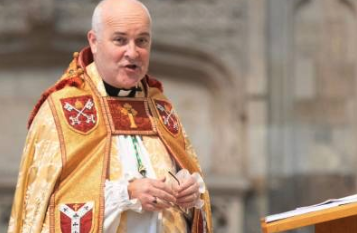
Stephen Cottrell: Working together to end poverty – anglican.ink
Report on Poverty in the United Kingdom and Alignment with Sustainable Development Goals
1.0 Introduction: The Challenge to SDG 1 (No Poverty)
A recent analysis by Archbishop Stephen Cottrell highlights the significant challenge the United Kingdom faces in achieving Sustainable Development Goal 1 (No Poverty). The report underscores that poverty is a pressing moral issue requiring a multi-faceted approach involving government, civil society, and individuals, in line with the collaborative spirit of the SDGs.
2.0 Key Findings on Poverty and Inequality
The current situation presents a direct contradiction to several core SDG principles, particularly those concerning poverty, hunger, and inequality.
- Prevalence of Poverty (SDG 1): One in five people across the United Kingdom currently lives below the poverty line. This statistic indicates a substantial failure to progress towards the primary target of SDG 1.
- Food Insecurity (SDG 2 – Zero Hunger): Anecdotal evidence from communities in Middlesbrough and Hull, such as children taking empty lunchboxes to school in hope of filling them, points to critical levels of food insecurity and a failure to ensure access to safe, nutritious, and sufficient food.
- Disproportionate Impact (SDG 10 – Reduced Inequalities): The burden of poverty is not shared equally. Data shows that children, disabled people, and individuals from some minority ethnic groups face particularly high and deep levels of poverty, undermining the objective of SDG 10 to reduce inequality within and among countries.
3.0 Structural Issues and Urban Development
A historical perspective, referencing the 40-year-old ‘Faith in the City’ report, reveals that poverty is often a result of systemic and structural issues, a challenge central to SDG 11 (Sustainable Cities and Communities) and SDG 16 (Peace, Justice and Strong Institutions).
3.1 Historical Context: ‘Faith in the City’
The landmark report called for a fundamental shift in priorities to support marginalized urban communities. It argued that the exclusion of the poor is not accidental but is imposed by powerful institutions. This historical analysis remains relevant to the modern pursuit of inclusive and sustainable urban development as outlined in SDG 11.
3.2 The Need for Institutional Reform
Addressing poverty requires confronting the structural issues that cause and exacerbate it. This aligns with SDG 16’s aim to build effective, accountable, and inclusive institutions at all levels. A robust and fair welfare state is identified as a key institutional mechanism for protecting citizens and advancing social justice.
4.0 Recommendations for Policy and Collaborative Action
To advance the 2030 Agenda for Sustainable Development, a clear vision and decisive action are required. The report implicitly calls for a strategy rooted in partnership and targeted policy-making.
- Strengthen Social Protection Systems (SDG 1, SDG 10): The government must reinforce the welfare state to protect all individuals in times of need. A specific, actionable policy recommendation is the abolition of the two-child limit, which would directly alleviate poverty for many families.
- Develop a Clear National Strategy (SDG 1): A coherent and articulated vision for tackling poverty and injustice is necessary. This strategy must be embraced by political leaders to provide hope and tangible opportunities for affected communities.
- Foster Multi-Stakeholder Partnerships (SDG 17 – Partnerships for the Goals): The task of ending poverty requires a collaborative effort. Government, faith-based organizations, charities, and individuals must work in partnership, sharing a vision for communities to flourish free from poverty. This approach embodies the core principle of SDG 17, which calls for revitalizing the global partnership for sustainable development.
Analysis of the Article in Relation to Sustainable Development Goals
1. Which SDGs are addressed or connected to the issues highlighted in the article?
-
SDG 1: No Poverty
This is the central theme of the article. The text explicitly discusses the goal of “ending poverty,” citing statistics like “One in five people across the United Kingdom are living below the poverty line” and describing it as “one of the moral missions of our times.”
-
SDG 2: Zero Hunger
The article directly addresses food insecurity, a key component of SDG 2. The poignant example of “children who take empty lunchboxes with them into school so they can fill them up with food provided during the day, in case there is nothing for dinner when they get home” highlights a lack of access to sufficient food.
-
SDG 10: Reduced Inequalities
The article emphasizes that poverty disproportionately affects certain groups. It states that “the pain is not equally shared” and that “Children, disabled people, and people from some minority ethnic groups face particularly high and deep levels of poverty,” directly connecting to the goal of reducing inequalities within a country.
2. What specific targets under those SDGs can be identified based on the article’s content?
SDG 1: No Poverty
-
Target 1.2: By 2030, reduce at least by half the proportion of men, women and children of all ages living in poverty in all its dimensions according to national definitions.
The article’s focus on UK-specific poverty, citing the national statistic of “One in five people… living below the poverty line,” aligns perfectly with this target, which addresses poverty as defined by national standards rather than a global extreme poverty line.
-
Target 1.3: Implement nationally appropriate social protection systems and measures for all, including floors, and by 2030 achieve substantial coverage of the poor and the vulnerable.
The discussion about strengthening the “welfare state which protects people in their moment of need” and the specific policy suggestion to “Abolish the two-child limit” are direct references to the implementation and reform of social protection systems aimed at supporting the poor and vulnerable.
SDG 2: Zero Hunger
-
Target 2.1: By 2030, end hunger and ensure access by all people, in particular the poor and people in vulnerable situations, including infants, to safe, nutritious and sufficient food all year round.
The story of children with empty lunchboxes is a direct illustration of a failure to meet this target. It describes children in a vulnerable situation (poverty) who lack access to sufficient food. The mention of food banks also points to community efforts to address this gap.
SDG 10: Reduced Inequalities
-
Target 10.2: By 2030, empower and promote the social, economic and political inclusion of all, irrespective of age, sex, disability, race, ethnicity, origin, religion or economic or other status.
The article highlights the “exclusion of the poor” and points out that specific groups like “Children, disabled people, and people from some minority ethnic groups” face higher levels of poverty. The call to support the “poorest and most marginalised people and communities” is a call for greater social and economic inclusion, which is the core of this target.
-
Target 10.3: Ensure equal opportunity and reduce inequalities of outcome, including by eliminating discriminatory laws, policies and practices and promoting appropriate legislation, policies and action in this regard.
The article’s critique of “structural issues which cause and exacerbate poverty” and its specific call to abolish the “two-child limit” can be seen as an effort to address policies that may lead to inequalities of outcome for larger families or those in poverty.
3. Are there any indicators mentioned or implied in the article that can be used to measure progress towards the identified targets?
-
Indicator for Target 1.2: Proportion of population living below the national poverty line.
The article explicitly provides this data point: “One in five people across the United Kingdom are living below the poverty line.” This statistic is a direct measure used to track progress against Target 1.2.
-
Indicator for Target 2.1: Prevalence of moderate or severe food insecurity in the population.
While not providing a quantitative statistic, the article implies the existence of food insecurity through the powerful anecdote of “children who take empty lunchboxes with them into school.” The mention of community responses like “food banks” also serves as an indirect indicator of food insecurity levels within communities.
-
Indicator for Target 10.2: Proportion of population living below 50 per cent of median income, disaggregated by age and disability status.
The article implies this indicator by stating that “Children, disabled people… face particularly high and deep levels of poverty.” This suggests that poverty rates are disproportionately high for these specific demographic groups, which is what this indicator is designed to measure.
4. Summary Table of SDGs, Targets, and Indicators
| SDGs | Targets | Indicators |
|---|---|---|
| SDG 1: No Poverty |
1.2: Reduce at least by half the proportion of people living in poverty according to national definitions.
1.3: Implement nationally appropriate social protection systems. |
Proportion of population living below the national poverty line (explicitly mentioned as “One in five people”).
Existence and scope of social protection policies like the “welfare state” and the “two-child limit.” |
| SDG 2: Zero Hunger | 2.1: End hunger and ensure access by all people, in particular the poor and vulnerable, to sufficient food. | Prevalence of food insecurity (implied through the anecdote of “children with empty lunchboxes” and the existence of “food banks”). |
| SDG 10: Reduced Inequalities |
10.2: Empower and promote the social and economic inclusion of all, irrespective of disability, race, ethnicity, etc.
10.3: Ensure equal opportunity and reduce inequalities of outcome. |
Poverty rates disaggregated by demographic groups (implied by the statement that “Children, disabled people, and people from some minority ethnic groups face particularly high… poverty”).
Analysis of policies like the “two-child limit” for their impact on different groups. |
Source: anglican.ink
What is Your Reaction?
 Like
0
Like
0
 Dislike
0
Dislike
0
 Love
0
Love
0
 Funny
0
Funny
0
 Angry
0
Angry
0
 Sad
0
Sad
0
 Wow
0
Wow
0