





































;Resize=620#)







The Republican Attack on Public Education – The Bulwark
Report on United States Education Policy Shifts and Implications for Sustainable Development Goals
Introduction
This report analyzes recent policy changes in the United States concerning the federal role in K-12 education. These shifts, characterized by a move to devolve federal authority and promote private school choice, have significant implications for the nation’s progress toward key United Nations Sustainable Development Goals (SDGs), particularly SDG 4 (Quality Education), SDG 10 (Reduced Inequalities), and SDG 16 (Peace, Justice, and Strong Institutions).
Institutional Restructuring and its Impact on SDG 16
Dismantling of Federal Education Infrastructure
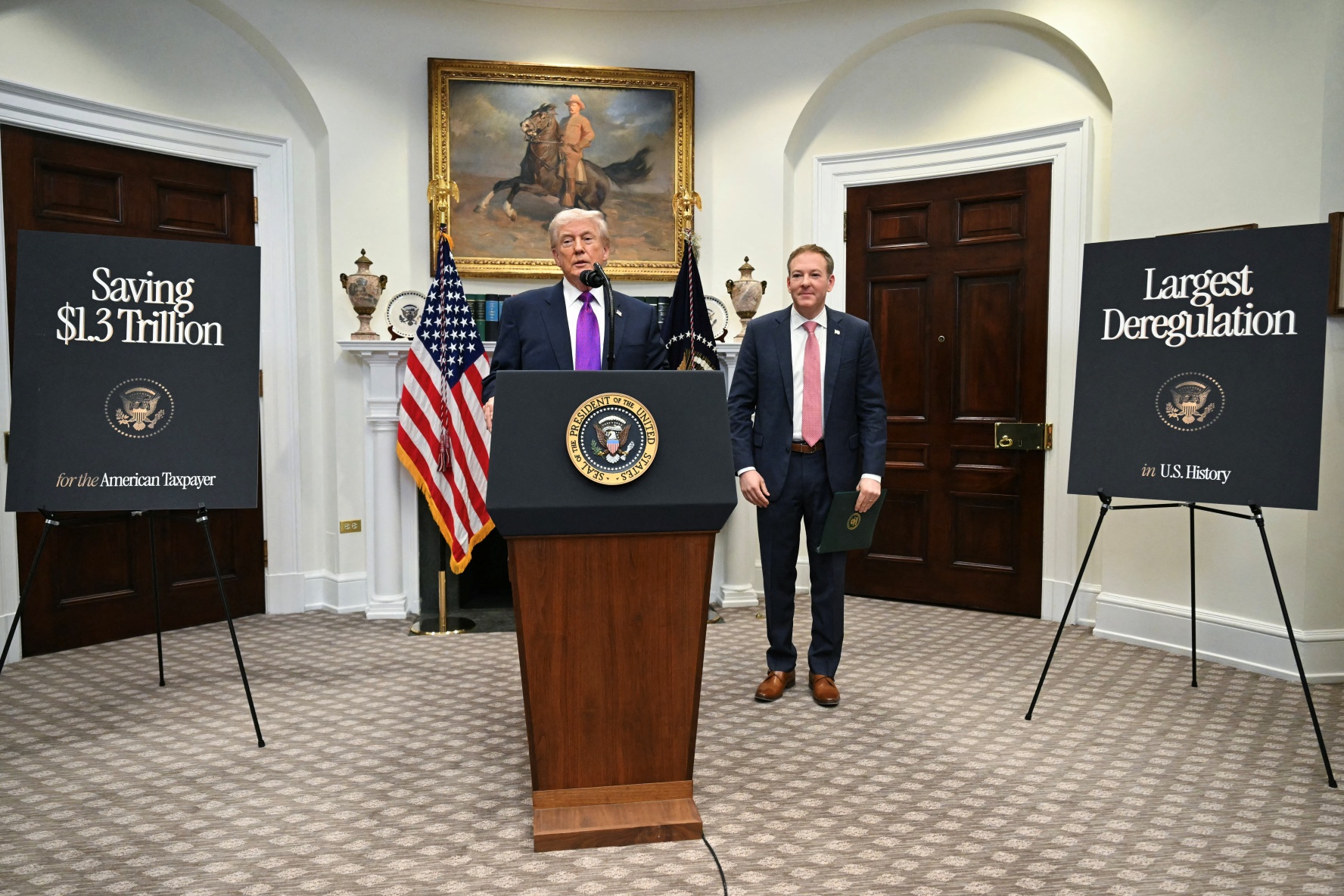
The current administration has initiated a significant restructuring of the federal government’s role in education, aiming to return primary control to the state level. This has involved a series of actions that weaken the institutional capacity of the U.S. Department of Education.
- Issuance of executive orders to dismantle the department and cease funding for programs promoting diversity, equity, and inclusion (DEI).
- A substantial reduction of the Department of Education’s workforce, impacting programs that support low-income and special-needs students.
- Significant budget cuts to the Office for Civil Rights, diminishing the federal capacity to enforce non-discriminatory laws in education, a key component of SDG 16.B.
- Reduced funding for the Institute of Education Sciences, which curtails data collection and research essential for evidence-based policymaking and monitoring educational outcomes.
These actions challenge the principles of SDG 16, which calls for effective, accountable, and transparent institutions. The reduction in federal oversight and civil rights enforcement weakens the institutional framework designed to protect vulnerable students and ensure equitable educational access.
Expansion of School Choice and Alignment with SDG 4 and SDG 10
Promotion of Federally Funded Private Schooling
While reducing its regulatory and support functions, the administration has expanded its role in promoting school choice through federally funded tax credit scholarship programs. The “One Big Beautiful Bill” (OBBB) established the first federal program of this kind, allowing individuals to receive tax credits for donations to Scholarship-Granting Organizations (SGOs), which then fund private and homeschool education.
Challenges to SDG 4 (Quality Education)
The policy of redirecting public funds to private institutions presents several challenges to achieving SDG 4, which aims to ensure inclusive and equitable quality education for all.
- Accountability for Quality: Recipient private and religious schools are often not subject to the same accountability standards as public schools, including requirements for teacher certification, administration of statewide assessments, or adherence to state curricular guidelines.
- Erosion of Public School Resources: The diversion of an estimated $26 billion in federal revenue between 2026 and 2035 could diminish resources available to the public school system, which serves the vast majority of students.
- Access for Vulnerable Students: The dismantling of federal programs supporting students with disabilities, English-language learners, and those from low-income families directly conflicts with SDG Target 4.5, which seeks to ensure equal access for the vulnerable.
Implications for SDG 10 (Reduced Inequalities)
The expansion of school choice via tax credits raises significant concerns regarding its potential to exacerbate societal divisions, in direct opposition to SDG 10.
- Potential for Discrimination: While private schools receiving these funds cannot discriminate based on race, they can legally deny admission based on other characteristics such as religion, gender, and sexual orientation, undermining SDG Target 10.3 to ensure equal opportunity.
- Increased Socioeconomic Disparity: Scholarships frequently do not cover the full cost of private tuition, creating a system that benefits wealthier families who can afford the remaining balance. Data from existing state programs indicates that a high percentage of voucher recipients were already attending private schools, suggesting the funds do not primarily serve to move students out of underperforming public schools but rather to subsidize existing private school attendees.
- Regressive Financial Mechanisms: The tax credit structure has been identified as a potential tax shelter for wealthy individuals and corporations, further contributing to wealth inequality rather than reducing it.
Conclusion: An Assessment of Policy Alignment with the 2030 Agenda
The current U.S. education policy direction presents a significant divergence from the principles enshrined in the Sustainable Development Goals. The strategy of dismantling federal oversight while promoting the privatization of education through tax incentives risks undermining the foundational goal of a universally accessible, high-quality public education system. Rather than strengthening institutions and ensuring equitable outcomes, these policies may lead to reduced accountability, increased discrimination, and a widening of the socioeconomic gap, presenting substantial obstacles to the achievement of SDG 4, SDG 10, and SDG 16.
Analysis of Sustainable Development Goals in the Article
1. Which SDGs are addressed or connected to the issues highlighted in the article?
- SDG 4: Quality Education: This is the central theme of the article. It directly discusses the state of public education, access to quality schooling, equity for all students, and the funding and infrastructure of educational institutions. The article’s main argument revolves around the potential negative impact of the administration’s policies on ensuring inclusive and equitable quality education.
- SDG 10: Reduced Inequalities: The article repeatedly emphasizes how the proposed educational policies could exacerbate inequalities. It highlights concerns about discrimination against vulnerable groups and the widening gap between wealthy and poor families in terms of educational opportunities. The text argues that shifting funds to private schools “risks worsening educational opportunities for rural families and the poor.”
- SDG 16: Peace, Justice and Strong Institutions: The article addresses this goal by discussing the dismantling of a key public institution, the Department of Education, and the weakening of its oversight functions, particularly the Office for Civil Rights. It raises critical questions about accountability, transparency, and the rule of law in the administration of education funding and the enforcement of anti-discrimination laws.
2. What specific targets under those SDGs can be identified based on the article’s content?
-
SDG 4: Quality Education
- Target 4.1: By 2030, ensure that all girls and boys complete free, equitable and quality primary and secondary education. The article’s core concern is that the new policies threaten the system of “free, high-quality public education for all students” by redirecting funds and weakening public schools, which could compromise the quality and equity of education, especially for “poor and middle-income families.”
- Target 4.5: By 2030, eliminate gender disparities in education and ensure equal access to all levels of education for the vulnerable, including persons with disabilities and children in vulnerable situations. The article directly addresses this by noting that while private schools receiving public funds cannot discriminate based on race, they “can legally do so based on other characteristics, such as religion, gender, sexual orientation, class, and income.” It also highlights cuts to programs supporting “low-income, special-needs, and vulnerable students.”
- Target 4.a: Build and upgrade education facilities and provide safe, inclusive and effective learning environments for all. The article concludes by stating that the administration’s plan fails to ensure “every child has access to high-quality teachers, fully resourced and safe schools… and supportive learning environments for all students,” which is the essence of this target.
-
SDG 10: Reduced Inequalities
- Target 10.2: By 2030, empower and promote the social, economic and political inclusion of all, irrespective of disability, race, economic or other status. The article argues that the policies will lead to exclusion, citing how private schools can discriminate against students with disabilities and those from different income levels, sexual orientations, or religions, thereby undermining the principle of inclusion for all.
- Target 10.3: Ensure equal opportunity and reduce inequalities of outcome, including by eliminating discriminatory policies and practices. The article highlights a failure to meet this target by explaining that the new system lacks protections against discrimination and that the “dismantling of the Office for Civil Rights” weakens the government’s ability to identify and rectify illegal discrimination.
- Target 10.4: Adopt policies, especially fiscal policies, and progressively achieve greater equality. The article critiques the proposed fiscal policy (tax credits for donations to SGOs), arguing it does the opposite of achieving greater equality. It states the policy could “create what some experts characterize as a tax shelter for the wealthy” and that “tax-credit scholarship programs will widen the gap between the rich and the poor.”
-
SDG 16: Peace, Justice and Strong Institutions
- Target 16.6: Develop effective, accountable and transparent institutions at all levels. The article directly criticizes the proposed school choice programs for their lack of “robust transparency and accountability measures when it comes to both how money is spent and the quality of the educational programs.” The dismantling of the Department of Education is presented as a move that weakens an effective and accountable institution.
- Target 16.b: Promote and enforce non-discriminatory laws and policies for sustainable development. The article implies a regression on this target by describing the “deep cuts to the department’s Office for Civil Rights,” the primary body responsible for enforcing civil rights and non-discrimination laws in education. This action directly undermines the enforcement of such policies.
3. Are there any indicators mentioned or implied in the article that can be used to measure progress towards the identified targets?
-
Indicators for SDG 4
- Federal funding for vulnerable student groups: The article mentions the attempted withholding of “$6 billion of congressionally appropriated funds for teacher training, migrant education, community learning centers, and supports for English-language learners.” The level of federal funding allocated to programs for low-income, disabled, and other vulnerable students serves as a direct indicator of support for equitable access (Target 4.5).
- Proportion of teachers with required qualifications: The article notes that “private school teachers are often not required to hold teaching certifications.” The percentage of teachers with state-mandated certifications in schools receiving public funds is an implied indicator for measuring educational quality (relevant to Target 4.1).
- Participation rate in voucher/scholarship programs by prior school type: The article provides a specific statistic from Arkansas: “Ninety-five percent of voucher recipients were not in public school the year before they received the voucher.” This data point serves as an indicator of whether such programs are providing new opportunities for public school students or subsidizing existing private school attendees, which measures progress toward equity (Target 4.5).
-
Indicators for SDG 10
- Fiscal impact of tax credit policies: The article quantifies the financial scale of the proposed policies, citing an estimated “$26 billion federal revenue shortfall between 2026 and 2035” and a potential “$10 billion in its first year” for the ECCA. These figures can be used as indicators to measure the magnitude of fiscal policies that, according to the article, increase inequality (Target 10.4).
- Existence of non-discrimination protections in schools receiving public funds: The article states that private schools can legally discriminate based on “religion, gender, sexual orientation, class, and income.” Whether schools receiving public funds via scholarships are required to adhere to comprehensive non-discrimination policies is a clear indicator for measuring equal opportunity (Target 10.3).
-
Indicators for SDG 16
- Staffing and funding levels of oversight bodies: The article mentions that the administration “laid off more than half of the Department of Education’s workforce” and made “deep cuts to the department’s Office for Civil Rights.” The budget and number of employees in these institutions are direct indicators of their capacity to provide oversight and enforce laws, which is crucial for accountability (Targets 16.6 and 16.b).
- Existence of reporting requirements for recipients of public funds: The article criticizes the lack of requirements for private schools to “report on how it is spent or how students who receive scholarships perform.” The presence or absence of mandatory financial and academic performance reporting for SGOs and private schools is a key indicator of transparency and accountability (Target 16.6).
4. Summary Table of SDGs, Targets, and Indicators
| SDGs | Targets | Indicators Identified in the Article |
|---|---|---|
| SDG 4: Quality Education |
4.1: Ensure free, equitable, and quality primary and secondary education.
4.5: Ensure equal access for the vulnerable, including persons with disabilities. 4.a: Provide safe, inclusive, and effective learning environments. |
– Amount of federal funding for programs supporting low-income students, students with disabilities, and English-language learners. – Percentage of teachers with required certifications in schools receiving public funds. – Percentage of scholarship recipients who were previously enrolled in public schools. |
| SDG 10: Reduced Inequalities |
10.2: Promote social, economic, and political inclusion of all.
10.3: Ensure equal opportunity and eliminate discriminatory policies. 10.4: Adopt fiscal policies to achieve greater equality. |
– Total value of federal revenue loss due to tax credit scholarship programs (e.g., “$26 billion federal revenue shortfall”). – Existence of comprehensive non-discrimination policies (covering religion, gender, sexual orientation, etc.) as a condition for schools to receive public funds. – Income eligibility limits for scholarship programs (e.g., “families make less than 300 percent of the median income”). |
| SDG 16: Peace, Justice and Strong Institutions |
16.6: Develop effective, accountable, and transparent institutions.
16.b: Promote and enforce non-discriminatory laws and policies. |
– Staffing levels and budget for the Department of Education and its Office for Civil Rights (e.g., “laid off more than half of the… workforce”). – Mandatory requirements for private schools and SGOs to report on financial spending and student academic outcomes. – Number of compliance audits conducted on Scholarship Granting Organizations (SGOs). |
Source: thebulwark.com
What is Your Reaction?
 Like
0
Like
0
 Dislike
0
Dislike
0
 Love
0
Love
0
 Funny
0
Funny
0
 Angry
0
Angry
0
 Sad
0
Sad
0
 Wow
0
Wow
0