Thousands Urged To Stay Inside In Oregon – Newsweek

Report on Air Quality Degradation in Oregon and its Impact on Sustainable Development Goals
1.0 Executive Summary
This report details an air quality event in Oregon where thousands of residents were exposed to unhealthy levels of fine particle (PM2.5) pollution. The incident, recorded in Deschutes and Grant counties, directly contravenes the objectives of several United Nations Sustainable Development Goals (SDGs), most notably SDG 3 (Good Health and Well-being) and SDG 11 (Sustainable Cities and Communities). The Air Quality Index (AQI) reached “unhealthy” levels, posing significant health risks and highlighting the urgent need for measures that align with global sustainability targets.
2.0 Incident Analysis and Health Implications (SDG 3: Good Health and Well-being)
On Tuesday, monitoring systems reported an AQI of 160 in the areas around La Pine and John Day. This level of PM2.5 pollution presents a direct threat to human health, undermining the core principle of SDG 3, which aims to ensure healthy lives and promote well-being for all at all ages.
2.1 Health Risks for the General and Vulnerable Populations
Exposure to such poor air quality disproportionately affects vulnerable groups, including children, the elderly, and individuals with pre-existing heart or lung conditions. This challenge to public health is a setback for SDG Target 3.9, which seeks to substantially reduce the number of deaths and illnesses from hazardous air pollution.
The Environmental Protection Agency (EPA) has linked PM2.5 exposure to severe health problems, including:
- Premature death in people with heart or lung disease
- Nonfatal heart attacks and irregular heartbeat
- Aggravated asthma and decreased lung function
- Increased respiratory symptoms such as coughing or difficulty breathing
2.2 Public Health Recommendations
In response, official bodies have issued advisories to mitigate health impacts, aligning with the preventative measures encouraged by SDG 3.
- For Sensitive Groups (people with heart or lung disease, older adults, children): Avoid strenuous outdoor activities, keep activities short, and consider moving them indoors.
- For the General Public: Reduce the duration and intensity of outdoor activities and take more frequent breaks.
3.0 Air Quality Monitoring and its Role in Sustainable Communities (SDG 11: Sustainable Cities and Communities)
The monitoring and reporting of air quality by agencies like AirNow are critical functions for achieving SDG 11, particularly Target 11.6, which aims to reduce the adverse per capita environmental impact of cities, including by paying special attention to air quality.
3.1 The Air Quality Index (AQI) Framework
The AQI provides a standardized system for communicating public health risks associated with air pollution levels. The framework is categorized as follows:
- 0-50 (Green): Good
- 51-100 (Yellow): Moderate
- 101-150 (Orange): Unhealthy for Sensitive Groups
- 151-200 (Red): Unhealthy
- 201-300 (Purple): Very Unhealthy
- 301+ (Maroon): Hazardous
3.2 Sources of Pollution and Urban Sustainability
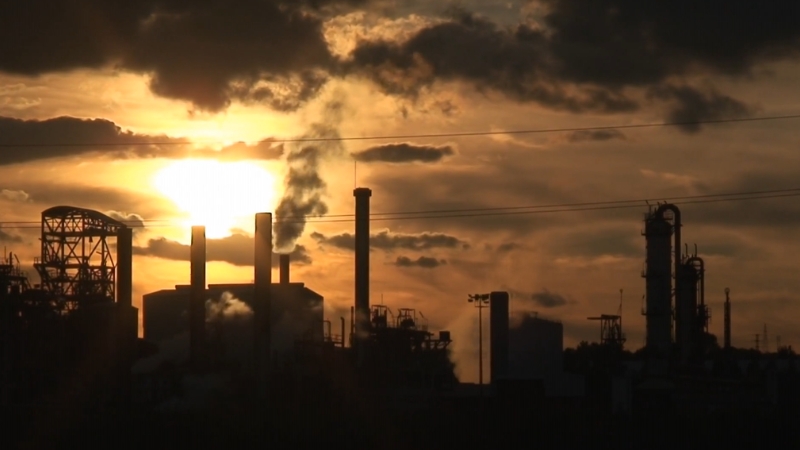
PM2.5 particles originate from sources such as power plants, vehicle emissions, construction sites, and wildfires. These sources are directly linked to urban and industrial activities. Addressing this pollution is fundamental to creating the safe, resilient, and sustainable communities envisioned in SDG 11.
4.0 Conclusion and Forward Outlook
The air quality event in Oregon underscores the interconnectedness of environmental health and sustainable development. Continuous monitoring and public advisories are essential short-term responses. However, long-term progress toward achieving SDG 3 and SDG 11 requires a concerted effort to address the root causes of air pollution. This includes transitioning to cleaner energy, promoting sustainable transportation, and implementing better land management practices to reduce the risk of events like wildfires, thereby advancing the broader 2030 Agenda for Sustainable Development.
Analysis of Sustainable Development Goals in the Article
1. Which SDGs are addressed or connected to the issues highlighted in the article?
The article on air pollution in Oregon primarily addresses two Sustainable Development Goals:
- SDG 3: Good Health and Well-being: The article extensively discusses the negative health impacts of air pollution on the population. It details how exposure to poor air quality can lead to various health issues, from minor irritations to severe conditions like heart attacks and premature death. It also highlights the disproportionate effect on vulnerable groups such as children, the elderly, and individuals with pre-existing heart or lung diseases.
- SDG 11: Sustainable Cities and Communities: The article focuses on the environmental quality within specific communities, namely La Pine in Deschutes County and John Day in Grant County. The core issue is the level of air pollution in these populated areas, which directly relates to creating safe, resilient, and sustainable living environments for residents.
2. What specific targets under those SDGs can be identified based on the article’s content?
Based on the article’s focus, the following specific SDG targets can be identified:
- Target 3.9: “By 2030, substantially reduce the number of deaths and illnesses from hazardous chemicals and air, water and soil pollution and contamination.” The article directly supports this target by highlighting the health risks associated with air pollution. The EPA’s warning, cited in the text, explicitly links “particle pollution exposure to a variety of problems, including: premature death in people with heart or lung disease, nonfatal heart attacks, aggravated asthma, [and] decreased lung function.”
- Target 11.6: “By 2030, reduce the adverse per capita environmental impact of cities, including by paying special attention to air quality…” The article’s entire premise is centered on monitoring and reporting air quality in specific counties. It discusses the “unhealthy levels of air pollution” and uses the Air Quality Index (AQI) to measure the environmental impact on the people living in those areas.
3. Are there any indicators mentioned or implied in the article that can be used to measure progress towards the identified targets?
Yes, the article mentions and implies specific indicators used to measure progress towards these targets:
- Indicator for Target 3.9 (Implied): The indicator for this target is 3.9.1: Mortality rate attributed to household and ambient air pollution. While the article does not provide mortality statistics, it directly implies this measurement by quoting the EPA’s warning that particle pollution is linked to “premature death in people with heart or lung disease.” This establishes a direct connection between the pollutant (PM2.5) and mortality, which is the basis of the indicator.
- Indicator for Target 11.6 (Mentioned): The indicator for this target is 11.6.2: Annual mean levels of fine particulate matter (e.g. PM2.5 and PM10) in cities (population weighted). The article explicitly and repeatedly refers to the measurement of “fine particle (PM2.5) pollution.” It states, “The live map recorded an AQI level of 160 in both Deschutes and Grant counties on Tuesday morning, meaning that levels of PM2.5 had reached an ‘unhealthy’ level.” The AirNow map and the AQI scale described are tools used to monitor and report on this exact indicator.
4. Summary Table of SDGs, Targets, and Indicators
| SDGs | Targets | Indicators |
|---|---|---|
| SDG 3: Good Health and Well-being | 3.9: By 2030, substantially reduce the number of deaths and illnesses from hazardous chemicals and air, water and soil pollution and contamination. | 3.9.1 (Implied): Mortality rate attributed to household and ambient air pollution. The article links PM2.5 exposure to “premature death.” |
| SDG 11: Sustainable Cities and Communities | 11.6: By 2030, reduce the adverse per capita environmental impact of cities, including by paying special attention to air quality… | 11.6.2 (Mentioned): Annual mean levels of fine particulate matter (e.g. PM2.5) in cities. The article is centered on measuring and reporting PM2.5 levels using the Air Quality Index (AQI). |
Source: newsweek.com
What is Your Reaction?
 Like
0
Like
0
 Dislike
0
Dislike
0
 Love
0
Love
0
 Funny
0
Funny
0
 Angry
0
Angry
0
 Sad
0
Sad
0
 Wow
0
Wow
0