
















Today in Paris, I met with the newly elected UNESCO Director-General Mr. Khaled El-Enany. I appreciate him reaffirming that Ukraine will remain a priority for UNESCO. We discussed joint efforts to advance our cooperation and enhance UNESCO’s assistance – x.com
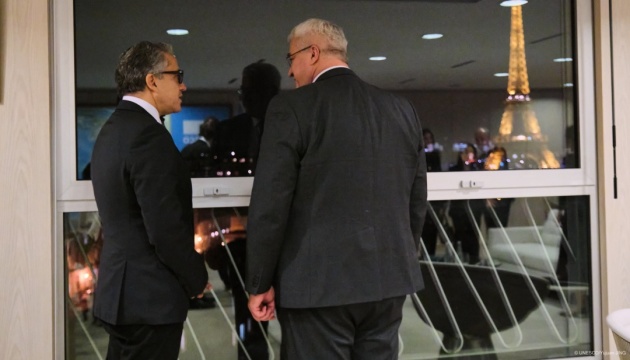
Report on Ukraine-UNESCO High-Level Meeting
Introduction
A meeting was held in France between the Minister of Foreign Affairs of Ukraine, Andriy Sybiha, and the newly elected Director-General of UNESCO, Khaled El-Enany. The discussion centered on strengthening cooperation to address the consequences of the Russian aggression against Ukraine, with a significant focus on aligning efforts with the United Nations Sustainable Development Goals (SDGs).
Key Priorities and Outcomes
The dialogue established several key priorities for the partnership between Ukraine and UNESCO, reflecting Ukraine’s new role as a member of the UNESCO Executive Board for the 2025–2029 term.
- Confirmation of Priority Status: The Director-General reaffirmed that Ukraine remains a priority for UNESCO, ensuring dedicated support for the nation.
- Strategic Cooperation: Both parties discussed joint efforts to enhance UNESCO’s assistance in mitigating the severe impacts of the conflict on Ukraine’s cultural and educational sectors.
- Executive Board Agenda: The meeting outlined Ukraine’s primary objectives as a member of the Executive Council, focusing on leveraging the platform to advance initiatives related to protection and reconstruction.
- Official Invitation: An official invitation was extended to the UNESCO Director-General to visit Ukraine to witness the situation firsthand and strengthen collaborative efforts on the ground.
Alignment with Sustainable Development Goals (SDGs)
The cooperation discussed directly contributes to the achievement of several critical SDGs:
- SDG 16: Peace, Justice and Strong Institutions: The partnership aims to protect cultural and educational institutions, which are fundamental to peace and societal resilience. By addressing the consequences of aggression, UNESCO and Ukraine are working to restore justice and reinforce the institutional foundations for a peaceful future.
- SDG 11: Sustainable Cities and Communities: A core focus of the collaboration is the protection and safeguarding of Ukraine’s cultural heritage, directly aligning with SDG Target 11.4. Rebuilding cultural sites is essential for the recovery and sustainable development of Ukrainian communities.
- SDG 4: Quality Education: UNESCO’s assistance is vital for overcoming the destruction of educational infrastructure. The joint efforts support the goal of ensuring inclusive and equitable quality education by working to restore access to learning for all Ukrainians affected by the conflict.
- SDG 17: Partnerships for the Goals: This high-level meeting exemplifies the spirit of SDG 17, fostering a robust partnership between a national government and an international organization to mobilize resources and expertise for sustainable development in a crisis context.
Analysis of Sustainable Development Goals in the Article
1. Which SDGs are addressed or connected to the issues highlighted in the article?
-
SDG 16: Peace, Justice and Strong Institutions
The article’s central theme is overcoming the “consequences of Russian aggression.” This directly relates to SDG 16, which aims to promote peaceful and inclusive societies, provide access to justice for all, and build effective, accountable, and inclusive institutions. The cooperation between Ukraine and UNESCO is an effort to strengthen institutional capacity to deal with the aftermath of conflict.
-
SDG 11: Sustainable Cities and Communities
Given UNESCO’s mandate to protect cultural heritage, the discussion about providing “assistance to Ukraine in overcoming the consequences of Russian aggression” implicitly addresses the protection and safeguarding of cultural sites and heritage, which is a key component of SDG 11. The conflict has put Ukraine’s cultural heritage at significant risk, making this goal highly relevant.
-
SDG 17: Partnerships for the Goals
The article is entirely about a partnership between a national government (Ukraine) and a global intergovernmental organization (UNESCO). The meeting between the Foreign Minister and the Director-General, discussions on “joint efforts,” and Ukraine’s election to the UNESCO Executive Board are all concrete examples of strengthening global partnerships to achieve sustainable development, particularly in a country affected by conflict.
2. What specific targets under those SDGs can be identified based on the article’s content?
-
Target 16.a: Strengthen relevant national institutions, including through international cooperation, for building capacity at all levels… to prevent violence and combat terrorism and crime.
The article highlights the “cooperation and strengthening of UNESCO’s assistance to Ukraine.” This is a direct example of international cooperation aimed at reinforcing Ukraine’s institutional capacity to manage and recover from the consequences of the conflict.
-
Target 11.4: Strengthen efforts to protect and safeguard the world’s cultural and natural heritage.
While not explicitly detailed, UNESCO’s assistance in the context of “overcoming the consequences of Russian aggression” would inherently involve efforts to protect, document, and restore Ukraine’s cultural heritage, which has been damaged and threatened by the conflict. This aligns perfectly with the objective of Target 11.4.
-
Target 17.16: Enhance the global partnership for sustainable development, complemented by multi-stakeholder partnerships that mobilize and share knowledge, expertise, technology and financial resources.
The high-level meeting between Ukrainian and UNESCO officials to discuss “joint efforts” and “cooperation” is a clear manifestation of this target. It represents the mobilization of an international partnership to provide support and expertise to a member state in crisis.
3. Are there any indicators mentioned or implied in the article that can be used to measure progress towards the identified targets?
-
Implied Indicator for Target 16.a: The existence and strengthening of cooperative agreements and joint programs.
The article mentions that the parties “discussed joint efforts to develop our cooperation and strengthen UNESCO’s assistance.” The establishment and implementation of these joint efforts serve as a qualitative indicator of progress in strengthening institutions through international partnership.
-
Implied Indicator for Target 11.4: The provision of international assistance for cultural heritage.
The commitment by UNESCO that “Ukraine will remain a priority” and the discussion of “strengthening assistance” implies the allocation of resources, expertise, and support for safeguarding cultural heritage. The amount and nature of this assistance would be a key indicator.
-
Implied Indicator for Target 17.16: High-level political engagement and institutional participation.
The article provides two clear indicators: the meeting between the Minister of Foreign Affairs and the UNESCO Director-General, and the fact that “Ukraine was elected to the UNESCO Executive Board for 2025–2029.” These events demonstrate a high level of engagement and an enhanced role within the global partnership.
4. Summary Table of SDGs, Targets, and Indicators
| SDGs | Targets | Indicators |
|---|---|---|
| SDG 16: Peace, Justice and Strong Institutions | 16.a: Strengthen relevant national institutions, including through international cooperation, for building capacity. | The development of “joint efforts” and “cooperation” between Ukraine and UNESCO to overcome the consequences of aggression. |
| SDG 11: Sustainable Cities and Communities | 11.4: Strengthen efforts to protect and safeguard the world’s cultural and natural heritage. | The provision of “assistance” from UNESCO, which, given its mandate, implies support for protecting cultural heritage affected by the conflict. |
| SDG 17: Partnerships for the Goals | 17.16: Enhance the global partnership for sustainable development. | The high-level meeting between officials and Ukraine’s election to the UNESCO Executive Board for 2025-2029. |
Source: ukrinform.ua
What is Your Reaction?
 Like
0
Like
0
 Dislike
0
Dislike
0
 Love
0
Love
0
 Funny
0
Funny
0
 Angry
0
Angry
0
 Sad
0
Sad
0
 Wow
0
Wow
0