













































Transforming Food Waste into Resources with Black Soldier Fly – Bioengineer.org
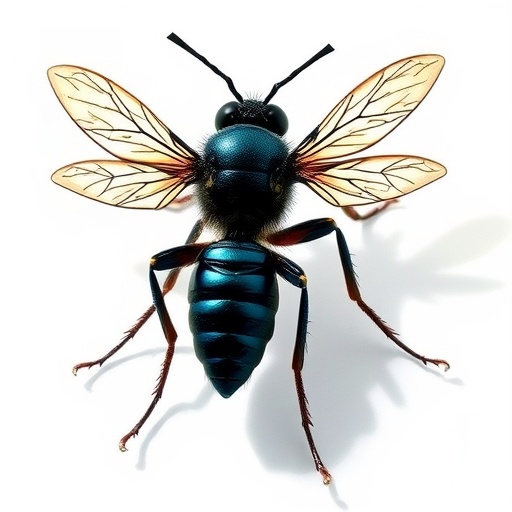
Report on the Valorization of Food Production Side Streams Using Black Soldier Fly Larvae
A Biocircular Strategy Aligned with Sustainable Development Goals
A study conducted by Shen et al. presents a biocircular strategy for valorizing food production side streams through the use of Black Soldier Fly (BSF) larvae. This innovative approach directly addresses global challenges outlined in the United Nations’ Sustainable Development Goals (SDGs) by transforming organic waste into valuable bioresources, thereby enhancing food security, promoting sustainable production, and mitigating environmental degradation.
Contribution to the 2030 Agenda for Sustainable Development
SDG 2: Zero Hunger
The research provides a direct pathway to achieving targets within SDG 2 by improving the sustainability of food production systems.
- Enhanced Animal Nutrition: The biomass produced by BSF larvae is rich in protein, essential amino acids, and fatty acids, serving as a high-quality alternative feed for aquaculture and livestock.
- Sustainable Agriculture: By replacing conventional feed sources like fishmeal and soybean, this method reduces the environmental footprint of livestock production, promoting more sustainable agricultural practices.
- Increased Food Security: The strategy bolsters the resilience of the food supply chain by creating a reliable, locally sourced protein for animal feed.
SDG 12: Responsible Consumption and Production
The core of the study is centered on the principles of a circular economy, directly supporting the objectives of SDG 12, particularly Target 12.3, which aims to halve per capita global food waste.
- Waste Valorization: The BSF larvae efficiently convert a wide variety of organic food waste into valuable biomass, embodying the principle of turning waste into a resource.
- Resource Recovery: This bioconversion process minimizes waste disposal in landfills, reducing associated environmental impacts such as methane emissions.
- Circular Economy Model: The research establishes a practical biocircular loop within the agro-industry, where side streams are reintegrated into the production cycle.
SDG 14 (Life Below Water) and SDG 15 (Life on Land)
The adoption of BSF-derived feed has significant positive implications for marine and terrestrial ecosystems.
- Protection of Marine Ecosystems: Reducing the demand for fishmeal helps alleviate pressure on wild fish stocks, contributing to the conservation of marine biodiversity.
- Preservation of Terrestrial Ecosystems: Decreasing reliance on soybean cultivation can help mitigate deforestation and land degradation associated with large-scale agriculture.
Technical and Economic Analysis
Implementation and Scalability
The study confirms the viability of integrating BSF larvae systems into diverse agricultural settings.
- Operational Feasibility: Research into optimal conditions for larval growth and bioconversion rates demonstrates that large-scale application is feasible in both rural and urban environments.
- Safety and Quality Assurance: The report acknowledges the need for comprehensive monitoring of potential contaminants and heavy metals to ensure the safety of the final biomass for animal consumption, aligning with food safety standards.
- Economic Opportunities: The production of BSF larvae can stimulate local economies by creating new job opportunities in waste management and agriculture, contributing to SDG 8 (Decent Work and Economic Growth).
Conclusion and Recommendations for Stakeholders
A Call for Collaborative Action (SDG 17: Partnerships for the Goals)
The research by Shen et al. serves as a roadmap for advancing sustainable food systems. To realize the full potential of this technology, a multi-stakeholder approach is imperative.
- Policymakers: Should develop regulatory frameworks and incentives to support the adoption of BSF technology and facilitate the use of BSF-derived products in animal feed.
- Industry Leaders: Agro-industries are encouraged to invest in BSF facilities to manage waste streams effectively and create new, sustainable revenue sources.
- Research Community: Continued interdisciplinary research is needed to optimize BSF cultivation and expand its application to different types of organic waste.
By harnessing this biocircular approach, society can make significant progress toward a sustainable future where food waste is systematically transformed into a resource, supporting ecological integrity and global food security in line with the Sustainable Development Goals.
Analysis of Sustainable Development Goals in the Article
1. Which SDGs are addressed or connected to the issues highlighted in the article?
The article on using Black Soldier Fly (BSF) larvae to valorize food production side streams connects to several Sustainable Development Goals (SDGs). The analysis below details the relevant SDGs and the reasons for their connection based on the article’s content.
-
SDG 2: Zero Hunger
This goal is addressed through the article’s focus on enhancing food security. The research proposes a method to create “high-quality feed for aquaculture, poultry, and other livestock” from waste. By producing a “nutrient-dense resource” rich in protein, the BSF larvae technology helps bolster sustainable food production systems and improves the nutritional value of animal feed, which is crucial for a stable food supply.
-
SDG 8: Decent Work and Economic Growth
The article connects to this goal by highlighting the economic benefits of the BSF larvae system. It states that the production “can create job opportunities within communities, contributing to economic development in rural areas.” This promotes sustainable economic growth and productivity by turning waste into a valuable economic resource.
-
SDG 11: Sustainable Cities and Communities
The research is relevant to this goal through its application in waste management. The article mentions the feasibility of large-scale applications in various contexts, including “urban waste management.” By providing a solution to process organic waste efficiently, this technology helps reduce the environmental impact of cities.
-
SDG 12: Responsible Consumption and Production
This is a central theme of the article. The entire study is based on creating a “biocircular strategy” to manage waste from food production. It directly addresses the problem that “Approximately one-third of food produced globally goes to waste” by proposing a method for resource recovery, recycling, and reuse, which are core principles of sustainable consumption and production patterns.
-
SDG 13: Climate Action
The article implicitly addresses climate action by proposing a solution to mitigate the environmental impact of food waste and conventional agriculture. By reducing reliance on “fishmeal and soybean, both of which have substantial environmental footprints,” the BSF technology helps lower greenhouse gas emissions associated with traditional feed production and deforestation. The focus is on mitigating environmental impact in the face of climate change.
-
SDG 15: Life on Land
This goal is connected through the reduction of pressure on land-based resources. The production of soybean for animal feed is a major driver of deforestation. By providing a sustainable alternative feed source, the BSF larvae technology helps reduce the need to convert forests and other ecosystems into agricultural land, thereby protecting biodiversity and terrestrial ecosystems.
2. What specific targets under those SDGs can be identified based on the article’s content?
Based on the issues discussed, several specific SDG targets can be identified:
-
SDG 2: Zero Hunger
- Target 2.4: By 2030, ensure sustainable food production systems and implement resilient agricultural practices. The article’s proposed “biocircular strategy” is a resilient agricultural practice that enhances productivity by transforming waste into a valuable resource, thus contributing to sustainable food production.
-
SDG 8: Decent Work and Economic Growth
- Target 8.4: Improve progressively, through 2030, global resource efficiency in consumption and production. The BSF larvae system directly improves resource efficiency by “valorizing food production side streams” and turning waste into high-value protein, aligning with the principles of a circular economy.
-
SDG 11: Sustainable Cities and Communities
- Target 11.6: By 2030, reduce the adverse per capita environmental impact of cities, including by paying special attention to… municipal and other waste management. The article explicitly notes the technology’s application in “urban waste management,” offering a method to sustainably manage organic waste generated in cities.
-
SDG 12: Responsible Consumption and Production
- Target 12.3: By 2030, halve per capita global food waste at the retail and consumer levels and reduce food losses along production and supply chains. The research directly tackles this target by focusing on utilizing “side streams from food production processes” and transforming food waste.
- Target 12.5: By 2030, substantially reduce waste generation through prevention, reduction, recycling and reuse. The core of the study is a recycling and reuse strategy, where BSF larvae “recycle waste materials” into valuable biomass, directly contributing to waste reduction.
3. Are there any indicators mentioned or implied in the article that can be used to measure progress towards the identified targets?
The article implies several indicators that can be used to measure progress towards the identified targets:
-
Indicator for Food Waste Reduction (Target 12.3)
The article states that “Approximately one-third of food produced globally goes to waste.” An implied indicator is the amount or percentage of food waste and production side streams successfully valorized or recycled through the BSF larvae system. Measuring the volume of waste diverted from landfills and converted into biomass would track progress.
-
Indicator for Sustainable Feed Production (Target 2.4)
The article highlights the “nutritional profile of the biomass produced by BSF larvae” and its role in reducing reliance on “fishmeal and soybean.” A relevant indicator would be the quantity of sustainable, protein-rich animal feed produced from BSF larvae. A secondary indicator could be the reduction in the volume of conventional feed sources (like soybean) used in the agricultural sector.
-
Indicator for Resource Efficiency (Target 12.5 & 8.4)
The research discusses the “efficiency in degrading organic matter” and “conversion rates” of the larvae. An implied indicator is the bioconversion rate of organic waste into high-value biomass. A higher conversion rate signifies greater resource efficiency in turning waste into a useful product.
-
Indicator for Safety and Quality (General)
The article raises concerns about “potential contaminants and heavy metals.” A crucial indicator for successful implementation would be the levels of contaminants in the final BSF-derived biomass, ensuring it meets food and feed safety standards for animal consumption.
-
Indicator for Economic Growth (SDG 8)
The text mentions that BSF production can “create job opportunities.” A direct indicator would be the number of new jobs created in the waste management and sustainable agriculture sectors related to BSF technology.
4. Create a table with three columns titled ‘SDGs, Targets and Indicators” to present the findings from analyzing the article.
| SDGs | Targets | Indicators (Implied from the Article) |
|---|---|---|
| SDG 2: Zero Hunger | Target 2.4: Ensure sustainable food production systems and implement resilient agricultural practices. | Quantity and nutritional quality of alternative animal feed produced; Reduction in the use of conventional feed sources (fishmeal, soybean). |
| SDG 8: Decent Work and Economic Growth | Target 8.4: Improve global resource efficiency in consumption and production. | Number of job opportunities created in rural and urban areas related to BSF farming and processing. |
| SDG 11: Sustainable Cities and Communities | Target 11.6: Reduce the adverse per capita environmental impact of cities, including waste management. | Volume of urban organic waste processed and recycled by BSF larvae systems. |
| SDG 12: Responsible Consumption and Production | Target 12.3: Halve per capita global food waste and reduce food losses. | Percentage of food production side streams and waste valorized instead of being discarded. |
| Target 12.5: Substantially reduce waste generation through recycling and reuse. | The bioconversion rate of organic waste into valuable biomass. | |
| SDG 13: Climate Action | (Implied) Contribute to climate change mitigation. | Reduction in environmental footprint associated with animal feed production. |
| SDG 15: Life on Land | (Implied) Halt deforestation. | Reduction in demand for land-intensive crops like soybean for animal feed. |
Source: bioengineer.org
What is Your Reaction?
 Like
0
Like
0
 Dislike
0
Dislike
0
 Love
0
Love
0
 Funny
0
Funny
0
 Angry
0
Angry
0
 Sad
0
Sad
0
 Wow
0
Wow
0