
















Ultrasonic Device Dramatically Speeds Harvesting of Water from the Air – Drinkable in Minutes Instead of Hours – Good News Network
Report on Ultrasonic Atmospheric Water Harvesting Technology and its Contribution to Sustainable Development Goals
1.0 Executive Summary
Engineers at the Massachusetts Institute of Technology (MIT) have developed a novel device that utilizes ultrasonic waves to extract water from atmospheric harvesting materials. This innovation significantly accelerates the water recovery process compared to conventional thermal methods. The technology presents a viable solution to water scarcity, directly contributing to several United Nations Sustainable Development Goals (SDGs), most notably SDG 6 (Clean Water and Sanitation) and SDG 7 (Affordable and Clean Energy).
2.0 Technological Overview
Atmospheric Water Harvesting (AWH) systems traditionally rely on sponge-like sorbent materials to absorb ambient humidity. The subsequent water extraction typically requires solar heat, a process that can take many hours. The new MIT device bypasses this limitation.
- Mechanism: The system employs an ultrasonic actuator that vibrates at a high frequency.
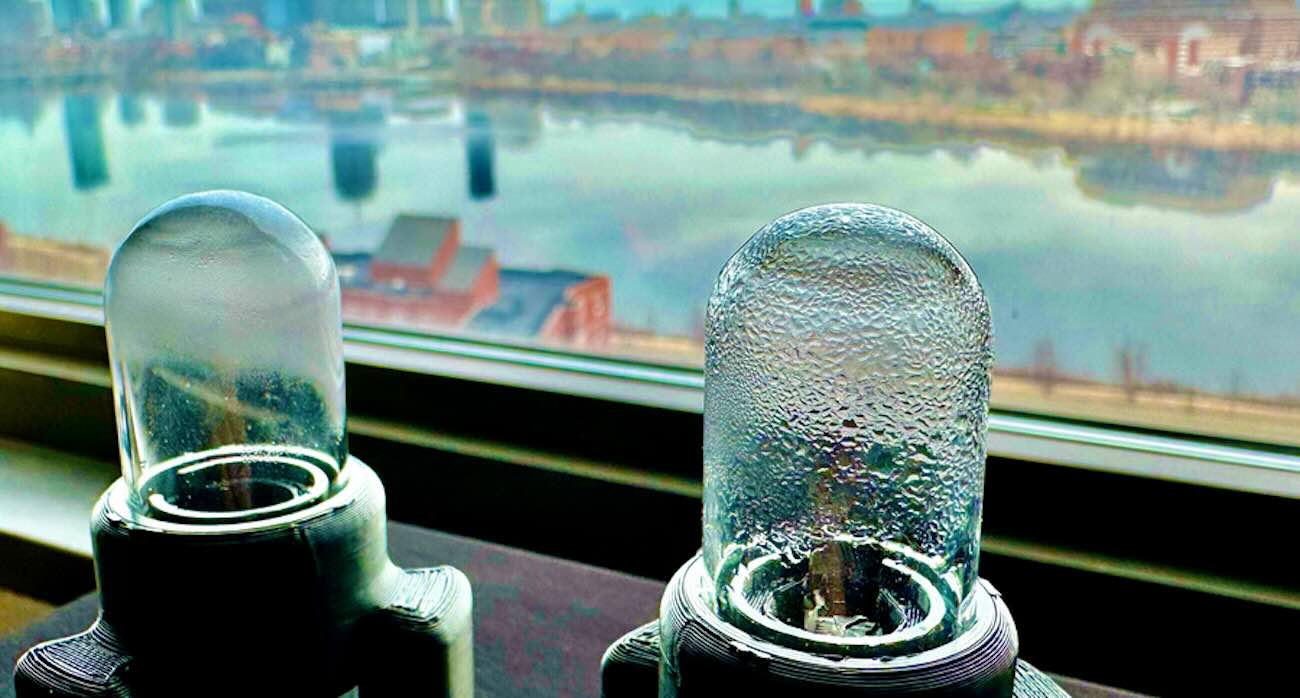
- Process: When a saturated sorbent material is placed on the device, the ultrasonic waves disrupt the bonds holding water molecules, shaking them out as droplets.
- Efficiency: This method recovers water in minutes, a dramatic improvement over the hours or days required for heat-based evaporation and condensation.
3.0 Performance Analysis and System Design
Empirical testing has demonstrated the superior efficiency of the ultrasonic approach. The device was tested on quarter-sized samples of a sorbent material saturated at various humidity levels.
- The device successfully extracted water and dried the samples within minutes across all test conditions.
- Calculations indicate the ultrasonic design is 45 times more efficient at water extraction than methods relying on solar heat.
- The system requires an external power source, which can be a small solar cell, aligning its operation with renewable energy principles.
- Future designs envision an automated system where a solar cell could also function as a sensor, detecting when the sorbent is saturated and activating the ultrasonic device to release the water.
4.0 Alignment with Sustainable Development Goals (SDGs)
This technological advancement provides a significant contribution to the global sustainability agenda by addressing key SDG targets.
- SDG 6: Clean Water and Sanitation: The primary impact is on ensuring the availability and sustainable management of water. The technology offers a decentralized method to produce clean drinking water from the atmosphere, which is critical for arid regions and communities lacking access to traditional water sources.
- SDG 7: Affordable and Clean Energy: By designing the device to be powered by small-scale solar technology, the innovation promotes the use of clean and affordable energy, reducing reliance on fossil fuels for water purification and transport.
- SDG 9: Industry, Innovation, and Infrastructure: The device is a prime example of scientific innovation applied to build resilient infrastructure. It has the potential to create new, sustainable water solutions that can be scaled for community or household use.
- SDG 13: Climate Action: By providing a localized water source, the technology can help communities adapt to the impacts of climate change, such as increased desertification and water stress, thereby strengthening resilience to climate-related hazards.
5.0 Conclusion and Future Implications
The ultrasonic water harvesting device represents a breakthrough in AWH technology. Its ability to rapidly cycle between water absorption and extraction throughout the day dramatically increases the potential daily yield of clean water. The envisioned integration with solar power and automated controls positions it as a practical, efficient, and sustainable solution to advance global water security and support the achievement of multiple Sustainable Development Goals.
Analysis of Sustainable Development Goals in the Article
1. Which SDGs are addressed or connected to the issues highlighted in the article?
- SDG 6: Clean Water and Sanitation: The primary focus of the article is a new technology for “atmospheric water harvesting” to produce “clean drinking water.” This directly addresses the global challenge of water scarcity, particularly in “desert regions,” which is a core component of SDG 6.
- SDG 9: Industry, Innovation, and Infrastructure: The article details a technological breakthrough by “MIT engineers.” It describes the development of a novel “ultrasonic device” based on scientific research, which aligns with SDG 9’s emphasis on fostering innovation and upgrading technological capabilities.
- SDG 7: Affordable and Clean Energy: The proposed device is designed to be highly efficient and can be “powered by a small solar cell.” This links the water solution to renewable energy sources, supporting the goal of increasing the share of clean energy and improving energy efficiency.
- SDG 13: Climate Action: Water scarcity is a significant consequence of climate change. By providing a method to secure water in arid environments, this technology serves as an adaptation strategy, helping communities build resilience to the impacts of climate change, which is a key aspect of SDG 13.
2. What specific targets under those SDGs can be identified based on the article’s content?
- Target 6.1: “By 2030, achieve universal and equitable access to safe and affordable drinking water for all.” The technology is presented as a potential solution to provide a “big source of water particularly for desert regions,” directly contributing to this target.
- Target 6.4: “By 2030, substantially increase water-use efficiency across all sectors and ensure sustainable withdrawals and supply of freshwater to address water scarcity.” The article highlights that the new method is “45 times more efficient” than previous designs and creates a new supply of freshwater from the atmosphere.
- Target 9.5: “Enhance scientific research, upgrade the technological capabilities of industrial sectors in all countries…encouraging innovation.” The entire article is a testament to this target, reporting on a new device developed by a research group at MIT and published in the journal Nature Communications.
- Target 7.2: “By 2030, increase substantially the share of renewable energy in the global energy mix.” The article envisions that the “device could be powered by a small solar cell,” integrating renewable energy into the water harvesting process.
- Target 13.1: “Strengthen resilience and adaptive capacity to climate-related hazards and natural disasters in all countries.” By offering a decentralized and reliable source of water in arid regions prone to drought, the technology enhances the adaptive capacity of communities to climate-related water stress.
3. Are there any indicators mentioned or implied in the article that can be used to measure progress towards the identified targets?
- Volume of water produced per day: The article explicitly states, “It’s all about how much water you can extract per day.” This is a direct quantitative indicator for measuring the success of water harvesting technologies in addressing water scarcity (relevant to Target 6.1).
- Rate of water extraction: The device’s ability to recover water in “minutes, versus the tens of minutes or hours required by thermal designs” is a key performance indicator. This speed allows for multiple cycles in a day, increasing the total yield and efficiency (relevant to Target 6.4).
- Efficiency improvement factor: The article quantifies the progress by stating the ultrasonic design is “45 times more efficient at extracting water from the same material” compared to sun-based methods. This serves as a clear indicator of technological advancement and resource-use efficiency (relevant to Targets 6.4 and 9.5).
- Integration with renewable energy: The fact that the system can be “powered by a small solar cell” is an indicator of its alignment with clean energy goals. The proportion of such devices powered by renewables could be a metric for progress (relevant to Target 7.2).
4. Summary Table of SDGs, Targets, and Indicators
| SDGs | Targets | Indicators |
|---|---|---|
| SDG 6: Clean Water and Sanitation | 6.1: Achieve universal and equitable access to safe and affordable drinking water. 6.4: Substantially increase water-use efficiency and ensure sustainable supplies of freshwater. |
– Volume of clean water produced per day. – Rate of water extraction (recovering water in minutes). |
| SDG 9: Industry, Innovation, and Infrastructure | 9.5: Enhance scientific research and upgrade technological capabilities. | – Development of new, highly efficient technologies (e.g., the ultrasonic device). – Efficiency improvement factor (45 times more efficient). |
| SDG 7: Affordable and Clean Energy | 7.2: Increase substantially the share of renewable energy. | – Potential for the device to be powered by a small solar cell. |
| SDG 13: Climate Action | 13.1: Strengthen resilience and adaptive capacity to climate-related hazards. | – Provision of a reliable water source in arid, climate-vulnerable regions. |
Source: goodnewsnetwork.org
What is Your Reaction?
 Like
0
Like
0
 Dislike
0
Dislike
0
 Love
0
Love
0
 Funny
0
Funny
0
 Angry
0
Angry
0
 Sad
0
Sad
0
 Wow
0
Wow
0