9 farm systems that improved the most in 2025 – MLB.com
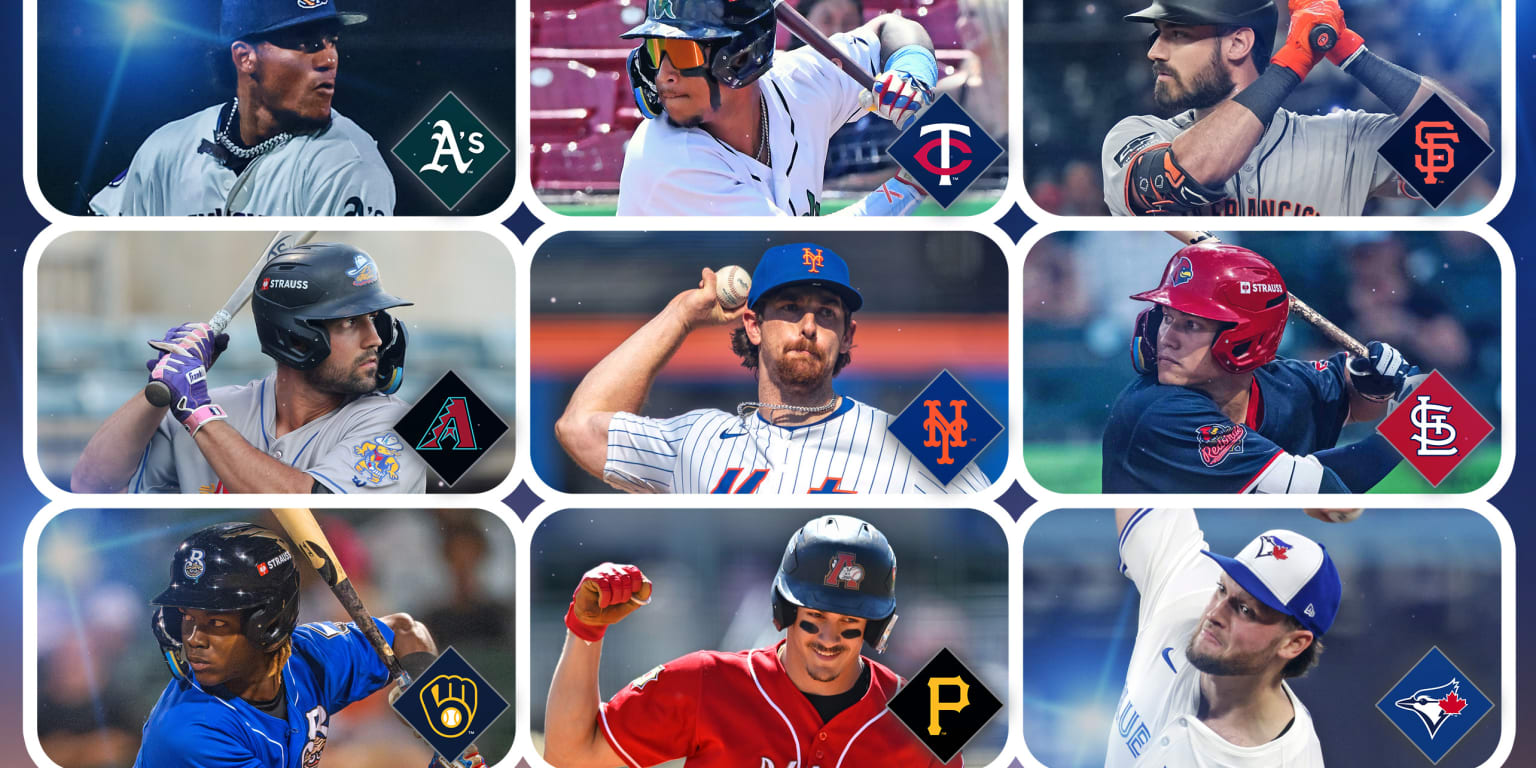
Minor League Baseball Farm Systems Breakout Report 2025
This report highlights the significant progress and development within various Minor League Baseball farm systems during the 2025 season. Emphasis is placed on how these advancements align with the Sustainable Development Goals (SDGs), particularly those related to quality education, decent work and economic growth, and reduced inequalities, by fostering talent development and career opportunities.
Overview
Throughout the 2025 season, numerous individual players exhibited remarkable growth, elevating their prospect status. When combined with strategic trades and draft acquisitions, entire farm systems demonstrated collective breakthroughs. Below is an analysis of nine farm systems that achieved the most substantial improvements, presented alphabetically.
-
Arizona Diamondbacks
Initially ranked in the bottom third of farm systems, the Diamondbacks improved to near or above average depth following an active Trade Deadline. Key pitching additions included Kohl Drake, Mitch Bratt, David Hagaman, and Ashton Izzi. Daniel Eagen’s breakout performance (153 strikeouts in 117 1/3 innings) strengthened the pitching staff. Ryan Waldschmidt emerged as the club’s top prospect (#66), showcasing impressive power and speed. Offensive highlights included Tommy Troy’s resurgence and the drafting of Kayson Cunningham, a potential plus hitter and runner.
- SDG Alignment: This development supports SDG 8 (Decent Work and Economic Growth) by creating career pathways and promoting talent growth within the sports industry.
- SDG 4 (Quality Education) is reflected in the training and skill development programs fostering player advancement.
-
Athletics
Despite losing top prospects Nick Kurtz and Jacob Wilson, the Athletics enhanced their system through significant trades. Acquisitions included top prospects Leo De Vries (#3 overall), Braden Nett (#4), Henry Baez (#8), and Eduardniel Núñez (#15). The organization also developed Gage Jump into a leading left-handed pitching prospect and added Jamie Arnold with the 11th overall pick. Wei-En Lin’s advancement to Double-A at age 19 further exemplified the system’s depth.
- SDG 10 (Reduced Inequalities) is addressed by providing opportunities for young athletes from diverse backgrounds to excel.
- SDG 4 (Quality Education) is supported through comprehensive player development and mentoring.
-
Milwaukee Brewers
The Brewers excelled in internal development, advancing prospects such as Jesús Made, who quickly rose to Single-A Carolina and became one of the top four prospects nationally. Luis Peña made a significant leap from outside the Top 100 to #18 overall. Additional offensive contributors included Marco Dinges and Josh Adamczewski. While pitching depth was less prominent post-graduation of Jacob Misiorowski, prospects Bishop Letson and J.D. Thompson show promise for future impact.
- SDG 8 (Decent Work and Economic Growth) is promoted by nurturing homegrown talent and enhancing employment prospects within professional baseball.
- SDG 4 (Quality Education) is evident in the Brewers’ focus on skill enhancement and player education.
-
Minnesota Twins
The Twins’ Trade Deadline fire sale brought seven new Top 30 prospects, including catcher Eduardo Tait (#57), left-handed pitcher Kendry Rojas, and graduated righty Mick Abel. Internal development propelled 2024 first-rounder Kaelen Culpepper into the Top 100 as a 20/20 shortstop. Southpaws Dasan Hill and Connor Prielipp demonstrated exceptional abilities in limited appearances. The addition of Wake Forest shortstop Marek Houston with the 16th overall pick enhanced the system’s dynamism.
- SDG 8 (Decent Work and Economic Growth) is reflected in the creation of new opportunities for athletes through strategic trades and player development.
- SDG 4 (Quality Education) is supported by the organization’s investment in nurturing young talent.
-
New York Mets
The Mets maintained arguably the deepest system in baseball despite limited draft picks. Nolan McLean and Jonah Tong advanced from promising arms to Major League prospects, with McLean recognized as the top pitching prospect nationally. Carson Benge reached Triple-A, showing a versatile skill set. Additional prospects such as Jett Williams, Brandon Sproat, Jacob Reimer, A.J. Ewing, and Ryan Clifford are poised for future Top 100 inclusion. Pitchers Jack Wenninger, Jonathan Santucci, and Will Watson contributed to the Mets leading the minors in strikeouts and strikeout percentage.
- SDG 9 (Industry, Innovation, and Infrastructure) is exemplified by the Mets’ advanced training facilities and innovative development programs.
- SDG 8 (Decent Work and Economic Growth) is supported through the cultivation of a robust talent pipeline.
-
Pittsburgh Pirates
The Pirates oversaw Konnor Griffin’s transformation into the No. 1 prospect in baseball, evolving into a five-tool superstar. Breakouts by Edward Florentino and Esmerlyn Valdez further strengthened the system. Bubba Chandler showed potential despite an inconsistent Triple-A season, and top prep pitcher Seth Hernandez was selected sixth overall. Enhancing the talent surrounding Paul Skenes remains a priority, with internal development prospects showing increased promise.
- SDG 4 (Quality Education) is demonstrated by the Pirates’ focus on comprehensive player development.
- SDG 8 (Decent Work and Economic Growth) is promoted through expanding career opportunities in professional sports.
-
St. Louis Cardinals
The Cardinals successfully developed JJ Wetherholt, the seventh overall pick in 2024, into a top infield prospect with a plus-plus hit tool. Catcher Rainiel Rodriguez had a dynamic age-18 season, and outfielder Joshua Baez improved significantly, posting 20 home runs and 54 steals. The Sonny Gray trade brought in lefty fireballer Brandon Clarke, the organization’s best pitching prospect. Additional contributions came from first-round pick Liam Doyle and breakout players Ixan Henderson and Brycen Mautz, offsetting pitching losses due to injuries.
- SDG 3 (Good Health and Well-being) is supported by the organization’s management of player health and injury recovery.
- SDG 4 (Quality Education) is evident in the Cardinals’ player skill development and training programs.
-
San Francisco Giants
Ranked 28th preseason, the Giants’ farm system showed progress through young talent development. Top international signing Josuar Gonzalez displayed potential as a future superstar with strong defense, speed, and offense at age 17. Shortstop Jhonny Level advanced to Single-A at 18, and outfielder Bo Davidson impressed in his second full season. The 13th overall pick Gavin Kilen adds further intrigue. While pitching remains a weakness, hitting improvements have elevated the system closer to the middle tier.
- SDG 4 (Quality Education) is reflected in the Giants’ investment in international talent development and youth training.
- SDG 10 (Reduced Inequalities) is addressed by providing opportunities for international players to succeed.
-
Toronto Blue Jays
The Blue Jays revitalized their pitching staff in 2025 following injury setbacks. Trey Yesavage led the resurgence, supported by breakout performances from Gage Stanifer and Johnny King. Additional progress by Khal Stephen, Kendry Rojas, and Juaron Watts-Brown facilitated impactful Trade Deadline moves. Offensive prospects include eighth overall pick JoJo Parker, noted for average and power hitting, and 18-year-old infielder Juan Sanchez, who had a sensational debut season in the Dominican Republic.
- SDG 8 (Decent Work and Economic Growth) is promoted through rebuilding efforts and talent development.
- SDG 4 (Quality Education) is supported by comprehensive training and player advancement initiatives.
Conclusion
The 2025 Minor League Baseball season showcased significant farm system breakthroughs, driven by strategic trades, draft selections, and internal player development. These advancements contribute to the Sustainable Development Goals by fostering education, economic growth, and equality within the sports industry, ultimately supporting the creation of sustainable career pathways and community development.
1. Which SDGs are addressed or connected to the issues highlighted in the article?
- SDG 3: Good Health and Well-being
- The article discusses the development and growth of athletes, which relates to physical health, well-being, and sports performance.
- SDG 4: Quality Education
- Player development and training programs imply education and skill-building in sports.
- SDG 8: Decent Work and Economic Growth
- Minor League Baseball farm systems contribute to economic opportunities and career development for athletes.
- SDG 10: Reduced Inequalities
- International signings and diverse player backgrounds suggest efforts toward inclusion and equal opportunities in sports.
- SDG 17: Partnerships for the Goals
- Trades, drafts, and collaborations between teams indicate partnerships and cooperation to achieve mutual goals.
2. What specific targets under those SDGs can be identified based on the article’s content?
- SDG 3: Good Health and Well-being
- Target 3.4: By 2030, reduce premature mortality from non-communicable diseases through prevention and promotion of mental health and well-being, which can relate to athlete health management.
- Target 3.6: Halve the number of global deaths and injuries from road traffic accidents, indirectly related to sports safety and injury prevention.
- SDG 4: Quality Education
- Target 4.4: Increase the number of youth and adults with relevant skills for employment, decent jobs, and entrepreneurship, applicable to athlete skill development.
- SDG 8: Decent Work and Economic Growth
- Target 8.3: Promote development-oriented policies that support productive activities and decent job creation, relevant to sports industry employment.
- Target 8.5: Achieve full and productive employment and decent work for all, including young people and persons with disabilities, relevant to athlete career progression.
- SDG 10: Reduced Inequalities
- Target 10.2: Empower and promote social, economic and political inclusion of all, irrespective of age, sex, disability, race, ethnicity, origin, religion or economic or other status.
- SDG 17: Partnerships for the Goals
- Target 17.16: Enhance the global partnership for sustainable development, complemented by multi-stakeholder partnerships that mobilize and share knowledge, expertise, technology and financial resources.
3. Are there any indicators mentioned or implied in the article that can be used to measure progress towards the identified targets?
- SDG 3 Indicators
- Number of strikeouts, innings pitched, and player health status as measures of athlete physical performance and well-being.
- Injury rates and recovery times could be implied indicators for health and safety.
- SDG 4 Indicators
- Number of players progressing through farm systems and achieving higher skill levels.
- Draft picks and development of young athletes as indicators of skill acquisition and education.
- SDG 8 Indicators
- Number of players drafted, traded, and promoted to higher leagues indicating employment and economic opportunities.
- Career progression and contract signings as measures of decent work and economic growth.
- SDG 10 Indicators
- Diversity of players in terms of nationality, age, and background as an indicator of reduced inequalities.
- Inclusion of international signings and prospects from various regions.
- SDG 17 Indicators
- Number and quality of trades, partnerships, and collaborations between teams as indicators of effective partnerships.
4. Table: SDGs, Targets and Indicators
| SDGs | Targets | Indicators |
|---|---|---|
| SDG 3: Good Health and Well-being |
|
|
| SDG 4: Quality Education |
|
|
| SDG 8: Decent Work and Economic Growth |
|
|
| SDG 10: Reduced Inequalities |
|
|
| SDG 17: Partnerships for the Goals |
|
|
Source: mlb.com
What is Your Reaction?
 Like
0
Like
0
 Dislike
0
Dislike
0
 Love
0
Love
0
 Funny
0
Funny
0
 Angry
0
Angry
0
 Sad
0
Sad
0
 Wow
0
Wow
0