





















































Home Energy Management System Market Trends & Summary – vocal.media
Global Home Energy Management System (HEMS) Market Report

Market Overview and Sustainable Development Goals (SDGs) Alignment
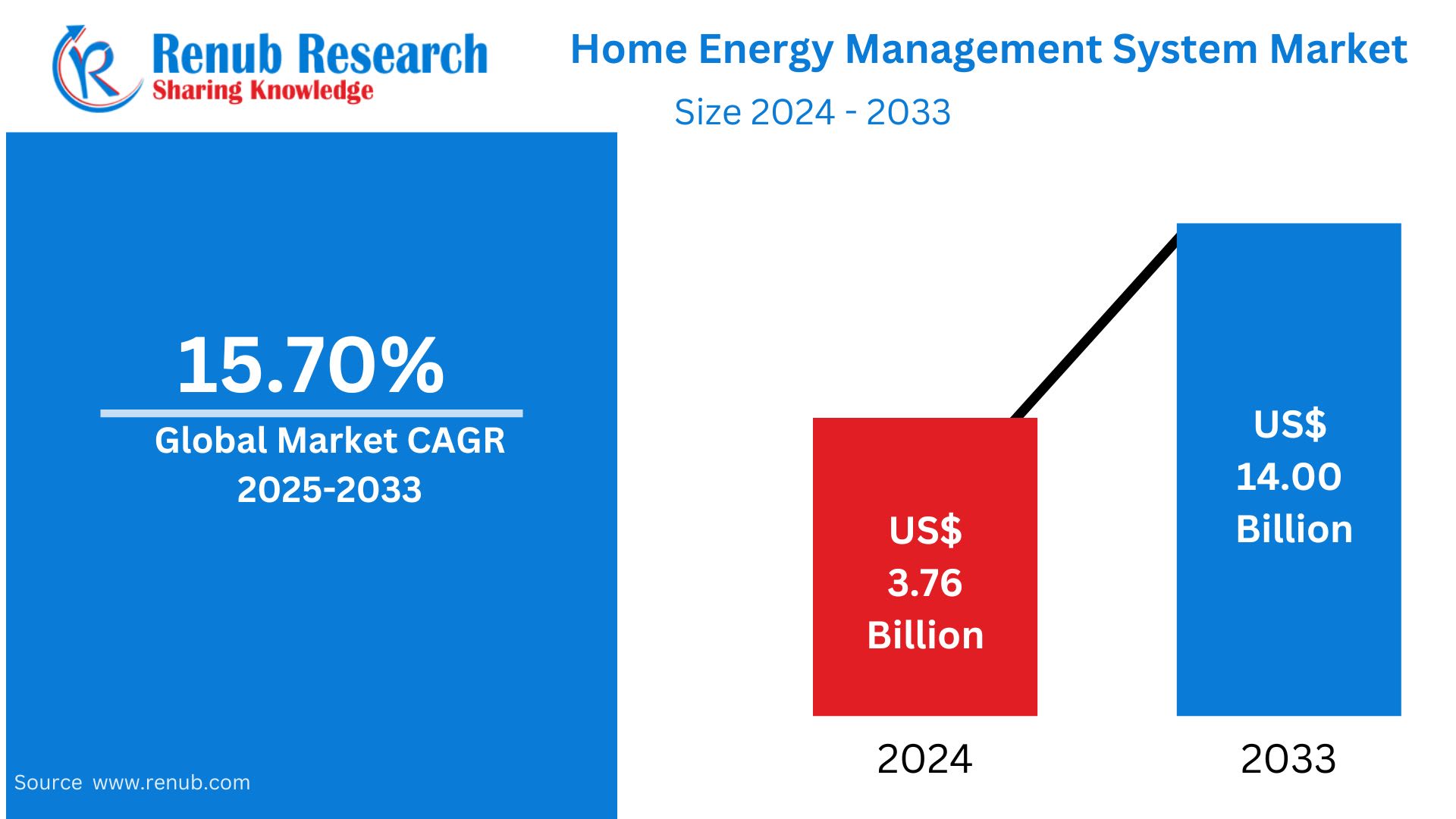
The global Home Energy Management System (HEMS) market is experiencing dynamic growth within the residential technology sector. Valued at USD 3.76 billion in 2024, it is projected to reach USD 14.00 billion by 2033, with a compound annual growth rate (CAGR) of 15.70%. This growth is driven by the convergence of sustainability objectives, rising energy costs, and the widespread adoption of smart home technologies, directly supporting SDG 7 (Affordable and Clean Energy), SDG 11 (Sustainable Cities and Communities), and SDG 13 (Climate Action).
Role and Functions of Home Energy Management Systems
HEMS are integrated smart platforms designed to monitor, control, and optimize household energy consumption. By connecting with devices such as smart meters, HVAC systems, lighting, home appliances, solar panels, and electric vehicle (EV) batteries, HEMS provide real-time energy consumption visibility.
Core functions include:
- Reducing energy wastage by identifying high-consumption appliances
- Automating heating, cooling, and lighting to align with occupancy and comfort
- Integrating renewable energy sources such as solar and wind power
- Enabling remote monitoring and control via smartphones and cloud platforms
- Lowering utility costs while enhancing sustainability
- Reducing household carbon footprints
Advancements in AI and IoT technologies enable HEMS to offer personalized recommendations, predictive energy forecasts, and seamless automation, reinforcing SDG 9 (Industry, Innovation, and Infrastructure).
Key Market Growth Drivers
-
Rising Demand for Energy Efficiency
Consumers globally are increasingly aware of the environmental and financial impacts of excessive energy use. The rising electricity prices and mainstream sustainability values encourage households to adopt energy management tools. HEMS empower users with real-time analytics and smart controls, promoting behavioral changes that reduce energy consumption and costs, advancing SDG 12 (Responsible Consumption and Production).
Example: In November 2023, Schneider Electric integrated an OpenAI-powered tool into its energy and sustainability hub to automate facility data optimization, signaling AI’s growing role in energy management.
-
Advancements in Smart Home Technology
The proliferation of IoT devices has transformed HEMS into a mainstream smart home essential. Connected thermostats, smart lighting, intelligent HVAC systems, and energy-optimized appliances enhance home automation accessibility.
AI-enhanced HEMS provide:
- Personalized energy-saving suggestions
- Automated schedules based on user habits
- Predictive maintenance alerts
- Integration with EV batteries for energy backup or redistribution
Notable development: In December 2023, Ford Motor Company partnered with Resideo Technologies to launch the EV-Home Power Partnership, integrating Ford EV batteries in a Vehicle-to-Home (V2H) system, exemplifying holistic energy solutions.
-
Government Incentives and Global Sustainability Goals
Energy efficiency is a national priority in many regions, with governments offering tax credits, rebates, and subsidies to encourage smart energy technology adoption. By November 2023:
- 25 U.S. states had mandatory Energy Efficiency Resource Standards (EERS)
- Several states provided tax rebates for energy-efficient appliances
- Global regulations promoted smart meters and renewable-ready homes
These initiatives accelerate HEMS adoption, supporting SDG 7 and SDG 13 by facilitating the transition to low-carbon residential infrastructure.
Market Barriers and Challenges
High Upfront Costs and Technological Complexity
Initial purchase and installation costs remain significant barriers for many households. Integration with existing home systems often requires technical expertise, which may deter less tech-savvy users. Manufacturers are addressing these challenges by simplifying interfaces, offering modular systems, and reducing hardware costs to promote mass adoption, especially in developing markets.
Data Security and Privacy Concerns
HEMS collect detailed data on household behavior and device usage, raising concerns about cybersecurity breaches, unauthorized data access, and misuse of personal consumption records. Ensuring transparent data practices and robust cybersecurity frameworks is critical for user trust and market success, aligning with SDG 16 (Peace, Justice, and Strong Institutions).
Market Segments
By Product Type
- Lighting Controls
- Thermostats
- Self-Monitoring Systems
- Advanced Central Controllers
- Intelligent HVAC Controllers
By Component
- Hardware
- Software
- Services
By Deployment
- On-Premise
- Cloud-Based
Regional Market Outlook
United States
The U.S. market is driven by rising energy prices, ambitious sustainability targets, and rapid smart home device adoption. Integration with residential solar energy is becoming standard. In June 2024, ABB launched the ReliaHome Smart Panel, offering real-time power management and grid optimization in the U.S. and Canada.
United Kingdom
The U.K.’s commitment to net-zero carbon emissions by 2050 accelerates HEMS adoption. Rising energy costs and government-supported smart meter deployment foster a conducive environment. In November 2024, Wondrwall introduced an AI-powered heat pump integrated with HEMS to optimize residential energy flow.
India
India’s rapid urbanization, increasing electricity costs, National Smart Cities Mission, and growing renewable energy installations position it as a promising HEMS market. Affordability and simplicity are critical due to price sensitivity. In September 2024, ABB India launched ABB-free@home, a smart home automation platform enhancing energy efficiency and security.
Saudi Arabia
Saudi Arabia’s Vision 2030 focuses on sustainability and energy diversification. High household electricity consumption and expanding solar installations drive HEMS adoption. The Kingdom invests in advanced residential technologies to optimize energy flow and reduce grid load.
Key Companies Profiled
- Honeywell International, Inc.
- General Electric Company
- Comcast Cable (Xfinity)
- Panasonic Corporation
- Johnson Controls
- Schneider Electric SE
- Robert Bosch GmbH
Conclusion
The Home Energy Management System market is transitioning from niche innovation to a global necessity. Rising electricity costs, stringent climate goals, and expanding smart home ecosystems position HEMS as essential technology comparable to broadband internet and home security systems. The future of HEMS lies in deeper AI integration, seamless IoT compatibility, renewable energy optimization, and user-friendly design. Collaboration among governments, manufacturers, and consumers toward energy efficiency aligns strongly with multiple Sustainable Development Goals, particularly SDG 7, SDG 11, and SDG 13. The projected market growth to USD 14 billion by 2033 reflects a transformative shift in residential energy management worldwide.
1. Sustainable Development Goals (SDGs) Addressed or Connected
- SDG 7: Affordable and Clean Energy
- The article discusses Home Energy Management Systems (HEMS) that optimize household energy usage, integrate renewable energy sources like solar and wind power, and promote energy efficiency.
- SDG 11: Sustainable Cities and Communities
- HEMS contributes to sustainable urban living by supporting smart home technologies and national initiatives such as India’s Smart Cities Mission.
- SDG 12: Responsible Consumption and Production
- HEMS reduces energy wastage, encourages behavioral changes in energy consumption, and promotes sustainable household energy use.
- SDG 13: Climate Action
- The article highlights reducing carbon footprints at the household level and government policies aimed at decarbonization and net-zero emissions.
- SDG 9: Industry, Innovation, and Infrastructure
- The advancement of AI, IoT, and cloud-based HEMS platforms reflects innovation in infrastructure and technology.
2. Specific Targets Under Those SDGs Identified
- SDG 7: Affordable and Clean Energy
- Target 7.3: By 2030, double the global rate of improvement in energy efficiency.
- Target 7.2: Increase substantially the share of renewable energy in the global energy mix.
- SDG 11: Sustainable Cities and Communities
- Target 11.6: Reduce the adverse per capita environmental impact of cities, including by paying special attention to air quality and municipal and other waste management.
- SDG 12: Responsible Consumption and Production
- Target 12.2: Achieve the sustainable management and efficient use of natural resources.
- Target 12.8: Ensure that people everywhere have the relevant information and awareness for sustainable development and lifestyles in harmony with nature.
- SDG 13: Climate Action
- Target 13.2: Integrate climate change measures into national policies, strategies, and planning.
- SDG 9: Industry, Innovation, and Infrastructure
- Target 9.5: Enhance scientific research, upgrade technological capabilities of industrial sectors, including by encouraging innovation and increasing the number of research and development workers.
3. Indicators Mentioned or Implied to Measure Progress
- Energy Efficiency Metrics
- Reduction in household energy consumption through HEMS analytics and controls.
- Real-time monitoring of energy usage patterns and identification of high-consumption appliances.
- Renewable Energy Integration
- Percentage of households integrating renewable energy sources such as solar panels and EV batteries with HEMS.
- Carbon Footprint Reduction
- Measurement of reduction in carbon emissions at the household level enabled by HEMS technologies.
- Adoption Rates of Smart Energy Technologies
- Number or percentage of households adopting HEMS, smart meters, and energy-efficient appliances.
- Government incentives uptake such as tax rebates and mandatory Energy Efficiency Resource Standards (EERS).
- Technological Innovation Indicators
- Deployment of AI and IoT-enabled HEMS platforms.
- Growth in cloud-based HEMS usage and integration with smart home ecosystems.
4. SDGs, Targets and Indicators Table
| SDGs | Targets | Indicators |
|---|---|---|
| SDG 7: Affordable and Clean Energy |
|
|
| SDG 11: Sustainable Cities and Communities |
|
|
| SDG 12: Responsible Consumption and Production |
|
|
| SDG 13: Climate Action |
|
|
| SDG 9: Industry, Innovation, and Infrastructure |
|
|
Source: vocal.media
What is Your Reaction?
 Like
0
Like
0
 Dislike
0
Dislike
0
 Love
0
Love
0
 Funny
0
Funny
0
 Angry
0
Angry
0
 Sad
0
Sad
0
 Wow
0
Wow
0