









































;Resize=620#)








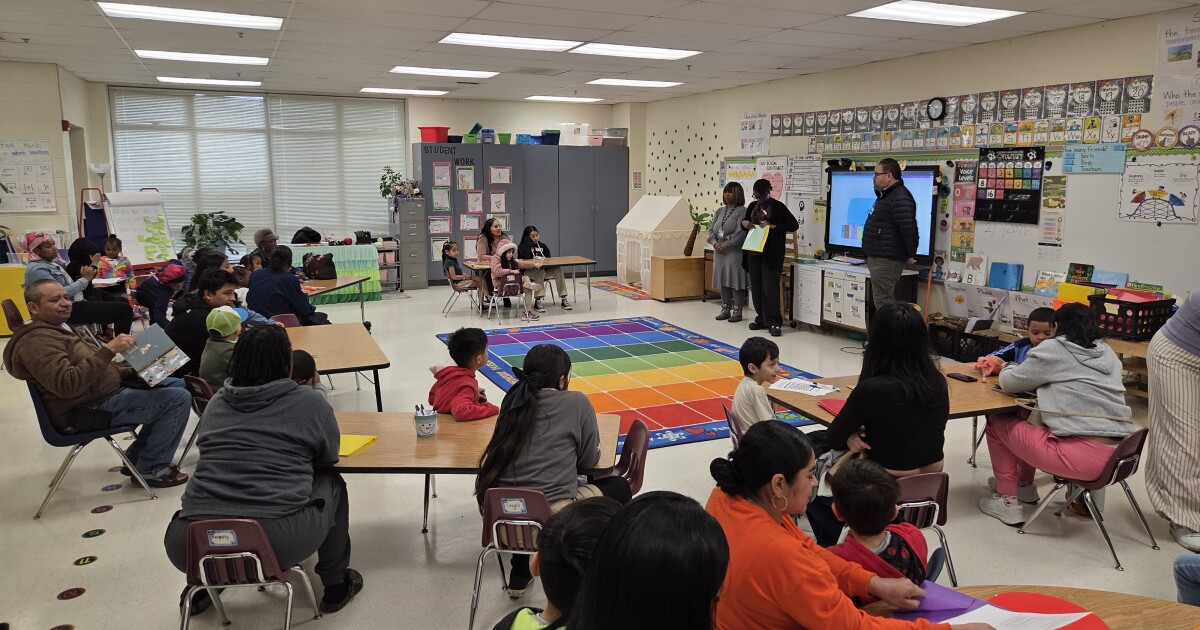
How Baltimore parents can get two months of child care help – The Baltimore Banner

Report on Baltimore City’s Child Care Assistance Program in Alignment with Sustainable Development Goals
Program Overview and Contribution to SDG 11 (Sustainable Cities and Communities)
In response to the economic disruption caused by a federal government shutdown, the Baltimore City government has initiated a targeted financial assistance program. This initiative, part of a larger $4.6 million aid package, allocates $1 million specifically for child care costs for affected residents over a two-month period. This action directly supports the objective of SDG 11: Sustainable Cities and Communities by enhancing urban resilience and providing a social safety net to protect residents during a period of institutional crisis, thereby fostering an inclusive and secure community.
Eligibility Criteria and Support for Vulnerable Populations (SDG 1, SDG 10)
The program is designed to provide relief to two specific vulnerable groups, directly addressing SDG 1: No Poverty and SDG 10: Reduced Inequalities by targeting those most at risk of financial hardship.
- Essential Federal Employees: This includes federal workers who are mandated to work in person without receiving pay. This measure provides a crucial economic buffer to prevent these households from falling into poverty due to sudden income loss.
- Families Eligible for the Supplemental Nutrition Assistance Program (SNAP): This group faces compounded insecurity due to potential delays in food benefit payments. The assistance mitigates the need for families to choose between food and child care, reducing inequality for low-income households.
To qualify, families in both groups must demonstrate that their child is enrolled in a licensed child care facility.
Financial Provisions and Economic Stability (SDG 8)
The program’s structure is designed to provide meaningful support that contributes to household economic stability, a key component of SDG 8: Decent Work and Economic Growth.
- Assistance Amount: Eligible families can receive up to $2,500 per month for November and December, for a potential total of $5,000 per family.
- Payment Method: Funds are disbursed directly to the licensed child care provider upon submission of an invoice. This ensures the aid is used for its intended purpose.
- Scope of Care: The funds can be applied to full-time care as well as before- and after-school programs.
By covering child care costs, the program enables essential employees to continue working and prevents parents from having to leave the workforce, thereby supporting decent work and preserving family economic health.
Impact on Core Human Development Goals (SDG 2, 3, 4, 5)
The child care assistance program has a multifaceted impact on several fundamental Sustainable Development Goals.
- SDG 2 (Zero Hunger): By alleviating child care expenses, the program frees up household resources that can be used for food, which is particularly critical for SNAP-eligible families facing benefit delays.
- SDG 3 (Good Health and Well-being): The program promotes family well-being by reducing financial stress on parents and ensuring children remain in stable, safe, and supportive child care environments.
- SDG 4 (Quality Education): It ensures continuity in early childhood development and education by helping parents maintain their children’s enrollment in care and after-school programs, preventing disruptions to their learning.
- SDG 5 (Gender Equality): The provision of child care support is a critical enabler for women’s economic participation, as caregiving responsibilities disproportionately affect women. This assistance helps female parents remain in the workforce.
Application Process and Program Logistics
The city has established a clear process for residents to access these funds.
- Residents can currently register their interest by completing a form on the official Baltimore City government website.
- City officials are proactively contacting interested families to help them prepare the necessary documentation for the formal application.
- The official application is scheduled to be launched by the middle of the month.
Contingency and Long-Term Support
The city has planned for scenarios where demand may exceed the allocated funding. If the $1 million fund is depleted, officials will direct families to alternative resources available through government and nonprofit organizations. Furthermore, the assistance will be available to all eligible applicants for the full two-month period, even if the federal government shutdown is resolved earlier. This commitment recognizes the lingering financial impact on families and underscores a dedication to sustained support, which is essential for achieving long-term development goals.
Analysis of Sustainable Development Goals in the Article
-
Which SDGs are addressed or connected to the issues highlighted in the article?
The article highlights issues that connect to several Sustainable Development Goals (SDGs) through its discussion of a government assistance program for families affected by a federal shutdown.
- SDG 1: No Poverty: The article directly addresses the financial hardship faced by federal workers without pay and families on SNAP benefits. The city’s financial aid is a social protection measure aimed at preventing these families from falling into poverty or experiencing severe economic distress.
- SDG 4: Quality Education: The assistance program is specifically for child care costs. The article notes the aid could “help prevent parents from losing their child’s coveted spot in the program if missed paychecks would otherwise force them to pull their kids out.” This directly supports continued access to early childhood development and care, which is a foundational element of quality education.
- SDG 8: Decent Work and Economic Growth: The core problem stems from federal employees being forced to work “without a paycheck.” This situation is contrary to the principles of decent work, which include fair and regular remuneration for labor. The shutdown disrupts the economic stability of hundreds of thousands of workers.
- SDG 10: Reduced Inequalities: The federal shutdown disproportionately affects specific vulnerable groups: government employees and low-income families reliant on food benefits. The Baltimore City government’s targeted assistance program is an effort to reduce the immediate economic inequality faced by these residents, stepping in where federal systems have failed.
-
What specific targets under those SDGs can be identified based on the article’s content?
Based on the specific actions and problems described, the following SDG targets are relevant:
- Target 1.3: Implement nationally appropriate social protection systems and measures for all, including floors, and by 2030 achieve substantial coverage of the poor and the vulnerable. The Baltimore City government’s $4.6 million pledge, including the $1 million for child care, is a clear example of a local social protection measure designed to support vulnerable populations during a crisis.
- Target 4.2: By 2030, ensure that all girls and boys have access to quality early childhood development, care and pre-primary education so that they are ready for primary education. The program’s focus on paying child care providers directly to keep children enrolled in licensed facilities directly supports this target by ensuring continuous access to early childhood care.
- Target 8.5: By 2030, achieve full and productive employment and decent work for all women and men… and equal pay for work of equal value. The article’s description of “essential workers… working in person without pay” highlights a severe deviation from this target, as working without pay is the antithesis of decent work.
- Target 10.4: Adopt policies, especially fiscal, wage and social protection policies, and progressively achieve greater equality. The city’s decision to earmark funds and create an assistance program is a local fiscal and social protection policy designed to mitigate the unequal impact of the federal shutdown on its residents.
-
Are there any indicators mentioned or implied in the article that can be used to measure progress towards the identified targets?
The article contains several pieces of information that can serve as direct or implied indicators for measuring progress towards the identified targets.
- For Target 1.3: The article provides quantifiable data for a social protection system indicator. It mentions the city has “earmarked $1 million” for child care assistance and that there are already “between 200 and 300 interested, eligible families.” These numbers can be used to measure the scope and coverage of this specific social protection measure.
- For Target 4.2: An implied indicator is the number of children who remain in licensed child care facilities as a result of the aid. The article states the goal is to prevent parents from being “force[d] to pull their kids out.” Therefore, tracking the number of families (and by extension, children) who receive the up to “$5,000 per family total” would measure the program’s success in maintaining participation in early childhood care.
- For Target 8.5: The article’s statement that “hundreds of thousands of federal workers to clock in without a paycheck” serves as a stark, negative indicator. It quantifies the scale of the failure to provide decent work (i.e., paid work) for a significant portion of the workforce.
- For Target 10.4: The primary indicator is the financial allocation itself. The “$1 million” for child care and the broader “$4.6 million pledge to aid city residents” are direct measures of the fiscal policy enacted by the city government to support vulnerable groups and reduce the inequality caused by the shutdown.
SDGs, Targets, and Indicators Summary
| SDGs | Targets | Indicators |
|---|---|---|
| SDG 1: No Poverty | 1.3: Implement nationally appropriate social protection systems and measures for all… and achieve substantial coverage of the poor and the vulnerable. | The proportion of the affected population covered by the social protection scheme, as indicated by the “$1 million” fund and the “200 and 300 interested, eligible families.” |
| SDG 4: Quality Education | 4.2: Ensure that all girls and boys have access to quality early childhood development, care and pre-primary education. | The number of children who are able to remain in licensed child care facilities due to the financial assistance, preventing a drop in participation rates in organized learning. |
| SDG 8: Decent Work and Economic Growth | 8.5: Achieve full and productive employment and decent work for all women and men… and equal pay for work of equal value. | The number of federal workers who are “working in person without pay,” which serves as a direct negative indicator of the provision of decent work. |
| SDG 10: Reduced Inequalities | 10.4: Adopt policies, especially fiscal, wage and social protection policies, and progressively achieve greater equality. | The specific fiscal policy action taken by the city, measured by the “$4.6 million pledge” and the “$1 million” earmarked to aid residents disproportionately affected by the shutdown. |
Source: thebanner.com
What is Your Reaction?
 Like
0
Like
0
 Dislike
0
Dislike
0
 Love
0
Love
0
 Funny
0
Funny
0
 Angry
0
Angry
0
 Sad
0
Sad
0
 Wow
0
Wow
0