


















































How drones could help reforest the world’s green lungs – DW
Technological Innovation in Reforestation and its Contribution to Sustainable Development Goals
Executive Summary
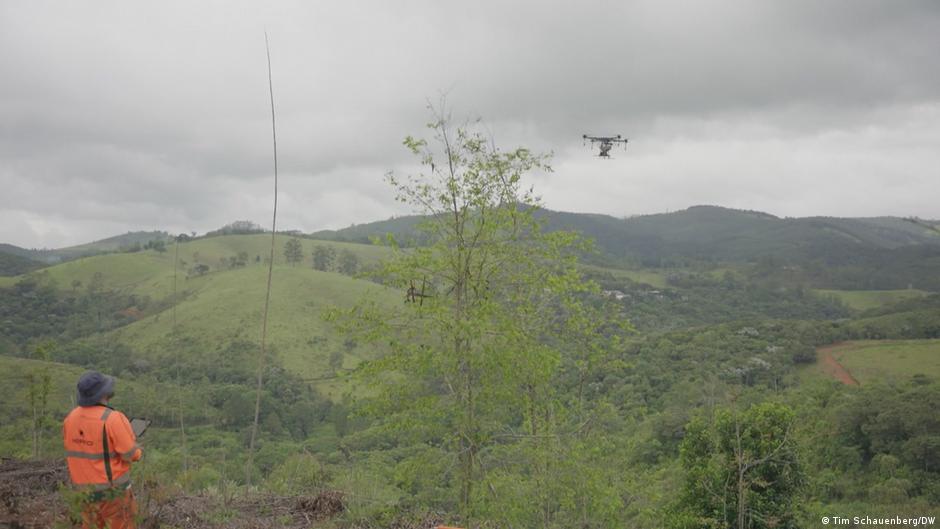
A report on the application of advanced drone technology for large-scale reforestation in Brazil, highlighting its direct alignment with global sustainability objectives. Near the site of the COP 30 climate summit, French start-up MORFO is pioneering a method to restore degraded ecosystems, thereby contributing significantly to the Sustainable Development Goals (SDGs).
Methodology and Technological Application
MORFO employs a multi-faceted technological approach to restore barren land into thriving ecosystems. The methodology is designed for speed, scale, and effectiveness, even in remote areas.
- Artificial Intelligence (AI): Utilized to analyze collected soil data for strategic planning.
- Drone Deployment: Enables the rapid dispersal of native seeds over vast territories. A single drone can cover 50 hectares per day, far exceeding traditional planting methods.
- Data-Driven Restoration: The use of soil data ensures that only suitable native seeds are planted, increasing the success rate of ecosystem recovery.
Alignment with Sustainable Development Goals (SDGs)
The initiative directly supports several key United Nations Sustainable Development Goals through its innovative approach to environmental restoration.
-
SDG 13: Climate Action
- The project actively combats climate change by restoring forests, which function as critical carbon sinks.
- The company’s business model, which includes the sale of carbon credits, provides a financial mechanism to support and scale climate mitigation efforts.
-
SDG 15: Life on Land
- The core mission is to halt and reverse land degradation by reforesting barren areas, directly addressing the 1.7 million hectares of forest lost in the Amazon in 2024 alone.
- By using native seeds, the project promotes the restoration of biodiversity and helps rebuild resilient terrestrial ecosystems.
-
SDG 9: Industry, Innovation, and Infrastructure
- The integration of AI, data analysis, and drone technology represents a significant sustainable innovation in the environmental sector.
Market Context and Future Outlook
According to Executive Director Gregory Maitre, MORFO is operating in a young but optimistic market, driven by urgent environmental needs.
- Market Driver: Catastrophic deforestation rates create a substantial demand for rapid and scalable reforestation solutions.
- Economic Model: The company, along with about a dozen competitors, is leveraging the sale of carbon credits to finance its operations and growth.
- Global Expansion: Future plans include expanding operations to other critically affected regions, such as Africa and Southeast Asia, to amplify its contribution to global sustainability targets.
Sustainable Development Goals (SDGs) Addressed
The article highlights issues and solutions that are directly connected to several Sustainable Development Goals. The primary focus on reforestation technology touches upon environmental conservation, climate action, and technological innovation.
-
SDG 15: Life on Land
This is the most prominent SDG in the article. The core mission of the start-up MORFO is to “transform barren land into thriving ecosystems” through reforestation. This directly addresses the goal of protecting, restoring, and promoting the sustainable use of terrestrial ecosystems, sustainably managing forests, and halting and reversing land degradation. The mention of losing “1.7 million hectares in the Amazon in 2024 alone” underscores the urgency of this goal.
-
SDG 13: Climate Action
The article connects the reforestation efforts to climate change by mentioning the “COP 30 climate summit” and the company’s business model of “offering carbon credits for sale.” Reforestation is a key strategy for climate change mitigation, as forests act as carbon sinks. The company’s work is a direct action to combat climate change and its impacts.
-
SDG 9: Industry, Innovation, and Infrastructure
The article showcases the use of innovative technology to solve an environmental problem. The use of “AI, collected soil data and drones” represents a significant technological advancement over “traditional methods.” This aligns with the goal of promoting inclusive and sustainable industrialization and fostering innovation.
-
SDG 17: Partnerships for the Goals
The article describes a “French start-up” operating in Brazil and “aiming to expand to Africa and Southeast Asia.” This international collaboration to transfer and implement environmentally sound technology is a clear example of a global partnership for sustainable development.
Specific Targets Identified
Based on the article’s content, several specific SDG targets can be identified:
-
Target 15.2: Promote sustainable forest management, halt deforestation, and restore degraded forests.
The entire operation described—using drones to “rapidly plant native seeds”—is a direct effort to increase reforestation and restore degraded forests, counteracting the “1.7 million hectares lost” in the Amazon.
-
Target 15.3: Combat desertification and restore degraded land and soil.
The project’s goal to transform “barren land into thriving ecosystems” by using “collected soil data” directly addresses the restoration of degraded land.
-
Target 13.2: Integrate climate change measures into policies, strategies, and planning.
By operating near the “COP 30 climate summit” and participating in the carbon market through “offering carbon credits for sale,” the company’s actions align with and support global and national climate change strategies.
-
Target 9.4: Upgrade infrastructure and retrofit industries to make them sustainable with greater adoption of clean and environmentally sound technologies.
The use of drones and AI for reforestation is a prime example of an “environmentally sound technology” being applied to make ecosystem restoration more efficient and scalable, far outpacing “traditional methods.”
-
Target 17.7: Promote the development, transfer, and dissemination of environmentally sound technologies to developing countries.
The article highlights a “French start-up” bringing its advanced reforestation technology to Brazil and planning further expansion to “Africa and Southeast Asia,” which exemplifies the transfer of such technologies.
Indicators for Measuring Progress
The article implies several indicators that can be used to measure progress towards the identified targets:
-
Indicator for Target 15.2: Area of forest being restored.
The article provides a specific metric for the technology’s efficiency: “One drone can cover 50 hectares a day.” This rate of reforestation is a direct, quantifiable indicator of progress in restoring forests.
-
Indicator for Target 15.3: Proportion of land that is degraded over total land area.
The article implicitly refers to this by mentioning the transformation of “barren land” and the scale of the problem with “1.7 million hectares lost.” The area of barren land successfully reforested would be a key performance indicator.
-
Indicator for Target 13.2: Amount of greenhouse gas emissions reduced or sequestered.
The mention of “offering carbon credits for sale” directly implies the measurement of carbon sequestration. The number of carbon credits generated and sold would serve as an indicator of the project’s contribution to climate change mitigation.
-
Indicator for Target 9.4 & 17.7: Adoption of new technologies.
The existence of the start-up MORFO and its “dozen competitors” indicates the growing adoption of this innovative reforestation technology. The company’s expansion into “Africa and Southeast Asia” would be an indicator of the technology’s successful transfer and dissemination.
Summary of Findings
| SDGs | Targets | Indicators |
|---|---|---|
| SDG 15: Life on Land | 15.2: Halt deforestation and restore degraded forests. 15.3: Restore degraded land and soil. |
Area of land reforested per day (e.g., “50 hectares a day”). Total area of “barren land” transformed into ecosystems. |
| SDG 13: Climate Action | 13.2: Integrate climate change measures into policies and planning. | Volume of CO2 sequestered, measured by the number of “carbon credits for sale.” |
| SDG 9: Industry, Innovation, and Infrastructure | 9.4: Adopt clean and environmentally sound technologies. | The number of companies using this technology (e.g., “MORFO, together with about a dozen competitors”). |
| SDG 17: Partnerships for the Goals | 17.7: Promote the transfer of environmentally sound technologies to developing countries. | Geographic expansion of the technology’s use (e.g., a “French start-up” operating in Brazil and “aiming to expand to Africa and Southeast Asia”). |
Source: dw.com
What is Your Reaction?
 Like
0
Like
0
 Dislike
0
Dislike
0
 Love
0
Love
0
 Funny
0
Funny
0
 Angry
0
Angry
0
 Sad
0
Sad
0
 Wow
0
Wow
0