












































;Resize=620#)












Ocean storms are melting Antarctica’s ice from below – Earth.com
Report on Sub-Glacial Ocean Dynamics and Implications for Sustainable Development Goals
Introduction
A recent study conducted by researchers from UC Irvine and NASA’s Jet Propulsion Laboratory (JPL) has identified previously underestimated ocean dynamics beneath Antarctic ice shelves. These findings reveal that rapid, storm-like oceanic events, known as submesoscale features, are a primary driver of ice loss. This report analyzes these findings and their significant implications for several United Nations Sustainable Development Goals (SDGs), particularly SDG 13 (Climate Action), SDG 14 (Life Below Water), and SDG 11 (Sustainable Cities and Communities).
Key Scientific Findings
Identification of Submesoscale Ocean Activity
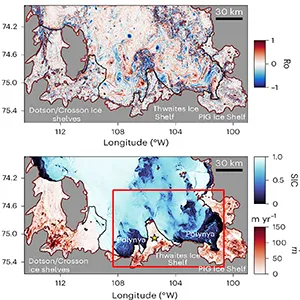
The research focused on short-lived, high-energy oceanic motions beneath the Thwaites and Pine Island glaciers. These events have a profound impact on the stability of the West Antarctic Ice Sheet.
- Nature of Events: The study identified submesoscale features, which are powerful ocean currents spanning 0.6 to 6 miles. These act like “weather inside the ocean.”
- Mechanism: These currents transport warm, deep ocean water upwards, bringing it into direct contact with the base of the ice shelves.
- Location of Impact: The Amundsen Sea Embayment, particularly the area between the Crosson and Thwaites ice shelves, was identified as a “submesoscale hot spot” due to seafloor geography that concentrates these currents.
Quantified Impact on Ice Shelf Melt
The study demonstrates that these transient events have a disproportionately large effect on overall ice melt, a factor largely overlooked in previous climate models.
- Magnitude of Melt: During these events, which last only a few days, ice melt rates can increase nearly threefold within hours.
- Seasonal Contribution: These short-lived bursts are responsible for approximately one-fifth of the total seasonal melt patterns observed.
- Feedback Loop: The meltwater produced alters the local ocean structure, forming sharp fronts that strengthen the very submesoscale features that initiated the melting, creating a self-reinforcing cycle.
Implications for Sustainable Development Goals (SDGs)
SDG 13: Climate Action
The findings directly challenge current climate modeling and underscore the urgency of climate action. The stability of the West Antarctic Ice Sheet, which holds enough ice to raise global sea levels by up to three meters, is a critical factor in global climate resilience.
- Improved Climate Models: The research necessitates the integration of fine-scale oceanic processes into global climate models to improve the accuracy of sea-level rise projections.
- Accelerated Impacts: Warmer ocean temperatures are predicted to make these submesoscale features more frequent and intense, potentially accelerating ice loss beyond current forecasts and demanding more aggressive mitigation strategies.
SDG 14: Life Below Water
The accelerated injection of cold, fresh meltwater into the Southern Ocean has significant consequences for marine ecosystems.
- Ecosystem Disruption: Changes in ocean temperature, salinity, and circulation patterns can disrupt marine habitats and food webs, affecting biodiversity from plankton to large marine mammals.
- Ocean Chemistry: The influx of meltwater alters local ocean chemistry, which can impact the health and viability of marine life in this globally important ecosystem.
SDG 11: Sustainable Cities and Communities
The primary consequence of accelerated Antarctic melt is global sea-level rise, which poses a direct threat to the sustainability of coastal communities worldwide.
- Threat to Infrastructure: Rising sea levels endanger coastal infrastructure, homes, and economies, requiring significant investment in adaptation and resilience measures.
- Informing Policy: Accurate projections of sea-level rise, informed by this research, are crucial for urban planning and developing effective strategies to protect vulnerable populations.
Future Directives and Recommendations
SDG 9: Industry, Innovation, and Infrastructure & SDG 17: Partnerships for the Goals
The study highlights the need for technological innovation and collaborative efforts to monitor these critical climate processes.
- Enhanced Observation: There is an urgent need to develop and deploy advanced observation tools, such as autonomous oceangoing robots, capable of measuring sub-glacial processes in real time. This aligns with SDG 9’s focus on building resilient infrastructure and fostering innovation.
- Collaborative Research: The partnership between academic institutions (UC Irvine) and government agencies (NASA) exemplifies the collaborative approach required by SDG 17 to address complex global challenges.
Analysis of SDGs, Targets, and Indicators
1. Which SDGs are addressed or connected to the issues highlighted in the article?
The article discusses issues related to climate change, ocean health, and scientific innovation, which directly connect to several Sustainable Development Goals (SDGs). The following SDGs are addressed:
- SDG 13: Climate Action: The core theme of the article is the impact of warming oceans on Antarctic ice shelves, a direct consequence of climate change. It discusses accelerated ice melt and its contribution to sea-level rise, which are central concerns of SDG 13.
- SDG 14: Life Below Water: The article focuses on oceanic processes (“submesoscale” motions, warm water currents) and their impact on a critical marine and polar ecosystem—the Antarctic ice shelves. Understanding these dynamics is crucial for protecting marine environments.
- SDG 11: Sustainable Cities and Communities: The article explicitly states that the West Antarctic Ice Sheet “holds enough ice to raise sea levels by up to three meters.” This poses a direct threat to coastal communities and cities worldwide, linking the research to the need for climate adaptation and resilience in human settlements.
- SDG 9: Industry, Innovation, and Infrastructure: The article highlights the limitations of current climate models and calls for technological advancement. The specific mention of the “urgent need to fund and develop better observation tools, including advanced oceangoing robots” directly relates to enhancing scientific research and innovation.
2. What specific targets under those SDGs can be identified based on the article’s content?
Based on the issues discussed, several specific SDG targets can be identified:
- Target 13.1: Strengthen resilience and adaptive capacity to climate-related hazards and natural disasters in all countries. The article’s focus on understanding the drivers of sea-level rise is fundamental to preparing for and adapting to this major climate-related hazard.
- Target 14.a: Increase scientific knowledge, develop research capacity and transfer marine technology… in order to improve ocean health. The study itself, and its call for “better observation tools” and improved models to understand sub-oceanic processes, directly aligns with this target.
- Target 11.b: By 2020, substantially increase the number of cities and human settlements adopting and implementing integrated policies and plans towards inclusion, resource efficiency, mitigation and adaptation to climate change, resilience to disasters. The article’s findings on potential sea-level rise underscore the urgency for coastal cities to develop and implement adaptation plans.
- Target 9.5: Enhance scientific research, upgrade the technological capabilities of industrial sectors in all countries… encouraging innovation. The call to improve climate models and develop “advanced oceangoing robots” is a direct appeal to enhance scientific research and technological capabilities.
3. Are there any indicators mentioned or implied in the article that can be used to measure progress towards the identified targets?
Yes, the article mentions or implies several indicators that can be used to measure progress:
- Rate of ice melt: The article provides specific data, stating that certain events “raise melt rates almost threefold within hours” and that these events account for “nearly a fifth of the total melt patterns each season.” Monitoring this rate is a direct indicator of climate impact.
- Potential sea-level rise: The article quantifies the potential impact by noting that the West Antarctic Ice Sheet could “raise sea levels by up to three meters.” This figure serves as a critical indicator for assessing risk and driving adaptation strategies.
- Accuracy and resolution of climate models: An implied indicator is the capability of climate models. The article notes that many models “miss these short lived bursts” and that prediction tools must include “submesoscale” motions for “better accuracy.” Progress can be measured by the integration of these fine-scale features into global climate models.
- Development of advanced observation technology: The call for “advanced oceangoing robots” and “moored sensors” implies that the development, funding, and deployment of such technologies are key indicators of progress in scientific research capacity (Target 14.a and 9.5).
4. SDGs, Targets, and Indicators Table
| SDGs | Targets | Indicators |
|---|---|---|
| SDG 13: Climate Action | 13.1: Strengthen resilience and adaptive capacity to climate-related hazards and natural disasters. | – Rate of ice melt under Antarctic shelves (e.g., threefold increases during short events). – Contribution of short-term melt events to seasonal totals (e.g., “nearly a fifth of the total melt patterns”). |
| SDG 14: Life Below Water | 14.a: Increase scientific knowledge, develop research capacity and transfer marine technology. | – Deployment of new observation tools (e.g., “moored sensors,” “advanced oceangoing robots”). – Funding for and development of better ocean observation tools. |
| SDG 11: Sustainable Cities and Communities | 11.b: Increase the number of cities adopting and implementing policies for adaptation to climate change and resilience to disasters. | – Forecasts of global sea-level rise (e.g., potential of “up to three meters” from the West Antarctic Ice Sheet). |
| SDG 9: Industry, Innovation, and Infrastructure | 9.5: Enhance scientific research and upgrade technological capabilities. | – Improvement in the accuracy and resolution of climate models to include “submesoscale” features. – Development of advanced scientific instruments for measuring suboceanic processes. |
Source: earth.com
What is Your Reaction?
 Like
0
Like
0
 Dislike
0
Dislike
0
 Love
0
Love
0
 Funny
0
Funny
0
 Angry
0
Angry
0
 Sad
0
Sad
0
 Wow
0
Wow
0