Saudi Arabia Innovates to Support Renewable Energy Goals – POWER Magazine
Report on Advanced Thermal Management for Photovoltaic Systems in Alignment with Sustainable Development Goals
The global transition towards renewable energy, a cornerstone of Sustainable Development Goal 7 (SDG 7: Affordable and Clean Energy), has accelerated the development of high-efficiency photovoltaic (PV) technologies such as triple-junction solar cells. However, the operational viability of these systems is challenged by thermal degradation, particularly in high-temperature environments. This report details the critical role of active thermal management in enhancing the performance, reliability, and longevity of advanced PV systems, thereby supporting global and national sustainability objectives.
Alignment with Sustainable Development Goals and National Strategy
The implementation of effective cooling technologies for PV systems is directly linked to several key Sustainable Development Goals and aligns with strategic national frameworks like Saudi Arabia’s Vision 2030.
Contribution to SDG 7 (Affordable and Clean Energy) and SDG 13 (Climate Action)
Efficient thermal management is fundamental to maximizing the energy output of solar installations. By mitigating performance losses due to overheating, active cooling ensures a more reliable and consistent supply of clean energy. This directly contributes to:
- SDG 7: Increasing the share of renewable energy in the global energy mix and ensuring access to affordable and clean energy.
- SDG 13: Strengthening the effectiveness of solar energy as a tool for climate change mitigation by maximizing greenhouse gas displacement.
Supporting SDG 9 (Industry, Innovation, and Infrastructure)
The research and deployment of advanced cooling systems represent a significant technological innovation. This fosters the development of resilient and sustainable infrastructure, a primary objective of SDG 9. By investing in such technologies, nations can build a knowledge-based economy centered on renewable energy solutions.
National Context: Saudi Arabia’s Vision 2030
Saudi Arabia’s Vision 2030 provides a strategic framework for economic diversification and sustainable development, with ambitious targets for renewable energy. The integration of active cooling systems supports this vision by:
- Meeting Renewable Energy Targets: Vision 2030 aims to generate 50% of electricity from renewables by 2030, including approximately 58.7 GW from solar energy. Active cooling is essential to achieve these targets by ensuring PV installations operate at optimal efficiency in the region’s arid climate.
- Fostering Economic Diversification: Developing and implementing efficient cooling solutions positions the nation as a leader in renewable energy technologies, contributing to economic growth outside the oil sector, in line with SDG 8 (Decent Work and Economic Growth).
Technical Framework for Enhanced PV Performance
Thermodynamic Principles in Photovoltaic Systems
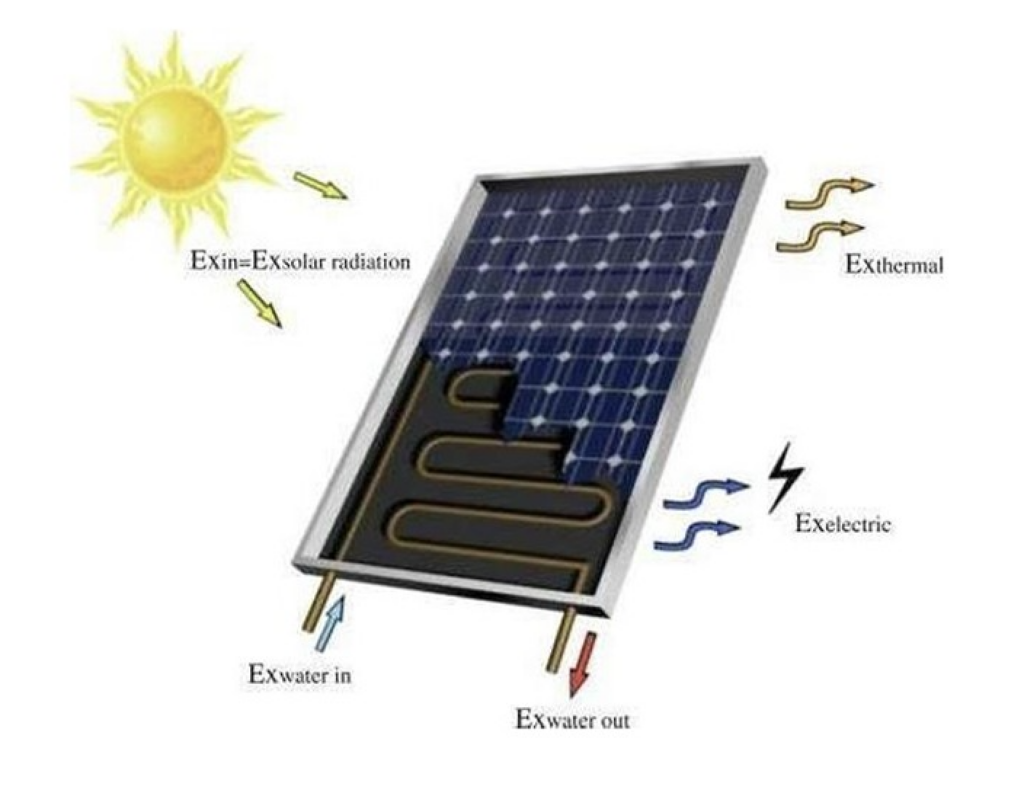
In accordance with the first law of thermodynamics, solar radiation absorbed by a PV cell is converted into either electrical energy or waste heat. Excessive heat accumulation reduces conversion efficiency and can damage cell materials. Active cooling systems are designed to manage this energy balance by effectively dissipating waste heat (Qout), thereby maintaining lower operating temperatures and maximizing electrical output. This optimization is crucial for the financial and environmental viability of solar projects under SDG 7.
The Role of Convective Heat Transfer
Convective heat transfer is the primary mechanism for heat dissipation from a PV cell surface to a surrounding fluid (air or liquid). The rate of this transfer is quantified by the convective heat transfer coefficient (h). Designing effective cooling systems requires a thorough understanding of the factors influencing this coefficient, including:
- Fluid velocity and properties
- Surface orientation and roughness
- Flow regime (laminar or turbulent)
Forced convection systems, which use external devices like fans or pumps, achieve significantly higher heat transfer coefficients than natural convection, making them more effective for cooling high-performance PV modules.
Analysis of Active Cooling Technologies for SDG Attainment
Active cooling systems are critical for maintaining the operational integrity of advanced PV cells and ensuring they contribute effectively to sustainability targets.
Overview of Cooling Methodologies
Key active cooling approaches focus on enhancing convective heat transfer to regulate cell temperature and sustain high energy conversion efficiency. The primary methods analyzed include liquid-based cooling and forced convection systems.
System-Specific Analysis
- Liquid-Based Cooling: This method circulates a liquid, typically water, through channels attached to the PV module. Water’s high specific heat capacity allows it to absorb significant thermal energy, making it a highly effective coolant. This efficiency directly supports the goal of maximizing clean energy generation as outlined in SDG 7 and SDG 13.
- Forced Convection Systems: These systems utilize fans or pumps to move a fluid (air or liquid) across the PV cell surface. By increasing fluid velocity, the convective heat transfer coefficient is enhanced, leading to more rapid heat removal. This is particularly vital for maintaining performance in regions with high solar insolation, which are critical for large-scale solar energy deployment.
Optimization for Sustainable Energy Production
By regulating operating temperatures, active cooling systems prevent significant power losses associated with the negative temperature coefficient of PV cells. This optimization is not merely a technical enhancement but a strategic enabler for realizing the full potential of solar technology. It ensures that investments in renewable infrastructure are reliable, efficient, and capable of meeting the ambitious targets set by the Sustainable Development Goals and national climate policies.
Analysis of Sustainable Development Goals in the Article
1. Which SDGs are addressed or connected to the issues highlighted in the article?
The article addresses several Sustainable Development Goals (SDGs) through its focus on renewable energy technology, economic strategy, and innovation within Saudi Arabia.
-
SDG 7: Affordable and Clean Energy
This is the most prominent SDG in the article. The entire text revolves around enhancing the efficiency of solar energy, a key form of clean energy. It discusses Saudi Arabia’s strategic goal to increase its renewable energy capacity, specifically mentioning targets for solar and wind power to ensure access to affordable, reliable, sustainable, and modern energy.
-
SDG 9: Industry, Innovation and Infrastructure
The article highlights the importance of innovation and technological advancement in the renewable energy sector. The discussion on developing and implementing “advanced technologies like active cooling” for photovoltaic systems directly relates to building resilient infrastructure, promoting inclusive and sustainable industrialization, and fostering innovation.
-
SDG 8: Decent Work and Economic Growth
The article connects the development of renewable energy to Saudi Arabia’s Vision 2030, which aims for “economic diversification” and reducing “dependence on oil.” By investing in renewable energy technologies, the country aims to develop a “knowledge-based economy” and position itself as a “leader in renewable energy technologies,” which contributes to sustainable economic growth.
-
SDG 13: Climate Action
Although not explicitly named, SDG 13 is inherently linked to the article’s subject matter. The “global shift toward renewable energy” and Saudi Arabia’s plan to reduce its dependence on oil are fundamental actions to combat climate change and its impacts by transitioning away from fossil fuels.
2. What specific targets under those SDGs can be identified based on the article’s content?
Based on the article’s content, the following specific SDG targets can be identified:
-
Target 7.2: Increase substantially the share of renewable energy in the global energy mix.
The article directly supports this target by detailing Saudi Arabia’s ambition to generate “50% of the country’s electricity from renewables by 2030” and its plans to develop “130 GW of renewable energy capacity.”
-
Target 7.a: Enhance international cooperation to facilitate access to clean energy research and technology, including renewable energy, energy efficiency and advanced and cleaner fossil-fuel technology, and promote investment in energy infrastructure and clean energy technology.
The focus on research and development of “high-efficiency photovoltaic (PV) systems,” “triple-junction solar cells,” and “active cooling systems” aligns with this target. The article itself, authored by university professors and students, represents a contribution to clean energy research.
-
Target 9.4: By 2030, upgrade infrastructure and retrofit industries to make them sustainable, with increased resource-use efficiency and greater adoption of clean and environmentally sound technologies and industrial processes.
The article’s discussion of integrating “active cooling systems into PV installations” to enhance “the efficiency and reliability of solar energy generation” is a direct example of adopting advanced and clean technologies to make energy infrastructure more sustainable and efficient.
-
Target 9.5: Enhance scientific research, upgrade the technological capabilities of industrial sectors in all countries, in particular developing countries, including, by 2030, encouraging innovation and substantially increasing the number of research and development workers per 1 million people and public and private research and development spending.
The article emphasizes Saudi Arabia’s goal of “fostering innovation and developing a knowledge-based economy” through “investing in project and development of efficient cooling solutions.” This shows a commitment to enhancing scientific research and technological capabilities in the renewable energy sector.
3. Are there any indicators mentioned or implied in the article that can be used to measure progress towards the identified targets?
Yes, the article mentions several quantitative and qualitative indicators that can be used to measure progress:
-
Indicator for Target 7.2:
The article provides clear, measurable indicators for this target.
- Renewable energy share in total final energy consumption: The specific goal of “generating 50% of the country’s electricity from renewables by 2030.”
- Installed renewable energy-generating capacity: The plan to develop “130 GW of renewable energy capacity,” broken down into “58.7 GW from solar energy and 40 GW from wind energy.”
-
Indicator for Target 9.4:
A qualitative indicator is the “adoption of advanced technologies like active cooling” to improve the performance and efficiency of solar installations. Progress could be measured by the rate and scale of deployment of these technologies in new and existing solar farms.
-
Indicator for Target 9.5:
The article implies an increase in research and development activities. An indicator is the level of investment in “project and development of efficient cooling solutions” and the country’s efforts to position itself “as a leader in renewable energy technologies.”
4. Create a table with three columns titled ‘SDGs, Targets and Indicators” to present the findings from analyzing the article.
| SDGs | Targets | Indicators |
|---|---|---|
| SDG 7: Affordable and Clean Energy | Target 7.2: Increase substantially the share of renewable energy in the global energy mix. |
|
| SDG 7: Affordable and Clean Energy | Target 7.a: Promote investment in energy infrastructure and clean energy technology. |
|
| SDG 9: Industry, Innovation and Infrastructure | Target 9.4: Upgrade infrastructure and industries for sustainability with greater adoption of clean technologies. |
|
| SDG 9: Industry, Innovation and Infrastructure | Target 9.5: Enhance scientific research and upgrade technological capabilities. |
|
| SDG 8: Decent Work and Economic Growth | Target 8.2: Achieve higher levels of economic productivity through diversification, technological upgrading and innovation. |
|
Source: powermag.com
What is Your Reaction?
 Like
0
Like
0
 Dislike
0
Dislike
0
 Love
0
Love
0
 Funny
0
Funny
0
 Angry
0
Angry
0
 Sad
0
Sad
0
 Wow
0
Wow
0