
















Students Present Inclusive Design Solutions at Innovation Showcase – Syracuse University Today
Intelligence++ Innovation Showcase 2025: Advancing Inclusive Solutions Aligned with Sustainable Development Goals
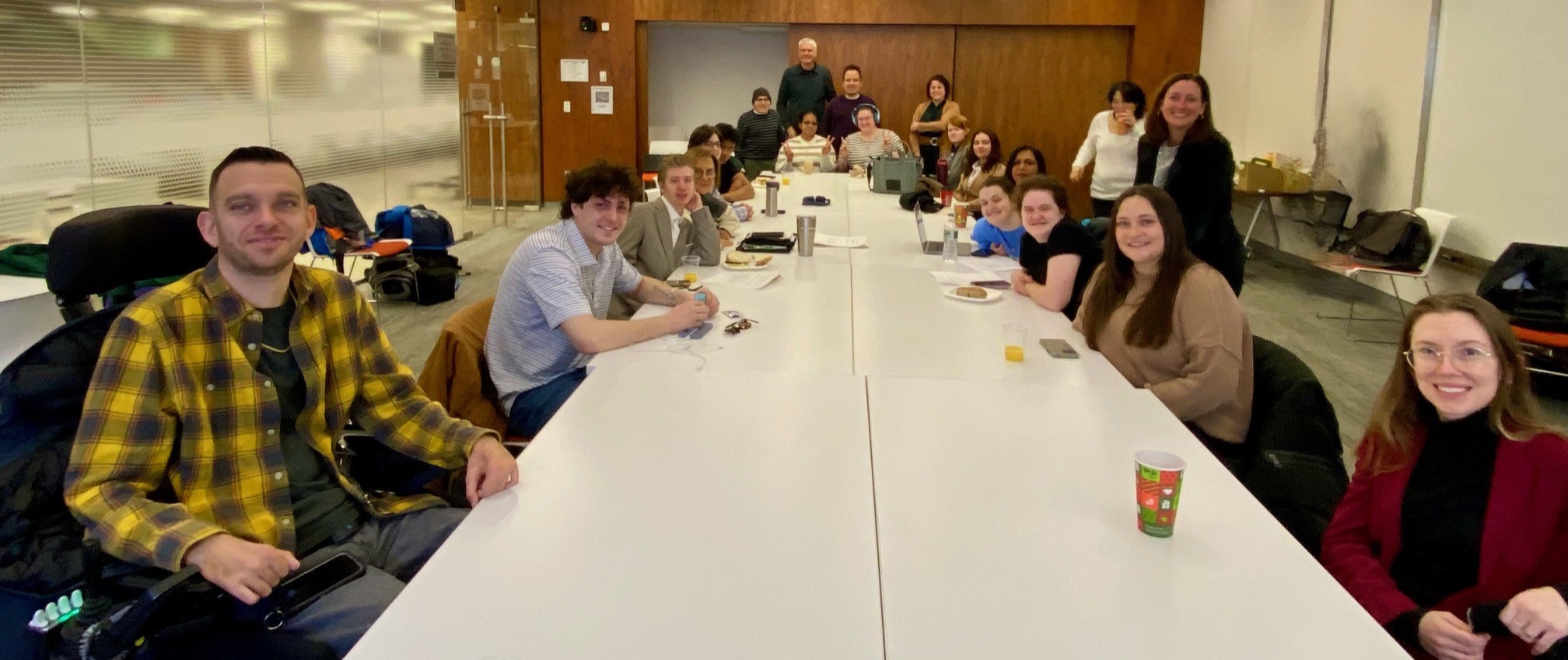
On December 9, the Intelligence++ Innovation Showcase was held at Bird Library, where students transformed lived experience, empathy, and emerging technology into inclusive solutions. This event marked the culmination of a semester-long interdisciplinary design course offered collaboratively by the School of Education’s Taishoff Center for Inclusive Higher Education – InclusiveU, the College of Visual and Performing Arts’ School of Design, and Syracuse University Libraries.
Program Overview and Alignment with SDGs
The Intelligence++ program, open to undergraduate and graduate students across campus—including students with intellectual disabilities—fosters co-design of product solutions addressing daily challenges faced by people with disabilities. Funded by the Foundation for Augmented Intelligence, the initiative emphasizes universal design principles, deep user research, entrepreneurship fundamentals, and delivery of functional prototypes and pitch presentations.
This initiative supports multiple Sustainable Development Goals (SDGs), including:
- SDG 3: Good Health and Well-being – by addressing health-related challenges such as allergies and emergency response.
- SDG 4: Quality Education – through inclusive education and interdisciplinary collaboration.
- SDG 8: Decent Work and Economic Growth – by fostering entrepreneurship and innovation.
- SDG 10: Reduced Inequalities – by designing accessible solutions for people with disabilities.
- SDG 11: Sustainable Cities and Communities – by enhancing accessibility and inclusivity in daily environments.
Showcase Highlights: Student Teams and Their Inclusive Innovations
1. Detecting Dairy Allergens: Zero React
The Zero React team developed a portable strip to detect dairy proteins such as milk and casein in foods, enabling individuals with dairy allergies to eat without fear. Utilizing 3D modeling and MakerSpace tools, the team created a rapid test prototype delivering results in under a minute.
- Target users: Parents of children with severe allergies
- Channels proposed: Pharmacies and allergist offices
- Features: Fully accessible instructions and displays
This innovation contributes to SDG 3 by promoting health and well-being through allergy management and SDG 10 by reducing health-related inequalities.
2. Making Meal Planning Inclusive: Accessible Appetite
Accessible Appetite addresses the challenge of meal planning for neurodivergent individuals by integrating recipes, grocery lists, and nutrition into one accessible application. Key features include:
- Smart Plate Builder for visual portioning
- Smart Substitutions tailored to sensory preferences
- Allergy Filters for automatic replacement of trigger foods
- Machine-learning suggestions personalized over time
- Built-in chatbot for step-by-step support
This tool advances SDG 3 by supporting nutritional health and SDG 10 by fostering inclusivity for neurodivergent populations.
3. Navigating Grocery Stores With Calm: Ease Cart
Ease Cart aims to reduce sensory overload during grocery shopping by providing a soothing navigation app with features such as:
- Minimal-distraction visual modes
- Audio read-aloud assistance
- Budget tracking and receipt organization
- Quick list templates for routine shopping
This innovation supports SDG 11 by making community spaces more accessible and SDG 10 by reducing barriers to independence for individuals sensitive to sensory stimuli.
4. Phones for Emergencies Only: Every Second Counts
Every Second Counts developed a VPN-based “emergency-only mode” that activates on school Wi-Fi, disabling non-essential phone functions while preserving emergency access. This solution addresses safety concerns arising from phone bans in K–12 schools.
- Consultations with educators, parents, and students informed design
- Technical feasibility advised by university digital transformation leadership
This project aligns with SDG 3 by enhancing safety and well-being in educational settings and SDG 4 by supporting safe learning environments.
Program Impact and Future Directions
Judges from business, accessibility, and technology sectors praised the advanced quality of student work, likening projects to early-stage startups. Gianfranco Zaccai, founder and funder of Intelligence++, emphasized the program’s mission to empower students through collaborative design and entrepreneurship as tools for inclusion.
The program’s multidisciplinary approach, involving engineering, design, business, communications, and arts, ensures that lived experience guides innovation. This methodology fosters rigorous discovery, better product development, and accessible design benefiting all users.
Attendees recognized the potential real-world impact of these projects, signaling a promising future for inclusive innovation that advances the Sustainable Development Goals.
Story by Linda Dickerson Hartsock
1. Sustainable Development Goals (SDGs) Addressed in the Article
- SDG 3: Good Health and Well-being
- The article discusses innovations like the Zero React portable strip for detecting dairy allergens, which directly contributes to improving health and safety for people with allergies.
- Every Second Counts emergency phone solution enhances safety in schools, promoting well-being.
- SDG 4: Quality Education
- The Intelligence++ program is an interdisciplinary design course that includes students with intellectual disabilities, promoting inclusive and equitable quality education.
- SDG 8: Decent Work and Economic Growth
- The program encourages entrepreneurship and innovation, helping students develop skills that can lead to economic opportunities.
- SDG 10: Reduced Inequalities
- Focus on inclusive design and solutions for people with disabilities and neurodivergent individuals addresses inequality and promotes social inclusion.
- SDG 11: Sustainable Cities and Communities
- Ease Cart app aims to make grocery shopping less overwhelming, contributing to more inclusive and accessible community environments.
2. Specific Targets Under the Identified SDGs
- SDG 3: Good Health and Well-being
- Target 3.4: Reduce premature mortality from non-communicable diseases through prevention and treatment (e.g., managing allergies).
- Target 3.d: Strengthen the capacity of all countries for early warning, risk reduction, and management of health risks (e.g., emergency phone access in schools).
- SDG 4: Quality Education
- Target 4.5: Eliminate gender disparities and ensure equal access to all levels of education and vocational training for vulnerable populations, including persons with disabilities.
- Target 4.7: Ensure that all learners acquire knowledge and skills needed to promote sustainable development, including through education for sustainable lifestyles and human rights.
- SDG 8: Decent Work and Economic Growth
- Target 8.3: Promote development-oriented policies that support productive activities, decent job creation, entrepreneurship, creativity, and innovation.
- SDG 10: Reduced Inequalities
- Target 10.2: Empower and promote the social, economic and political inclusion of all, irrespective of disability.
- SDG 11: Sustainable Cities and Communities
- Target 11.2: Provide access to safe, affordable, accessible and sustainable transport systems for all, improving road safety, particularly for vulnerable populations.
3. Indicators Mentioned or Implied in the Article
- Health and Safety Indicators
- Number of people with allergies using the Zero React device to avoid allergic reactions.
- Incidence rate of allergic reactions or emergency situations in schools with emergency phone access solutions.
- Education and Inclusion Indicators
- Enrollment and participation rates of students with intellectual disabilities in interdisciplinary courses like Intelligence++.
- Number of inclusive design projects developed and implemented by students.
- Entrepreneurship and Innovation Indicators
- Number of startups or products developed from the Intelligence++ program moving towards commercialization.
- Number of students acquiring entrepreneurial skills through the program.
- Accessibility and Community Inclusion Indicators
- User engagement metrics for apps like Accessible Appetite and Ease Cart, measuring accessibility and usability improvements.
- Reduction in sensory overload incidents or improved shopping experiences for neurodivergent individuals.
4. Table of SDGs, Targets, and Indicators
| SDGs | Targets | Indicators |
|---|---|---|
| SDG 3: Good Health and Well-being |
|
|
| SDG 4: Quality Education |
|
|
| SDG 8: Decent Work and Economic Growth |
|
|
| SDG 10: Reduced Inequalities |
|
|
| SDG 11: Sustainable Cities and Communities |
|
|
Source: news.syr.edu
What is Your Reaction?
 Like
0
Like
0
 Dislike
0
Dislike
0
 Love
0
Love
0
 Funny
0
Funny
0
 Angry
0
Angry
0
 Sad
0
Sad
0
 Wow
0
Wow
0