








































;Resize=620#)











Weird tasting, smelly water deemed safe to drink for Atlanta residents, officials say – 11Alive.com

Report on Atlanta’s Drinking Water Quality and Alignment with Sustainable Development Goals (SDGs)
Executive Summary
This report addresses recent public concerns regarding the taste and odor of the municipal water supply in Atlanta. An investigation by the City of Atlanta Department of Watershed Management (DWM) has identified the cause as a natural, seasonal phenomenon. The city’s response demonstrates a commitment to providing safe drinking water, aligning with several key United Nations Sustainable Development Goals (SDGs), particularly SDG 6 (Clean Water and Sanitation).
Analysis of Water Quality Issue
The DWM has concluded that the aesthetic changes in the water supply are due to seasonal environmental factors. The findings are as follows:
- Primary Cause: The issue is attributed to a natural process known as “lake turnover,” which occurs during seasonal shifts in the fall and spring in Lake Lanier, the primary reservoir for the region fed by the Chattahoochee River.
- Mechanism: During turnover, cooler surface water, which contains algae accumulated over the summer, sinks and mixes with deeper water layers.
- Identified Compounds: This mixing process releases low levels of naturally occurring organic compounds, specifically Methylisoborneol (MIB) and Geosmin, which are responsible for the earthy taste and odor.
- Health and Safety Assessment: The DWM has confirmed that these compounds are not harmful and pose no health risks to the public, ensuring the water remains safe for consumption. This directly supports SDG 3 (Good Health and Well-being) by safeguarding public health.
Mitigation Measures and Commitment to SDG 6
In response to the situation, the DWM has implemented measures to improve water quality and maintain public trust. These actions are in direct support of SDG 6 (Clean Water and Sanitation), which aims to ensure the availability and sustainable management of water for all.
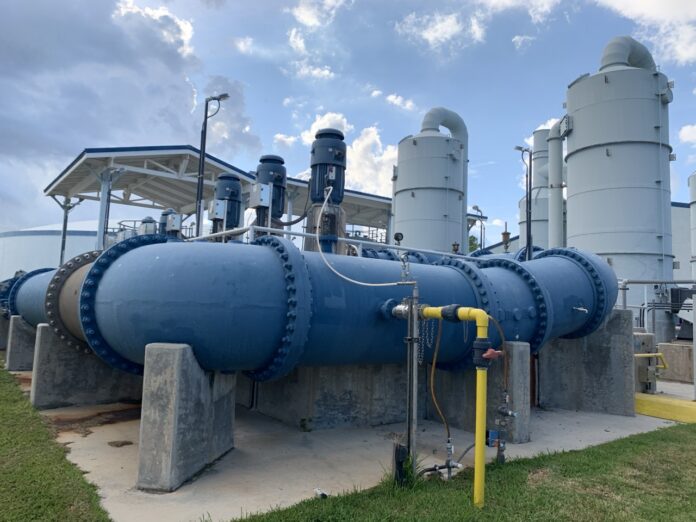
- Enhanced Water Treatment: The DWM initiated the manual feeding of powdered activated carbon (PAC) at its water treatment plants. This process is designed to adsorb and control the organic compounds affecting taste and smell. This action directly contributes to Target 6.3 of the SDGs, which focuses on improving water quality by reducing pollution.
- Public Communication: Officials have provided clear information to residents, assuring them of the water’s safety. Transparent communication is vital for maintaining the public’s confidence in municipal services, a cornerstone of SDG 11 (Sustainable Cities and Communities).
- Continuous Monitoring: The ongoing assessment of the Chattahoochee River ecosystem highlights the importance of protecting and restoring water-related ecosystems, as outlined in SDG Target 6.6.
Conclusion
The unusual taste and odor in Atlanta’s drinking water are the result of a predictable, natural environmental cycle and do not compromise the water’s safety. The DWM’s proactive response, including advanced treatment with PAC and transparent public communication, demonstrates effective management of a vital public resource. These efforts underscore the city’s commitment to achieving the Sustainable Development Goals, particularly ensuring access to safe and clean water (SDG 6), promoting public health (SDG 3), and building resilient urban infrastructure (SDG 11).
SDGs Addressed in the Article
SDG 6: Clean Water and Sanitation
- The article’s central theme is the quality and safety of drinking water for the residents of Atlanta. It discusses the water source (Chattahoochee River), natural compounds affecting its taste and smell, the treatment process, and the city’s management of the water supply, all of which are core components of SDG 6.
SDG 3: Good Health and Well-being
- The article places a strong emphasis on the health implications of the water quality issue. The Department of Watershed Management (DWM) makes a point to assure residents that the compounds “are not harmful and do not pose any health risks” and that the water “is safe to drink,” directly connecting the issue to the protection of public health.
SDG 11: Sustainable Cities and Communities
- The provision of a safe and reliable water supply is a fundamental basic service for any city. The article details how a municipal body, the Atlanta DWM, is actively managing its urban water system to address a quality issue and maintain service for its population, which aligns with the goal of making cities sustainable and resilient.
Specific SDG Targets Identified
SDG 6: Clean Water and Sanitation
-
Target 6.1: By 2030, achieve universal and equitable access to safe and affordable drinking water for all.
- The article directly relates to this target by focusing on the safety of the drinking water provided to Atlanta’s population. The official assurance that the water “is safe to drink” despite aesthetic concerns demonstrates the effort to maintain access to safe water.
-
Target 6.3: By 2030, improve water quality by reducing pollution…
- While the compounds are naturally occurring, the city’s response to “initiated manual feeding of powdered activated carbon (PAC) at its water treatment plants to control naturally occurring compounds” is a direct action to improve the final quality of the drinking water delivered to consumers.
SDG 3: Good Health and Well-being
-
Target 3.9: By 2030, substantially reduce the number of deaths and illnesses from hazardous chemicals and air, water and soil pollution and contamination.
- The DWM’s statement that the identified compounds “are not harmful and do not pose any health risks” explicitly addresses this target by confirming the water is free from contamination that would lead to illness, thereby safeguarding public health.
SDG 11: Sustainable Cities and Communities
-
Target 11.1: By 2030, ensure access for all to adequate, safe and affordable housing and basic services…
- The management of the public water supply is a critical “basic service.” The article showcases the city’s operational management of this service, including quality monitoring, treatment adjustments, and public communication.
Indicators for Measuring Progress
Implied Indicators
- Proportion of population using safely managed drinking water services (Official Indicator 6.1.1): The article implies this is being met. The existence and actions of the “City of Atlanta Department of Watershed Management,” which conducts “preliminary assessments” and operates “water treatment plants,” point to a system of safely managed drinking water for the city’s population.
- Measurement of specific water quality parameters: The article implies the use of specific measurements as indicators. The identification of “low levels of naturally occurring organic compounds Methylisoborneol (MIB) and Geosmin” shows that the DWM is monitoring specific chemical and biological parameters to assess water quality.
- Implementation of water treatment technologies: The specific action of using “powdered activated carbon (PAC)” serves as an indicator of the city’s capacity and effort to respond to water quality issues and improve the effectiveness of its water treatment processes.
Summary Table: SDGs, Targets, and Indicators
| SDGs | Targets | Indicators |
|---|---|---|
| SDG 6: Clean Water and Sanitation | Target 6.1: Achieve universal and equitable access to safe and affordable drinking water for all. | Implied: Proportion of population using safely managed drinking water services, confirmed by the DWM’s public assurance of safety. |
| SDG 6: Clean Water and Sanitation | Target 6.3: Improve water quality. | Implied: Measurement of specific compounds (MIB and Geosmin); Implementation of treatment processes (powdered activated carbon). |
| SDG 3: Good Health and Well-being | Target 3.9: Substantially reduce illnesses from water pollution and contamination. | Implied: Monitoring for harmful substances and public confirmation that the identified compounds “do not pose any health risks.” |
| SDG 11: Sustainable Cities and Communities | Target 11.1: Ensure access for all to basic services. | Implied: The active management and quality control of the municipal water supply by the Department of Watershed Management. |
Source: 11alive.com
What is Your Reaction?
 Like
0
Like
0
 Dislike
0
Dislike
0
 Love
0
Love
0
 Funny
0
Funny
0
 Angry
0
Angry
0
 Sad
0
Sad
0
 Wow
0
Wow
0