
















EU Offshore Study: Average Wind Turbine Hits Only One Dozen Birds Per Year – The Maritime Executive
Report on Avian Interaction with Offshore Wind Infrastructure and Implications for Sustainable Development Goals
Introduction: Advancing SDG 7 and SDG 13 through Evidence-Based Environmental Assessment
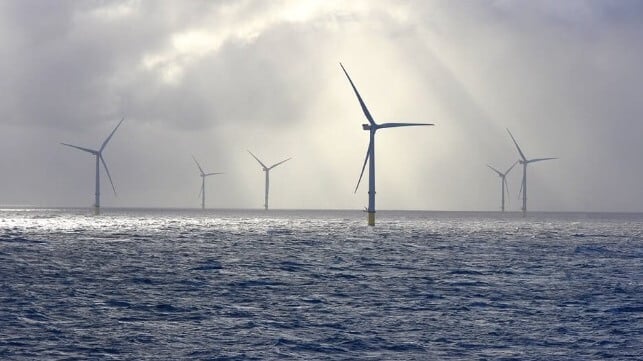
A recent study commissioned by the German Offshore Wind Energy Association (BWO) provides critical data supporting the expansion of offshore wind energy, a key strategy for achieving Sustainable Development Goal 7 (Affordable and Clean Energy) and Sustainable Development Goal 13 (Climate Action). The research addresses significant environmental concerns regarding the impact of wind turbines on migratory birds, directly informing strategies to protect biodiversity in line with Sustainable Development Goal 14 (Life Below Water) and Sustainable Development Goal 15 (Life on Land).
Methodology: Innovation in Support of Sustainable Infrastructure (SDG 9)
The study, conducted by research firm BioConsult SH GmbH, represents a partnership approach to generating data for sustainable development, aligning with SDG 17 (Partnerships for the Goals). The research methodology employed innovative technologies, reflecting progress toward SDG 9 (Industry, Innovation, and Infrastructure).
- Location: The study was conducted at the Windtestfeld Nord wind farm near Husum, Germany, a key area for offshore wind development in the North and Baltic Seas.
- Duration and Scope: Over a period of one and a half years, the movement patterns of more than 4.2 million birds were analyzed.
- Technological Approach: A combination of specialized bird radar for continuous migration monitoring and AI-based camera systems installed on turbines was used. This allowed for unprecedented accuracy in recording bird movements, including nocturnal activity captured via infrared technology.
Key Findings: Harmonizing Clean Energy with Ecosystem Protection
The results of the study provide a strong factual basis for de-politicizing the debate around wind energy and wildlife, enabling policy decisions that support both climate and biodiversity goals.
- High Avoidance Rate: Over 99.8 percent of migratory birds were found to actively avoid wind turbines, indicating that the presence of wind farms does not automatically lead to high collision rates.
- Low Collision Risk: The overall collision risk for nocturnally migrating birds was determined to be very low in relation to the total number of birds passing through the area.
- Quantified Impact: Fatality surveys estimated a mean of 12.9 collision fatalities per turbine per year across all bird species. This low number challenges previous assumptions and suggests that blanket shutdowns of turbines during migration periods are not a sensible or necessary measure.
Implications for Sustainable Development Goals (SDGs)
The study’s conclusions have significant positive implications for the integrated achievement of multiple SDGs.
- SDG 7 & SDG 13: By demonstrating the low impact on avian populations, the research removes a potential barrier to the rapid expansion of offshore wind capacity, which is essential for transitioning to clean energy and taking urgent climate action. Germany’s targets of 30 GW by 2030 and 70 GW by 2045 are now supported by evidence that this expansion can be environmentally sound.
- SDG 14 & SDG 15: The findings confirm that renewable energy infrastructure can be developed in harmony with marine and terrestrial ecosystems. The data allows for the creation of targeted, effective mitigation strategies rather than broad, inefficient restrictions, thus protecting biodiversity while advancing energy goals.
- SDG 9 & SDG 17: The project serves as a model for using technological innovation and industry-research partnerships to build sustainable and resilient infrastructure. The data generated provides a robust foundation for evidence-based policy and regulation.
Analysis of SDGs, Targets, and Indicators
1. Which SDGs are addressed or connected to the issues highlighted in the article?
-
SDG 7: Affordable and Clean Energy
- The entire article revolves around offshore wind energy, a key source of clean and renewable power. It discusses Germany’s national targets to significantly increase its offshore wind capacity to 30 GW by 2030 and 70 GW by 2045, directly supporting the goal of providing clean energy.
-
SDG 13: Climate Action
- The expansion of offshore wind energy, as detailed in the article, is a fundamental strategy for climate change mitigation. By increasing renewable energy capacity, Germany aims to reduce its reliance on fossil fuels, thereby combating climate change. The study’s purpose is to facilitate this expansion by addressing environmental concerns.
-
SDG 15: Life on Land
- This goal is central to the article’s main theme, which is the impact of wind turbines on migratory birds. The study investigates the collision risks for species like geese, ducks, gulls, and songbirds to ensure that the expansion of wind energy is “environmentally sound” and does not harm avian biodiversity. It directly addresses the protection of wildlife and ecosystems.
-
SDG 14: Life Below Water
- The wind farms discussed are located offshore in the North and Baltic Seas. The study’s aim to ensure an “environmentally sound expansion” of this infrastructure is inherently linked to protecting the marine ecosystems in which these farms are built.
-
SDG 9: Industry, Innovation, and Infrastructure
- The article discusses the large-scale development of energy infrastructure (offshore wind farms). Furthermore, it highlights a “methodological breakthrough” in monitoring technology, using a combination of specialized bird radar and AI-based camera systems. This represents an innovation that helps make infrastructure development more sustainable.
2. What specific targets under those SDGs can be identified based on the article’s content?
-
Target 7.2: By 2030, increase substantially the share of renewable energy in the global energy mix.
- The article explicitly mentions Germany’s national targets to “increase offshore wind capacity to 30 GW by 2030,” which is a direct and measurable contribution to this global target.
-
Target 15.5: Take urgent and significant action to reduce the degradation of natural habitats, halt the loss of biodiversity and, by 2020, protect and prevent the extinction of threatened species.
- The study’s primary objective is to assess and mitigate the threat of wind turbines to migratory birds. By concluding that “over 99.8 percent of migratory birds avoid wind turbines,” the study provides data to help prevent the loss of avian biodiversity, directly aligning with the goal of protecting species and their habitats.
-
Target 9.4: By 2030, upgrade infrastructure and retrofit industries to make them sustainable, with increased resource-use efficiency and greater adoption of clean and environmentally sound technologies and industrial processes.
- The expansion of offshore wind energy is a major upgrade of a country’s energy infrastructure to make it cleaner and more sustainable. The study itself, by providing a factual basis for the “environmentally sound expansion of offshore wind energy,” supports the implementation of this target.
3. Are there any indicators mentioned or implied in the article that can be used to measure progress towards the identified targets?
-
Indicator 7.2.1: Renewable energy share in the total final energy consumption.
- The article provides concrete data points that are used to calculate this indicator. It states Germany’s existing installed capacity (“9.2 GW”) and its future targets (“30 GW by 2030,” “40 GW by 2035,” and “70 GW by 2045”). These figures directly measure the growth of renewable energy capacity.
-
Indicators related to Target 15.5 (e.g., measuring threats to biodiversity).
- While a specific UN indicator like the Red List Index is not named, the article provides direct, quantifiable data that would be used to assess such indicators. The key metrics mentioned are:
- The avoidance rate of birds: “over 99.8 percent of migratory birds avoid wind turbines.”
- The number of collision victims: “an estimated total of 99.7 fatalities of all bird species being recorded across the study period.”
- The fatality rate per turbine: “a mean of 12.9 collision fatalities per year and turbine.”
These figures serve as direct measures of the human-induced impact on wildlife, which is a core component of biodiversity indicators.
- While a specific UN indicator like the Red List Index is not named, the article provides direct, quantifiable data that would be used to assess such indicators. The key metrics mentioned are:
SDGs, Targets and Indicators Table
| SDGs | Targets | Indicators |
|---|---|---|
| SDG 7: Affordable and Clean Energy | Target 7.2: By 2030, increase substantially the share of renewable energy in the global energy mix. | Implied Indicator 7.2.1: The article provides data on installed offshore wind capacity (9.2 GW) and future national targets (30 GW by 2030, 70 GW by 2045), which are direct measures of renewable energy growth. |
| SDG 15: Life on Land | Target 15.5: Take urgent and significant action to reduce the degradation of natural habitats, halt the loss of biodiversity… | Implied Indicators for Biodiversity Impact: The article provides specific metrics to measure the impact on bird populations:
|
| SDG 9: Industry, Innovation, and Infrastructure | Target 9.4: By 2030, upgrade infrastructure… to make them sustainable… and with greater adoption of clean and environmentally sound technologies. | Implied Indicator: The article describes the “methodological breakthrough” of using AI-based cameras and specialized radar for environmental monitoring, representing the adoption of innovative and environmentally sound technology in infrastructure projects. |
| SDG 13: Climate Action | Target 13.2: Integrate climate change measures into national policies, strategies and planning. | Implied Indicator: Germany’s national policy to set ambitious targets for offshore wind expansion (30 GW by 2030) is a direct example of a national strategy to combat climate change. |
Source: maritime-executive.com
What is Your Reaction?
 Like
0
Like
0
 Dislike
0
Dislike
0
 Love
0
Love
0
 Funny
0
Funny
0
 Angry
0
Angry
0
 Sad
0
Sad
0
 Wow
0
Wow
0