














































Finding a Longer-Duration Alternative to Battery Storage – POWER Magazine
Report on the Role of Long-Duration Energy Storage in Achieving Sustainable Development Goals
Executive Summary
The global transition towards renewable energy sources necessitates advanced energy storage solutions to ensure grid stability and reliability, directly supporting the achievement of several Sustainable Development Goals (SDGs). While lithium-ion batteries have dominated the market, their limitations in duration and safety are driving investment towards Long-Duration Energy Storage (LDES) technologies. This report details the growing importance of LDES, with a specific focus on Compressed Air Energy Storage (CAES), as a critical enabler for SDG 7 (Affordable and Clean Energy), SDG 9 (Industry, Innovation, and Infrastructure), SDG 11 (Sustainable Cities and Communities), and SDG 13 (Climate Action).
Market Growth and the Shift Towards Sustainable Storage Solutions
The global energy storage market is experiencing unprecedented growth, with investment increasing by 36% in 2024. This expansion is foundational for building the resilient and clean energy infrastructure required by the SDGs.
Market Trajectory
- Global energy storage market value grew from $0.6 billion in 2014 to $53.9 billion in 2024.
- Utility-scale projects constitute 58% of the market, indicating a strategic focus on grid-level solutions that support SDG 7.
- In the U.S., installed battery energy storage systems (BESS) grew from 1 GW in 2020 to approximately 20 GW by the end of 2024.
Limitations of Conventional Battery Storage
The predominant reliance on lithium-ion BESS presents challenges to long-term sustainability and safety goals.
- Duration Constraints: BESS typically offers only up to four hours of storage, which is insufficient for managing the intermittency of renewables over extended periods, limiting progress towards SDG 7.
- Safety and Environmental Risks: Incidents such as the January 2025 fire at the Moss Landing facility highlight the fire risk associated with lithium-ion technology, posing a threat to the safety and resilience of communities as outlined in SDG 11.
Long-Duration Energy Storage (LDES) as a Catalyst for the SDGs
LDES technologies are emerging as superior alternatives for integrating renewables, enhancing grid reliability, and advancing global decarbonization objectives in line with SDG 13.
Contributions to Sustainable Development
- Supporting SDG 7 (Affordable and Clean Energy): LDES enables the storage of excess renewable energy for use during periods of low generation, ensuring a consistent and reliable supply of clean power.
- Advancing SDG 9 (Industry, Innovation, and Infrastructure): The development and deployment of LDES represent significant innovation in building resilient and sustainable energy infrastructure.
- Promoting Economic Efficiency: LDES allows energy to be stored when prices are low and sold when high, optimizing grid economics and reducing the need for costly grid expansion projects.
Policy and Financial Support
Government initiatives are accelerating the adoption of LDES technologies, reinforcing national commitments to the SDGs.
- The Inflation Reduction Act (IRA) provides hundreds of millions of dollars for non-lithium energy storage projects.
- The Investment Tax Credit (ITC) offers a subsidy of up to 30%, incentivizing private sector investment in sustainable infrastructure (SDG 9).
Compressed Air Energy Storage (CAES): A Proven Technology for a Sustainable Future
CAES is a mature, mechanical LDES technology poised for a renaissance due to its scalability, reliability, and alignment with sustainable development principles.
Operational Excellence and SDG Alignment
Existing CAES facilities in Germany and the U.S. have operated for decades, demonstrating the technology’s viability.
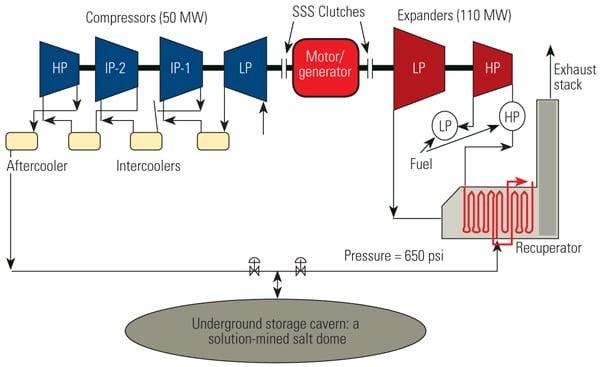
- Function: Off-peak or surplus renewable electricity is used to compress air into underground caverns. During peak demand, the compressed air is released to drive turbines and generate electricity.
- Grid Services: These plants provide essential grid services, including peaking power and frequency control, which are vital for the stable integration of intermittent renewables (SDG 7 and SDG 11).
- Efficiency and Duration: The McIntosh, Alabama facility can store enough energy to provide 110 MW of power for 25 hours, far exceeding the capacity of lithium-ion batteries.
Market Projections and Global Adoption
The global CAES market is projected to reach between $10.3 billion and $19.8 billion by 2030, with significant projects planned worldwide, including in the U.S., China, Japan, and Europe. The planned 324-MW Bethel Energy Center in Texas is expected to reduce emissions by approximately 90% compared to a modern combined cycle plant, making a direct contribution to SDG 13.
Innovation in CAES and its Impact on Global Goals
A new wave of innovation is enhancing CAES technology, further improving its efficiency and environmental performance to accelerate progress on the SDGs.
Advanced LDES Technologies
- Advanced-CAES (A-CAES): Developed by companies like Hydrostor, this variant uses a hydrostatic head to maintain constant pressure and incorporates thermal storage to capture heat from compression. This process eliminates the need for natural gas combustion, creating a zero-emissions power source that fully aligns with SDG 7 and SDG 13.
- Liquid Air Energy Storage (LAES): This technology stores energy by liquefying air. It is scalable, has no geographical constraints, and offers an efficiency of 50-70%, providing a flexible solution for building sustainable energy systems (SDG 9).
- CO2-Based Storage: Projects are under development to use compressed CO2 as a storage medium, turning a greenhouse gas into a component of the clean energy solution.
- Hydrogen and CAES Hybrids: Combining green hydrogen production with CAES offers a pathway to store massive quantities of renewable energy, supporting the decarbonization of multiple sectors and advancing SDG 13.
Economic Viability and Concluding Remarks
From an economic perspective, LDES technologies are increasingly competitive, making them a fiscally responsible choice for achieving climate and energy goals.
Cost-Effectiveness
- CAES: The Levelized Cost of Energy (COE) is estimated at $116-$140/kWh.
- Pumped Hydro Storage: COE is approximately $150-$200/kWh.
- Utility-Scale Lithium-Ion BESS: COE ranges from $170-$296/kWh for four hours of storage.
In conclusion, the strategic deployment of LDES technologies, particularly CAES and its innovative variants, is indispensable for the global energy transition. By providing safe, reliable, and cost-effective energy storage, these solutions are critical infrastructure for achieving the Sustainable Development Goals related to clean energy, climate action, and resilient infrastructure.
Analysis of Sustainable Development Goals (SDGs) in the Article
1. Which SDGs are addressed or connected to the issues highlighted in the article?
-
SDG 7: Affordable and Clean Energy
The article’s central theme is the development and deployment of energy storage technologies like Compressed Air Energy Storage (CAES) and other Long-Duration Energy Storage (LDES) solutions. These technologies are crucial for supporting the integration of renewable energy sources such as solar and wind, which are intermittent. By storing excess renewable energy, these systems ensure a stable and reliable supply of clean energy, directly contributing to making energy more sustainable and reliable.
-
SDG 9: Industry, Innovation, and Infrastructure
The article extensively discusses innovation in the energy sector, highlighting the development of new and improved energy storage systems (Advanced-CAES, LAES, CO2-based storage). It details the construction of new, resilient energy infrastructure projects worldwide (U.S., Germany, China, etc.) designed to enhance grid stability and support decarbonization. This focus on technological advancement and building sustainable infrastructure aligns perfectly with SDG 9.
-
SDG 13: Climate Action
The primary motivation for developing LDES, as mentioned in the article, is to “compensate for the intermittency of renewables” and forward “decarbonization objectives.” By enabling greater use of renewable energy and providing cleaner alternatives to fossil fuel-based power plants (the Bethel Energy Center is cited as “reducing emissions by about 90%”), these technologies are a direct measure to combat climate change and its impacts.
2. What specific targets under those SDGs can be identified based on the article’s content?
-
SDG 7: Affordable and Clean Energy
- Target 7.2: By 2030, increase substantially the share of renewable energy in the global energy mix. The article explains that the “vision behind this investment is for excess solar and wind to be stored in batteries for use when the sun doesn’t shine or the wind isn’t blowing.” This directly supports increasing the functional share of renewables in the grid.
- Target 7.b: By 2030, expand infrastructure and upgrade technology for supplying modern and sustainable energy services. The article is filled with examples of this, from the growth of lithium-ion BESS to the development and funding of innovative LDES technologies like CAES, LAES, and hydrogen-CAES hybrids. The global market growth from “$0.6 billion worldwide” in 2014 to “$53.9 in 2024” shows this expansion.
-
SDG 9: Industry, Innovation, and Infrastructure
- Target 9.1: Develop quality, reliable, sustainable and resilient infrastructure. The article emphasizes that LDES adds “stability and reliability to the grid.” The discussion of projects like the 320-MW facility in Huntorf, Germany, and the planned 500-MW Willow Rock Center in California are examples of developing this resilient infrastructure.
- Target 9.4: By 2030, upgrade infrastructure and retrofit industries to make them sustainable, with increased resource-use efficiency and greater adoption of clean and environmentally sound technologies. The article describes a “New Wave of CAES Innovation,” including Advanced-CAES systems that “can provide efficiency rates as high as 80%” and eliminate the carbon emissions associated with traditional CAES that “uses natural gas combustion.” This represents a direct effort to adopt cleaner and more efficient technologies.
-
SDG 13: Climate Action
- Target 13.2: Integrate climate change measures into national policies, strategies and planning. The article explicitly mentions government support through the “Inflation Reduction Act (IRA)” and the “investment tax credit (ITC),” which provides a “subsidy of up to 30%.” These are national policies in the U.S. designed to accelerate the transition to cleaner energy technologies as a climate change mitigation strategy.
3. Are there any indicators mentioned or implied in the article that can be used to measure progress towards the identified targets?
-
For SDG 7 (Affordable and Clean Energy)
- Financial Investment: The article provides specific figures on investment in the energy storage market, which serves as a proxy for financial flows towards sustainable energy infrastructure. Examples include the market reaching “$53.9 in 2024” and “hundreds of millions of dollars in funding for advanced energy storage systems.”
- Installed Capacity: Progress can be measured by the total installed capacity of energy storage. The article notes the U.S. grew from “1 GW of BESS in 2020” to “about 20 GW at the end of 2024” and mentions the capacity of specific projects (e.g., “320-MW facility in Huntorf,” “500 MW of power” for the Willow Rock Center).
-
For SDG 9 (Industry, Innovation, and Infrastructure)
- Adoption of New Technologies: The number and scale of projects using innovative technologies serve as an indicator. The article lists several, such as Hydrostor’s Advanced-CAES, Highview Power’s LAES projects in Spain, and the CO2-based storage project by Burns & McDonnell.
- Emission Reduction Levels: The article implies that a key performance indicator for new infrastructure is its environmental impact. The Bethel Energy Center is projected to provide ancillary services while “reducing emissions by about 90%,” a quantifiable measure of its sustainability.
-
For SDG 13 (Climate Action)
- Existence of Supportive Policies: The implementation and funding levels of national policies are a direct indicator. The article’s reference to the “Inflation Reduction Act (IRA)” and the “investment tax credit (ITC)” are concrete examples of policies designed to integrate climate action into national planning.
4. Summary Table of SDGs, Targets, and Indicators
| SDGs | Targets | Indicators |
|---|---|---|
| SDG 7: Affordable and Clean Energy | 7.2: Increase the share of renewable energy.
7.b: Expand infrastructure and upgrade technology for sustainable energy. |
|
| SDG 9: Industry, Innovation, and Infrastructure | 9.1: Develop quality, reliable, and resilient infrastructure.
9.4: Upgrade infrastructure with clean and environmentally sound technologies. |
|
| SDG 13: Climate Action | 13.2: Integrate climate change measures into national policies. |
|
Source: powermag.com
What is Your Reaction?
 Like
0
Like
0
 Dislike
0
Dislike
0
 Love
0
Love
0
 Funny
0
Funny
0
 Angry
0
Angry
0
 Sad
0
Sad
0
 Wow
0
Wow
0