
















Homerun Resources Inc. Executes NREL Enduring Thermal Energy Storage Global Intellectual Property Agreement Including New Patent Application and EMS Integration – Investing News Network
Report on Homerun Energy’s Advancement in Sustainable Energy Storage Technology
Executive Summary
Homerun Energy USA, Inc., a subsidiary of Homerun Resources, Inc., has entered into a significant Intellectual Property Agreement (IPA) with Alliance for Sustainable Energy, LLC, the operator of the U.S. Department of Energy’s National Renewable Energy Laboratory (NREL). This agreement focuses on the commercialization of NREL’s particle-based thermal energy storage (TES) systems, a technology poised to make substantial contributions to several Sustainable Development Goals (SDGs), particularly SDG 7 (Affordable and Clean Energy), SDG 9 (Industry, Innovation, and Infrastructure), and SDG 13 (Climate Action).
Advancing SDG 7: Affordable and Clean Energy
Core Technology: Long-Duration Thermal Energy Storage
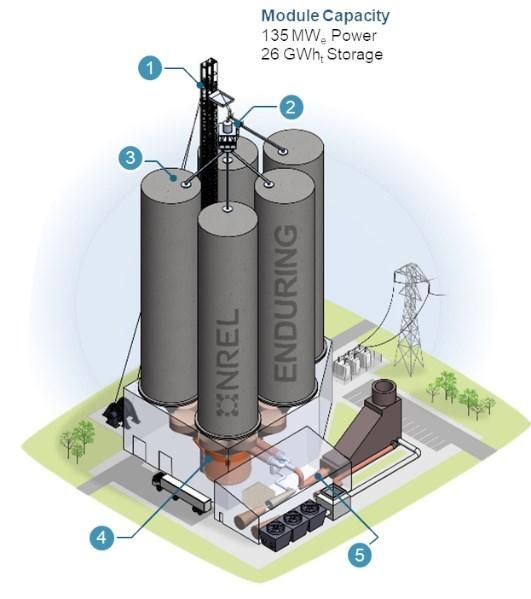
The collaboration centers on a sand-based TES system designed for long-duration energy storage. This technology is critical for enhancing grid stability and enabling the widespread adoption of intermittent renewable energy sources like solar and wind. By storing excess energy as heat in silica particles, the system provides a reliable and economic solution to ensure clean energy is available on demand, directly supporting the targets of SDG 7.
Commercialization and AI-Powered Energy Management
Homerun’s commercialization plan involves integrating its proprietary AI Energy Management System (EMS) with the NREL technology. This integration aims to optimize energy capture, storage, and utilization, thereby increasing efficiency and reducing costs. The AI-driven system will empower users to monitor, control, and predict energy patterns, enhancing the performance and economic viability of renewable energy solutions and contributing to more sustainable energy consumption.
Fostering SDG 9: Industry, Innovation, and Infrastructure
Strategic Partnership and Intellectual Property Development
The agreement is the result of a two-year Cooperative Research and Development Agreement (CRADA) between Homerun and NREL, exemplifying a successful public-private partnership model for accelerating sustainable innovation. Key details of the partnership include:
- Homerun Energy USA, Inc. has secured an option to license the intellectual property portfolio related to NREL’s particle-based TES systems.
- The option period is for twelve months, during which Homerun must demonstrate commercially reasonable efforts to bring the technology to market.
- A new patent application has been filed under the CRADA for an invention that integrates the TES system with silica sand purification processing.
Promoting SDG 12 and SDG 13: Responsible Production and Climate Action
Integrated System for Enhanced Resource Efficiency
The newly developed invention combines energy storage with materials processing, creating a dual-purpose system that aligns with the principles of responsible production (SDG 12). This innovative approach offers significant benefits:
- Synergy: It synergizes energy storage with silica purification, using silica sand as both the storage medium and the final purified product.
- Efficiency: The system is designed to recover and reuse process heat for internal operations and external industrial applications, maximizing energy utilization and minimizing waste.
- Economic Viability: The dual-functionality creates multiple revenue streams from power sales, industrial process heat, and the supply of advanced silica materials for technology and energy end-uses.
Homerun’s Vertically Integrated Strategy for the Energy Transition
This initiative is part of Homerun’s broader strategy to build a “silica-powered backbone” for the energy transition, directly addressing the need for urgent climate action (SDG 13). The company’s four focused verticals represent a comprehensive approach to developing sustainable infrastructure:
- Silica: Securing a supply of high-purity silica for critical clean energy applications.
- Solar: Developing high-efficiency and antimony-free solar glass manufacturing.
- Energy Storage: Advancing silica-based thermal storage to decarbonize industrial heat and enhance grid flexibility.
- Energy Solutions: Deploying AI-enabled management systems to optimize renewable energy for commercial and industrial customers.
Analysis of Sustainable Development Goals (SDGs) in the Article
1. Which SDGs are addressed or connected to the issues highlighted in the article?
-
SDG 7: Affordable and Clean Energy
- The article focuses on the development and commercialization of a “particle-based thermal energy storage system.” This technology is crucial for ensuring access to reliable and sustainable energy. As stated, it provides “long-life, long duration energy storage,” which is essential for stabilizing power grids that rely on intermittent renewable energy sources like solar and wind.
-
SDG 9: Industry, Innovation, and Infrastructure
- The article highlights significant innovation through the partnership between Homerun Energy and the National Renewable Energy Laboratory (NREL). It discusses the filing of a “new patent application” and the integration of an “AI Energy Management System (EMS).” Furthermore, the technology is aimed at industrial applications, seeking to “decarbonize industrial heat” and improve efficiency for customers in sectors like “pulp & paper, food, chemicals, metallurgical applications and data centres,” thereby promoting sustainable industrialization.
-
SDG 13: Climate Action
- The entire initiative described in the article is a direct response to the need for climate action. By developing energy storage solutions, the technology enables greater adoption of renewable energy, which is key to reducing greenhouse gas emissions. The goal to “decarbonize industrial heat” directly tackles a major source of emissions, contributing to the fight against climate change and its impacts. The article explicitly mentions reducing “environmental impact” as a key benefit.
2. What specific targets under those SDGs can be identified based on the article’s content?
-
Target 7.2: By 2030, increase substantially the share of renewable energy in the global energy mix.
- The “long duration energy storage” system described is a critical enabling technology for increasing the share of renewables. It solves the intermittency problem of sources like solar and wind, allowing for a consistent and reliable power supply, which is necessary for their large-scale integration into the energy grid.
-
Target 7.a: By 2030, enhance international cooperation to facilitate access to clean energy research and technology… and promote investment in energy infrastructure and clean energy technology.
- The article is centered around an “Intellectual Property Agreement” and a “Cooperative Research and Development Agreement (CRADA)” between Homerun Energy USA, Inc., and Alliance for Sustainable Energy, LLC, the operator of the U.S. Department of Energy’s NREL. This partnership exemplifies the cooperation needed to advance and commercialize clean energy technology.
-
Target 9.4: By 2030, upgrade infrastructure and retrofit industries to make them sustainable, with increased resource-use efficiency and greater adoption of clean and environmentally sound technologies and industrial processes.
- The technology aims to provide “industrial heating/cooling solutions” and “recovers and reuses process heat for both internal plant operations and external industrial customers.” This directly addresses the goal of retrofitting industries with clean technologies to improve energy efficiency and sustainability.
-
Target 9.5: Enhance scientific research, upgrade the technological capabilities of industrial sectors in all countries… encouraging innovation and substantially increasing the number of research and development workers.
- The collaboration between Homerun and NREL, the filing of a new patent, and the plan to “advance the technologies toward commercial application” are all activities that enhance scientific research and upgrade technological capabilities. The development of a novel “thermal energy storage (TES) system integrated with silica sand purification” is a clear example of this innovation.
3. Are there any indicators mentioned or implied in the article that can be used to measure progress towards the identified targets?
-
Indicator for Target 7.a: Existence of formal cooperation agreements.
- The article explicitly mentions the “Intellectual Property Agreement (IPA)” and the “Cooperative Research and Development Agreement (CRADA No. CRD-23-24168).” The existence of these agreements is a direct measure of cooperation to facilitate access to clean energy research and technology.
-
Indicator for Target 9.4: Improvements in energy efficiency.
- The article implies this indicator by stating that the system “recovers and reuses process heat” and “maximizes energy utilization.” Measuring the amount of heat recovered and reused or the overall energy savings in industrial applications would serve as a clear indicator of progress.
-
Indicator for Target 9.5: Research and development activity.
- The article directly mentions that a “new patent application has been filed.” The number of patents filed related to clean and sustainable technology is a standard indicator for measuring innovation and R&D activity. The two-year partnership itself is also an indicator of sustained R&D efforts.
4. Summary of SDGs, Targets, and Indicators
| SDGs | Targets | Indicators |
|---|---|---|
| SDG 7: Affordable and Clean Energy | 7.2: Increase the share of renewable energy in the global energy mix.
7.a: Enhance international cooperation to facilitate access to clean energy research and technology. |
Implied: Increased grid capacity for renewables due to the deployment of long-duration energy storage.
Mentioned: The existence of the Cooperative Research and Development Agreement (CRADA) and Intellectual Property Agreement (IPA) between Homerun and NREL. |
| SDG 9: Industry, Innovation, and Infrastructure | 9.4: Upgrade infrastructure and retrofit industries to make them sustainable and increase resource-use efficiency.
9.5: Enhance scientific research and upgrade technological capabilities. |
Implied: Measured improvements in energy efficiency in industrial processes through the recovery and reuse of process heat.
Mentioned: The filing of a “new patent application” for the invention. |
| SDG 13: Climate Action | 13.2: Integrate climate change measures into national policies, strategies and planning. | Implied: Reduction of CO2 emissions from industrial heat processes by adopting the sand-based thermal energy storage technology, which supports decarbonization goals. |
Source: investingnews.com
What is Your Reaction?
 Like
0
Like
0
 Dislike
0
Dislike
0
 Love
0
Love
0
 Funny
0
Funny
0
 Angry
0
Angry
0
 Sad
0
Sad
0
 Wow
0
Wow
0