
















How will climate change affect the UK? – The Week
Climate Change Impact Report: United Kingdom and the Sustainable Development Goals
1.0 Introduction: Climate Projections and SDG 13 (Climate Action)
- The World Meteorological Organisation reports atmospheric carbon dioxide concentrations have reached their highest level in 800,000 years, directly challenging the objectives of SDG 13 (Climate Action).
- Global temperatures have already increased by approximately 1.1-1.3°C above pre-industrial levels, with a projected warming of 2.5-3°C by 2100.
- Met Office projections for the UK indicate a significantly warmer and wetter climate, characterized by stark seasonal contrasts and an increase in extreme weather events.
2.0 Key Risk Areas and Their Impact on Sustainable Development
2.1 Economic and Infrastructure Resilience: SDGs 8, 9, and 11
The Climate Change Committee (CCC) has identified significant risks to the UK’s economic and infrastructural stability, impacting several SDGs.
- Economic Prosperity (SDG 8): Climate change poses a direct risk to economic prosperity, with predictions that economic output could be reduced by up to 7% by 2050, undermining efforts for decent work and sustainable economic growth.
- Infrastructure Disruption (SDG 9): The integrity of national infrastructure is threatened by climate-related events.
- Droughts are projected to increase pressure on public water supplies.
- Extreme heat events risk damage to critical transportation networks, such as the buckling of railway lines.
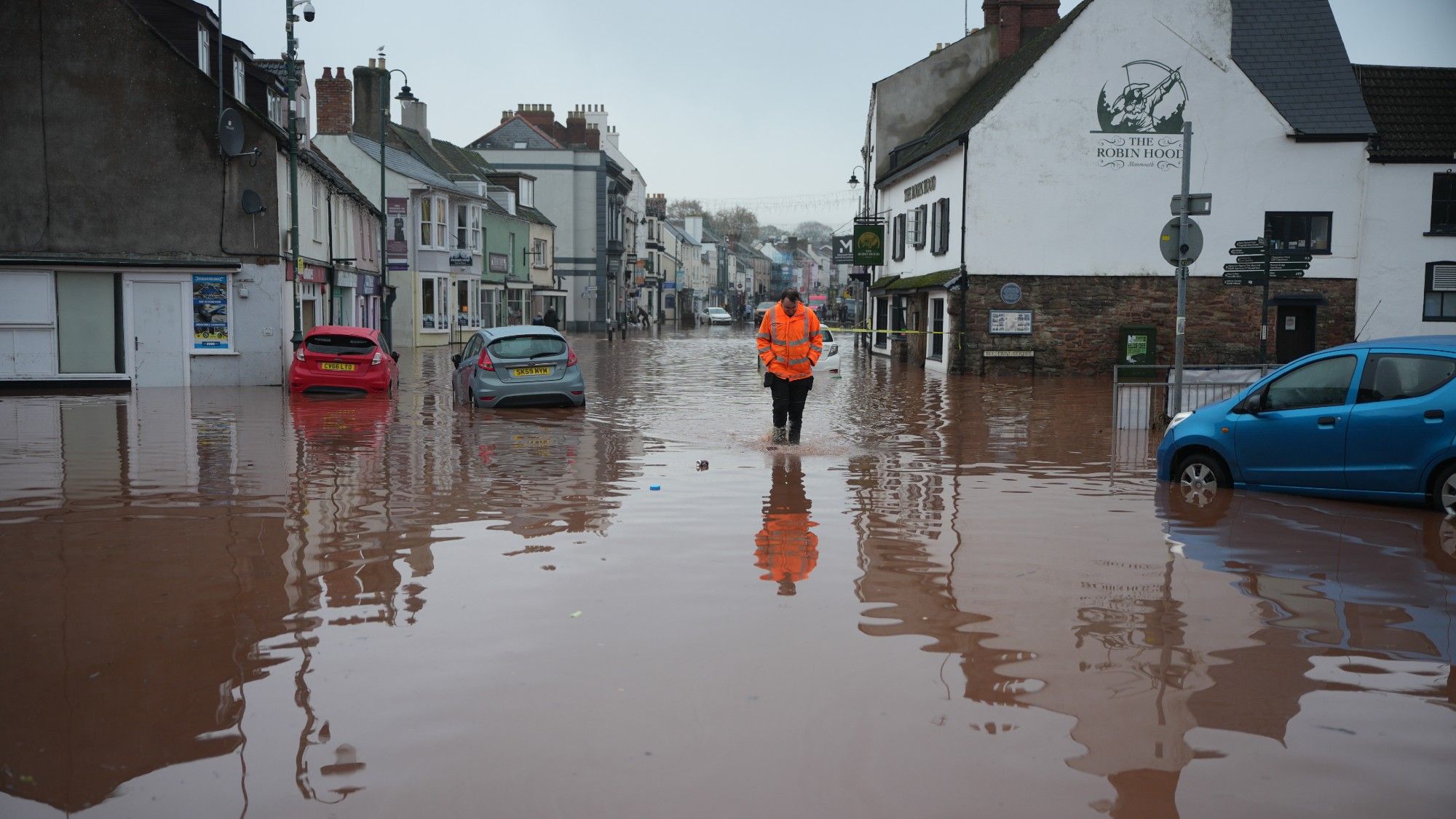
- Sustainable Communities (SDG 11): A primary risk is to properties from flooding and overheating, jeopardising the goal of creating safe, resilient, and sustainable human settlements.
2.2 Food Security and Ecosystems: SDGs 2, 14, and 15
Climate change poses a direct threat to food production and natural ecosystems, affecting goals related to hunger and biodiversity.
- Food Production and Zero Hunger (SDG 2):
- Recent weather patterns, including flooding and drought, have already damaged crops and driven up the price of animal feed. A study found 86% of farmers had experienced extreme rainfall and 78% had experienced drought in the past five years.
- While warmer weather may enable the cultivation of new crops, yields of many staple crops and grass-fed livestock are expected to decline due to drier summers.
- Higher temperatures will allow pests and diseases to thrive, further threatening food security.
- Life on Land and Below Water (SDG 14 & SDG 15):
- Global sea levels have risen by 16.5cm since 1900, with a further rise of between 0.3m and 1.15m anticipated by 2100.
- Rising sea levels contribute to coastal erosion, destroying homes and natural habitats.
- The Environment Agency assesses that 13% of agricultural land is already at risk of flooding, with over half of the UK’s prime agricultural land considered at risk, threatening biodiversity and the ability of land to sequester carbon.
2.3 Public Health and Well-being: SDG 3
The changing climate presents severe risks to public health, directly impacting SDG 3 (Good Health and Well-being).
- The CCC estimates that heat-related deaths could exceed 10,000 per year by 2050.
- A warming climate is expected to create a more welcoming environment for food-borne bacterial infections, such as salmonella and campylobacter.
- Changing disease patterns may also lead to an increase in insect-borne diseases like malaria and Lyme’s disease.
2.4 Property and Community Resilience: SDG 11
The risk to property from climate-related events is a major challenge to SDG 11 (Sustainable Cities and Communities).
- The Environment Agency estimates that 6.3 million properties in England are currently at risk from flooding, a figure that could rise to eight million by 2050.
- A significant concern is that high-risk areas will become uninsurable and thus uninhabitable.
- A government-backed insurance scheme for vulnerable properties is scheduled to end in 2039, increasing future uncertainty for at-risk communities.
3.0 Adaptation Strategies and Future Outlook
Addressing these climate risks requires significant investment in adaptation and mitigation, aligning with multiple SDG targets.
- Investment in Mitigation (SDG 13): Over £59 billion has been allocated by Labour for the period to 2030 to achieve net-zero emissions.
- Water Management (SDG 6): To address water shortages, nine new industrial-scale reservoirs are planned for construction by 2050.
- Infrastructure Resilience (SDG 9 & SDG 11): A £2.7 billion boost will be given to the £1 billion spent annually on flood defences.
- Risk Assessment: A 2022 government report identified 56 climate risks, from loss of native species to political instability, with more than half judged as needing “more action” to build a resilient future in line with the Sustainable Development Goals.
Analysis of Sustainable Development Goals in the Article
1. Which SDGs are addressed or connected to the issues highlighted in the article?
-
SDG 2: Zero Hunger
The article directly addresses threats to food security by discussing how extreme weather events like flooding and drought are damaging crops, driving up the price of animal feed, and reducing yields of staple crops in the UK. It mentions that “86% of farmers had experienced extreme rainfall in the past five years, while drought had affected 78%,” highlighting the vulnerability of the agricultural sector.
-
SDG 3: Good Health and Well-being
The article connects climate change to public health risks. It explicitly states that “heat-related deaths could exceed 10,000 a year by 2050” and notes that a warming climate will create a “welcoming environment for food-borne bacterial infections such as salmonella and campylobacter, and for insect-borne diseases such as malaria and Lyme’s.”
-
SDG 6: Clean Water and Sanitation
The issue of water availability is a key theme. The article mentions “drought putting pressure on water supplies” as a major risk. It also points to adaptation strategies, such as the plan to build “nine new industrial-scale reservoirs by 2050 to address water shortages.”
-
SDG 8: Decent Work and Economic Growth
The economic consequences of climate change are highlighted. The article cites a prediction from the Climate Change Committee (CCC) that “economic output could be reduced by up to 7% by 2050” due to climate-related risks, posing a significant threat to economic prosperity.
-
SDG 11: Sustainable Cities and Communities
The article discusses the impact of climate change on human settlements and infrastructure. It details the “risk to properties from flooding and overheating,” estimating that “6.3 million properties across England are now at risk from flooding,” a number that could rise to eight million by 2050. It also mentions infrastructure disruption, such as “extreme heat buckling railway lines.”
-
SDG 13: Climate Action
This is the central theme of the article. It begins by stating that the “concentration of carbon dioxide in the Earth’s atmosphere had reached its highest level in the past 800,000 years” and discusses the consequences of global warming, such as rising sea levels and more extreme weather events. The entire text is an analysis of the impacts of climate change and the need for adaptation.
-
SDG 15: Life on Land
The article touches upon the threat to terrestrial ecosystems and biodiversity. It lists the “threat from extreme weather to… nature (i.e. biodiversity and the ability of land, such as peat bogs, to sequester carbon)” as a key risk. It also mentions that rising sea levels cause “coastal erosion, destroying homes and habitats.”
2. What specific targets under those SDGs can be identified based on the article’s content?
-
SDG 13: Climate Action
- Target 13.1: Strengthen resilience and adaptive capacity to climate-related hazards and natural disasters in all countries. The article is focused on the UK’s need to adapt to climate change, discussing risks like flooding, heatwaves, and drought, and mentioning adaptation measures such as building reservoirs and flood defences.
-
SDG 2: Zero Hunger
- Target 2.4: By 2030, ensure sustainable food production systems and implement resilient agricultural practices that increase productivity and production, that help maintain ecosystems, that strengthen capacity for adaptation to climate change, extreme weather, drought, flooding and other disasters and that progressively improve land and soil quality. The article’s discussion of how flooding and drought are damaging crops and affecting yields directly relates to the need for resilient agricultural practices.
-
SDG 11: Sustainable Cities and Communities
- Target 11.5: By 2030, significantly reduce the number of deaths and the number of people affected and substantially decrease the direct economic losses relative to global gross domestic product caused by disasters, including water-related disasters, with a focus on protecting the poor and people in vulnerable situations. The article quantifies the risk to properties from flooding (“6.3 million properties”) and mentions the economic threat of areas becoming “uninsurable and thus uninhabitable.”
-
SDG 3: Good Health and Well-being
- Target 3.d: Strengthen the capacity of all countries, in particular developing countries, for early warning, risk reduction and management of national and global health risks. The projection of “heat-related deaths could exceed 10,000 a year by 2050” and the warning about changing disease patterns imply the need for strengthened health risk management.
-
SDG 15: Life on Land
- Target 15.5: Take urgent and significant action to reduce the degradation of natural habitats, halt the loss of biodiversity and, by 2020, protect and prevent the extinction of threatened species. The article identifies the threat to “biodiversity and the ability of land, such as peat bogs, to sequester carbon” and the destruction of habitats from coastal erosion as key risks.
3. Are there any indicators mentioned or implied in the article that can be used to measure progress towards the identified targets?
Yes, the article provides several quantitative and qualitative indicators that can be used to measure progress.
-
For SDG 13 (Climate Action):
- Concentration of carbon dioxide in the atmosphere.
- Global temperature increase above pre-industrial levels (currently 1.1-1.3°C).
- Sea level rise (16.5cm since 1900, with projections for 2100).
- Frequency and intensity of extreme weather events (e.g., very hot days, intense storms).
-
For SDG 2 (Zero Hunger):
- Percentage of agricultural land at risk of flooding (13% currently, with over half of Grade 1 land at risk).
- Crop yields for staple crops.
- Percentage of farmers affected by extreme weather (86% by rainfall, 78% by drought in the past five years).
-
For SDG 11 (Sustainable Cities and Communities):
- Number of properties at risk from flooding (6.3 million now, projected to be 8 million by 2050).
- Economic losses due to climate-related disasters (reduction in economic output of up to 7% by 2050).
-
For SDG 3 (Good Health and Well-being):
- Number of heat-related deaths per year (projected to exceed 10,000 by 2050).
- Incidence of climate-sensitive diseases (e.g., malaria, Lyme’s disease, salmonella).
4. Create a table with three columns titled ‘SDGs, Targets and Indicators” to present the findings from analyzing the article.
| SDGs | Targets | Indicators |
|---|---|---|
| SDG 13: Climate Action | 13.1: Strengthen resilience and adaptive capacity to climate-related hazards and natural disasters. |
|
| SDG 2: Zero Hunger | 2.4: Ensure sustainable food production systems and implement resilient agricultural practices. |
|
| SDG 3: Good Health and Well-being | 3.d: Strengthen capacity for early warning, risk reduction and management of health risks. |
|
| SDG 11: Sustainable Cities and Communities | 11.5: Reduce the number of deaths, affected people, and economic losses from disasters. |
|
| SDG 15: Life on Land | 15.5: Reduce the degradation of natural habitats and halt biodiversity loss. |
|
Source: theweek.com
What is Your Reaction?
 Like
0
Like
0
 Dislike
0
Dislike
0
 Love
0
Love
0
 Funny
0
Funny
0
 Angry
0
Angry
0
 Sad
0
Sad
0
 Wow
0
Wow
0