
























































Kazakhstan to Host International Genetic Resources Bank – The Times Of Central Asia
Kazakhstan to Host International Genetic Resources Bank Aligned with Sustainable Development Goals
Introduction
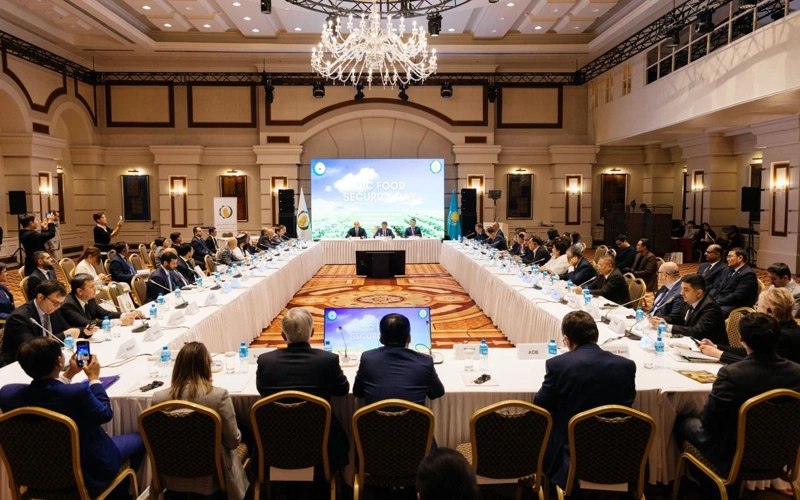
Kazakhstan has been unanimously approved by the 57 member states of the Organization of Islamic Cooperation (OIC) to host an international genetic resources bank. This initiative, led by the Islamic Organization for Food Security (IOFS), is designed to preserve agricultural biodiversity and enhance scientific collaboration among OIC countries. The project strongly supports several Sustainable Development Goals (SDGs), including SDG 2 (Zero Hunger), SDG 13 (Climate Action), and SDG 15 (Life on Land).
Project Overview and Objectives
- Creation of Genetic Resources Bank: The bank aims to conserve the biological diversity of agricultural crops, ensuring food security and resilience against climate change.
- Scientific Research and Collaboration: The facility will serve as a research center focusing on crop breeding, developing varieties resistant to climate change, drought, and environmental stresses.
- Regional Development: The bank will foster cooperation among OIC member states to promote sustainable agriculture and biodiversity preservation.
Implementation and Funding
- The government of Kazakhstan has confirmed its readiness to host the facility, with a project roadmap already completed.
- The Qatar Fund for Development (QFFD) has pledged approximately $2 million to finance the first phase of the project.
- Practical implementation is expected to begin in 2026, with completion targeted for 2029.
Location and Functional Scope
The Almaty region is currently the preferred location due to its favorable climatic conditions, which are optimal for the preservation of diverse genetic materials. The bank will not only store genetic samples but also maintain those requiring periodic cultivation and updating.
Comparison with Existing Models
The project draws inspiration from the Svalbard Global Seed Vault in Norway but aims to provide broader functionality by incorporating a full-fledged research center. This center will enable scientists from OIC countries to:
- Develop new crop varieties resistant to climate change and drought
- Increase agricultural yields
- Enhance food security in line with SDG 2
Complementary Initiatives: Biochar Projects in Central Asia
In addition to the genetic resources bank, IOFS is advancing projects promoting the use of biochar technology to rehabilitate degraded soils across Central Asia. This initiative aligns with SDG 15 (Life on Land) and SDG 13 (Climate Action) by improving soil health and enhancing carbon sequestration.
- Biochar Benefits: Biochar improves soil fertility, water retention, and acts as a sorbent to absorb harmful substances such as salts.
- Regional Relevance: Central Asian soils often suffer from salination; biochar technology offers a sustainable solution to restore agricultural productivity.
- Global Usage: The technology is already widely used in Arab and Asian countries, demonstrating its effectiveness and adaptability.
Recent Developments
As part of Kazakhstan’s commitment to sustainable agriculture, the country launched its first agroclimatic testing site for carbon technologies, Kaz Agro Carbon, in early November. This initiative supports SDG 13 by promoting climate-smart agricultural practices.
Conclusion
The establishment of the international genetic resources bank in Kazakhstan represents a significant step toward achieving multiple Sustainable Development Goals. By preserving agricultural biodiversity, fostering scientific innovation, and promoting sustainable land management practices, the project will contribute to global efforts to ensure food security, combat climate change, and protect terrestrial ecosystems.
1. Sustainable Development Goals (SDGs) Addressed or Connected
- SDG 2: Zero Hunger – The article focuses on preserving agricultural biodiversity and improving crop resilience, which directly relates to ending hunger and achieving food security.
- SDG 13: Climate Action – The development of crop varieties resistant to climate change and the use of biochar to rehabilitate soils address climate adaptation and mitigation.
- SDG 15: Life on Land – Preserving biological diversity of agricultural crops and improving soil quality contribute to sustainable land use and ecosystem conservation.
- SDG 17: Partnerships for the Goals – The international collaboration among OIC countries and funding support from Qatar Fund for Development highlight global partnerships.
2. Specific Targets Under Those SDGs
- SDG 2 Targets:
- 2.4: By 2030, ensure sustainable food production systems and implement resilient agricultural practices that increase productivity and production.
- 2.5: Maintain the genetic diversity of seeds, cultivated plants, and farmed animals and ensure access to fair and equitable sharing of benefits.
- SDG 13 Targets:
- 13.1: Strengthen resilience and adaptive capacity to climate-related hazards and natural disasters in all countries.
- 13.2: Integrate climate change measures into national policies, strategies, and planning.
- SDG 15 Targets:
- 15.1: Ensure the conservation, restoration, and sustainable use of terrestrial and inland freshwater ecosystems and their services.
- 15.5: Take urgent action to reduce the degradation of natural habitats, halt the loss of biodiversity, and protect threatened species.
- SDG 17 Targets:
- 17.16: Enhance the global partnership for sustainable development, complemented by multi-stakeholder partnerships.
- 17.3: Mobilize additional financial resources for developing countries from multiple sources.
3. Indicators Mentioned or Implied to Measure Progress
- For SDG 2:
- Indicator 2.4.1: Proportion of agricultural area under productive and sustainable agriculture (implied by the focus on resilient crop varieties and sustainable practices).
- Indicator 2.5.1: Number of plant genetic resources secured in either medium or long-term conservation facilities (directly relevant to the genetic resources bank).
- For SDG 13:
- Indicator 13.1.2: Number of countries with national and local disaster risk reduction strategies (implied by climate-resilient crop development).
- Indicator 13.2.1: Number of countries that have communicated the establishment or operationalization of an integrated policy/strategy/plan (implied by the project roadmap and national readiness).
- For SDG 15:
- Indicator 15.1.1: Forest area as a proportion of total land area (related to land use and biodiversity conservation).
- Indicator 15.5.1: Red List Index (implied by efforts to preserve genetic diversity and reduce habitat degradation).
- For SDG 17:
- Indicator 17.3.1: Foreign direct investments (FDI), official development assistance and South-South cooperation as a proportion of total domestic budget (related to funding from Qatar Fund for Development).
- Indicator 17.16.1: Number of countries reporting progress in multi-stakeholder development effectiveness monitoring frameworks (implied by OIC collaboration).
4. Table of SDGs, Targets, and Indicators
| SDGs | Targets | Indicators |
|---|---|---|
| SDG 2: Zero Hunger |
|
|
| SDG 13: Climate Action |
|
|
| SDG 15: Life on Land |
|
|
| SDG 17: Partnerships for the Goals |
|
|
Source: timesca.com
What is Your Reaction?
 Like
0
Like
0
 Dislike
0
Dislike
0
 Love
0
Love
0
 Funny
0
Funny
0
 Angry
0
Angry
0
 Sad
0
Sad
0
 Wow
0
Wow
0