
















Nature loss is a national security risk, intelligence chiefs warn – Euronews.com
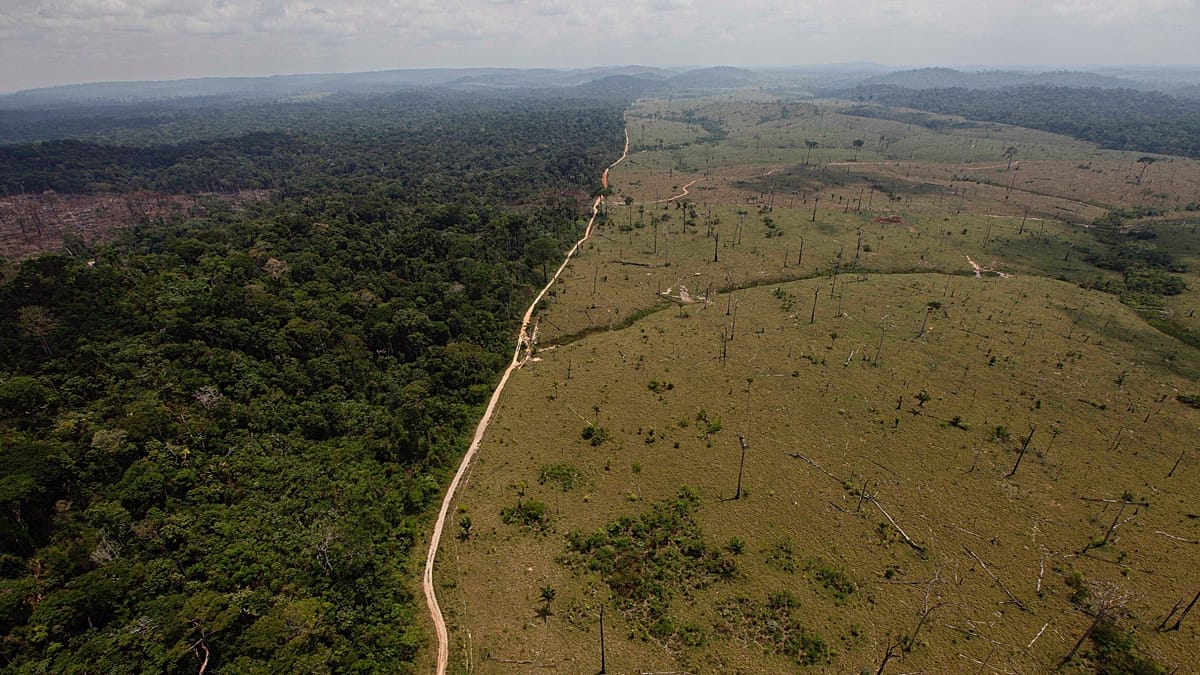
Report on Global Biodiversity Loss and Its Impact on UK National Security and Sustainable Development Goals
Introduction
A recent report by the UK’s Department for Environment, Food and Rural Affairs (DEFRA), developed with input from intelligence agencies MI5 and MI6, highlights the critical threat posed by global biodiversity loss to the UK’s national security and prosperity. The report underscores the urgent need for sustainable interventions aligned with the United Nations Sustainable Development Goals (SDGs), particularly those related to Zero Hunger (SDG 2), Climate Action (SDG 13), Life on Land (SDG 15), and Peace, Justice and Strong Institutions (SDG 16).
UK’s National Security Risks from Ecosystem Collapse
Dependence on Global Food and Fertiliser Markets
The 14-page DEFRA report emphasizes the UK’s significant reliance on international markets for food and fertiliser, which directly impacts SDG 2 (Zero Hunger) and SDG 12 (Responsible Consumption and Production):
- The UK imports approximately 40% of its food, with 25% sourced from Europe.
- High dependency on imports for fresh fruits, vegetables, sugar, and soy used in animal farming.
- Limited domestic fertiliser production, critical for crop yield and nutrition.
The report warns that biodiversity loss and climate change threaten domestic food production through degraded soils, loss of pollinators, and extreme weather events, jeopardizing the UK’s food security and sustainable agriculture (SDG 2 and SDG 15).
Risks of Ecosystem Degradation
- Potential collapse of ecosystems could severely stress UK agriculture, limiting adaptation to new technologies and approaches.
- Disruptions in international markets may exacerbate food insecurity.
- Organized crime may exploit scarce resources, increasing poverty and migration pressures (SDG 1 – No Poverty; SDG 10 – Reduced Inequalities).
- Food and water insecurity could fuel political polarization, instability, and disinformation, heightening conflict risks (SDG 16).
- Competition over arable land and resources may escalate conflicts within and between states.
- Non-state actors, including terrorist groups, may capitalize on instability to control scarce resources.
- The finite nature of natural resources threatens economic security, highlighting the need for sustainable consumption (SDG 8 – Decent Work and Economic Growth; SDG 12).
Government Response and Calls for Action
Environment Act 2021 and Legislative Measures
The UK government’s Environment Act 2021 aims to address biodiversity loss and environmental degradation by:
- Cleaning air and restoring natural habitats (SDG 15).
- Increasing biodiversity and reducing waste (SDG 12).
- Legally committing to halt species decline by 2030.
However, critics highlight contradictions such as the UK banking sector’s investment of over £1 billion into companies linked to deforestation, undermining SDG 15 and global climate commitments (SDG 13).
NGO and Expert Recommendations
- Urgent strengthening and implementation of the Environment Act to protect global forests and reduce UK consumption impacts.
- Implementation of Schedule 17 of the Environment Act to ban commodities grown on illegally deforested land.
- Calls for ending imports of commodities from all deforested lands to align with SDG 15 and SDG 12.
- Acceleration of tree planting initiatives to meet climate and nature targets, supporting SDG 13 and SDG 15.
European Context and Broader Implications
Europe’s Vulnerability to Biodiversity Loss
Europe, the fastest-warming continent, faces significant challenges related to biodiversity loss and climate change, impacting multiple SDGs:
- Approximately 12 million Europeans are at increased risk of food insecurity (SDG 2).
- One-third of the EU experiences year-round water stress, threatening water quality and availability essential for agriculture (SDG 6 – Clean Water and Sanitation).
- Heavy reliance on imports such as maize, rice, wheat, cocoa, coffee, and soy from climate-vulnerable countries exacerbates risks (SDG 12, SDG 13).
- EU consumption contributes to around 10% of global deforestation, primarily driven by palm oil and soy used in animal feed, highlighting the need for sustainable supply chains (SDG 15, SDG 12).
Conclusion
The DEFRA report serves as a critical wake-up call emphasizing the interconnectedness of biodiversity loss, climate change, and national security. It highlights the necessity for the UK and Europe to intensify efforts toward achieving the Sustainable Development Goals through robust environmental legislation, sustainable consumption, and global cooperation to mitigate risks associated with ecosystem collapse.
1. Sustainable Development Goals (SDGs) Addressed or Connected
- SDG 2: Zero Hunger – The article discusses food insecurity, crop failures, and reliance on food imports, highlighting threats to food production and supply.
- SDG 13: Climate Action – Climate change is mentioned as a compounding factor alongside biodiversity loss affecting ecosystems and food security.
- SDG 15: Life on Land – The article focuses heavily on biodiversity loss, ecosystem collapse, deforestation, and the need to protect forests and natural habitats.
- SDG 12: Responsible Consumption and Production – The UK’s consumption patterns and imports linked to deforestation and environmental degradation are discussed.
- SDG 6: Clean Water and Sanitation – Water stress and its impact on food security and agriculture in Europe are highlighted.
- SDG 16: Peace, Justice and Strong Institutions – The article links environmental degradation to increased conflict, political instability, migration, and exploitation by non-state actors.
- SDG 8: Decent Work and Economic Growth – Economic insecurity resulting from ecosystem collapse and resource scarcity is mentioned.
2. Specific Targets Under Those SDGs Identified
- SDG 2 – Target 2.1: End hunger and ensure access to safe, nutritious, and sufficient food all year round.
- SDG 2 – Target 2.4: Ensure sustainable food production systems and implement resilient agricultural practices.
- SDG 13 – Target 13.1: Strengthen resilience and adaptive capacity to climate-related hazards and natural disasters.
- SDG 15 – Target 15.1: Ensure conservation, restoration, and sustainable use of terrestrial ecosystems and halt biodiversity loss.
- SDG 15 – Target 15.2: Promote sustainable management of forests, halt deforestation, and restore degraded forests.
- SDG 12 – Target 12.2: Achieve sustainable management and efficient use of natural resources.
- SDG 6 – Target 6.4: Increase water-use efficiency across all sectors to ensure sustainable water withdrawals.
- SDG 16 – Target 16.1: Significantly reduce all forms of violence and related death rates, including conflict linked to resource scarcity.
- SDG 8 – Target 8.4: Improve global resource efficiency in consumption and production.
3. Indicators Mentioned or Implied to Measure Progress
- Food Import Dependency Ratio: The article states the UK imports around 40% of its food, indicating reliance on external sources which can be tracked.
- Crop Yield and Agricultural Productivity: References to crop failures, depleted soils, and reliance on fertilisers imply monitoring agricultural output and soil health.
- Biodiversity Indicators: The Environment Act’s legal binding to halt species decline by 2030 implies use of species population trends as indicators.
- Deforestation Rates: The article discusses deforestation linked to UK consumption and banking investments, implying tracking forest cover loss.
- Water Stress Levels: The mention of one-third of the EU experiencing water stress year-round suggests monitoring water availability and quality.
- Food Insecurity Rates: The link between food insecurity increases and migration rates implies measuring population food security status.
- Tree Planting Rates: The UK’s tree planting progress and targets are discussed, indicating afforestation/reforestation indicators.
- Economic Indicators Related to Resource Use: Reference to the global economy’s reliance on finite natural resources and resource consumption rates (e.g., 1.6 Earths) implies tracking ecological footprint and resource efficiency.
- Conflict and Migration Statistics: The article links environmental degradation to increased conflict and migration, suggesting use of conflict incidence and migration flow data.
4. Table of SDGs, Targets, and Indicators
| SDGs | Targets | Indicators |
|---|---|---|
| SDG 2: Zero Hunger |
|
|
| SDG 13: Climate Action |
|
|
| SDG 15: Life on Land |
|
|
| SDG 12: Responsible Consumption and Production |
|
|
| SDG 6: Clean Water and Sanitation |
|
|
| SDG 16: Peace, Justice and Strong Institutions |
|
|
| SDG 8: Decent Work and Economic Growth |
|
|
Source: euronews.com
What is Your Reaction?
 Like
0
Like
0
 Dislike
0
Dislike
0
 Love
0
Love
0
 Funny
0
Funny
0
 Angry
0
Angry
0
 Sad
0
Sad
0
 Wow
0
Wow
0