









































;Resize=620#)








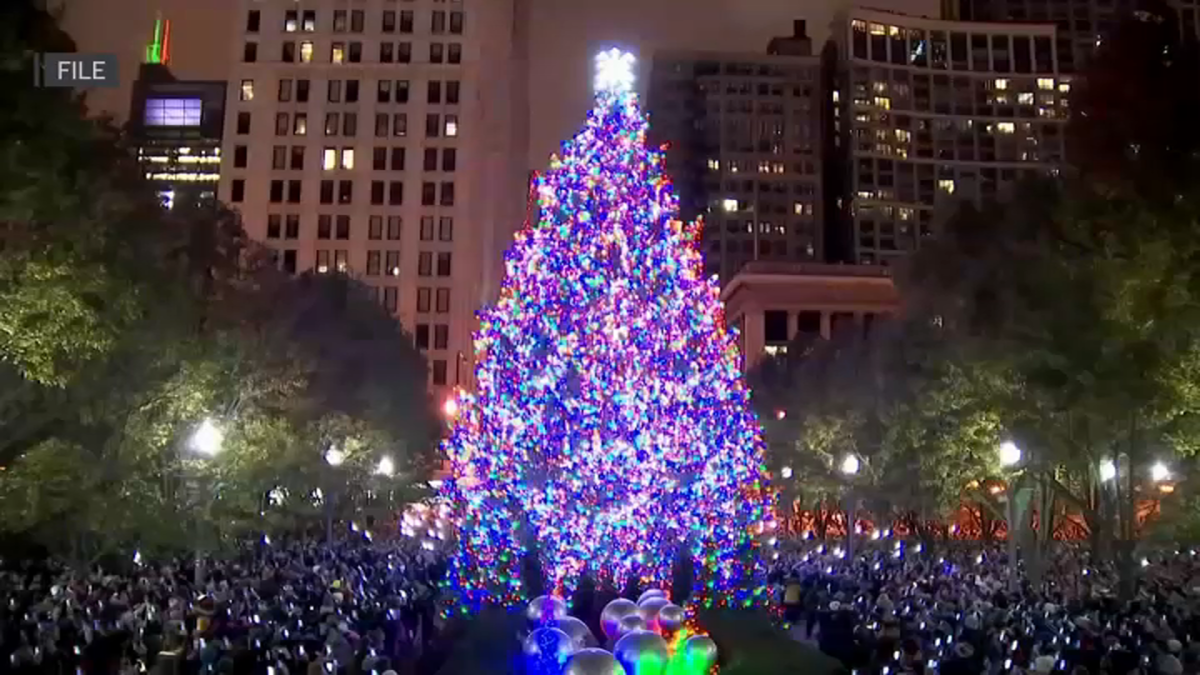
Old Farmer’s Almanac releases Christmas weather predictions. What it says for Chicago – NBC 5 Chicago
Analysis of Christmas Weather Forecasts for Chicago in the Context of Sustainable Development
The prediction of seasonal weather patterns in major urban centers like Chicago is a critical component of advancing several Sustainable Development Goals (SDGs). Accurate forecasting supports urban resilience, climate action, and public well-being. This report analyzes various Christmas weather forecasts for Chicago, evaluating their methodologies and implications for sustainability initiatives, with a primary focus on SDG 11 (Sustainable Cities and Communities) and SDG 13 (Climate Action).
Competing Forecasting Methodologies and Data Reliability
Traditional vs. Scientific Projections
Two distinct forecasting approaches provide differing outlooks for the Christmas period in Chicago. The Old Farmer’s Almanac, a source based on traditional long-range prediction models, anticipates conditions conducive to achieving several SDGs through preparedness.
- Prediction: Colder-than-normal to very cold temperatures with periods of snow.
- Implication for SDG 11: Advanced warning of cold and snow allows municipal services to prepare infrastructure, ensuring transportation remains functional and communities are safe.
- Implication for SDG 7 (Affordable and Clean Energy): Forecasts of extreme cold can help energy providers anticipate demand spikes for heating, managing grid stability.
In contrast, scientific bodies like the National Weather Service (NWS) and meteorologists emphasize the limitations of long-range predictions, advocating for data-driven models that are crucial for reliable climate action strategies under SDG 13.
Data Accuracy and its Role in SDG 17 (Partnerships for the Goals)
The reliability of forecast data is a subject of debate, highlighting the need for collaboration between scientific institutions and public information channels.
- Farmer’s Almanac Claimed Accuracy: 80-85%
- University of Illinois Study Finding: 52% accuracy, comparable to random chance.
This discrepancy underscores the importance of partnerships, as outlined in SDG 17, where academic institutions provide critical validation of data used for public guidance and policy-making related to climate and weather preparedness.
Historical Climate Data and Urban Resilience (SDG 11)
Chicago’s “White Christmas” Climatology
Historical data from the NWS provides a baseline for understanding Chicago’s climate variability, a key factor in building urban resilience. A “White Christmas,” defined as at least one inch of snow on the ground, has occurred in 41% of years since record-keeping began. Recent years demonstrate significant volatility, posing challenges to sustainable urban management.
- 2022: A “White Christmas” occurred during one of the coldest holiday periods on record, with a high of 14°F. This tested the city’s emergency response and energy infrastructure.
- 2023: The city experienced its second-warmest Christmas, with a high of 59°F, highlighting the trend of temperature extremes linked to broader climate change.
This data is vital for informing urban planning under SDG 11, ensuring that cities can adapt to both extreme cold and unseasonal warmth, protecting vulnerable populations and maintaining essential services.
Long-Range Outlook and Alignment with Global Climate Goals
Climate Prediction Center (CPC) Projections
The CPC’s outlook provides a scientifically grounded forecast that aligns with efforts to achieve SDG 13 (Climate Action). The current long-range forecast indicates:
- A tendency toward above-average temperatures for the November-January period.
- A potential for above-average precipitation during the same timeframe.
- The persistence of a La Niña pattern, which can influence snowfall frequency.
Contribution to SDG 13 (Climate Action)
Understanding and acting upon these long-range scientific outlooks is fundamental to climate action. Such projections allow stakeholders to:
- Develop adaptive strategies for managing water resources and preparing for altered precipitation patterns.
- Inform public health initiatives related to atypical winter temperatures, contributing to SDG 3 (Good Health and Well-being).
- Integrate climate variability into long-term infrastructure and energy planning, building a foundation for resilient and sustainable communities.
Analysis of the Article in Relation to Sustainable Development Goals
1. Which SDGs are addressed or connected to the issues highlighted in the article?
Based on the article’s content, the primary Sustainable Development Goal (SDG) that is connected to the issues discussed is:
-
SDG 13: Climate Action
Explanation: The article focuses extensively on weather patterns, climate data, and long-range forecasting. It discusses historical weather extremes, such as record-cold and record-warm Christmases in Chicago, and mentions climate phenomena like the La Niña pattern. This collection, analysis, and public dissemination of climate and weather information are fundamental to understanding climate trends, raising awareness, and taking action to combat climate change and its impacts, which is the core objective of SDG 13.
2. What specific targets under those SDGs can be identified based on the article’s content?
The following specific targets under SDG 13 can be identified:
-
Target 13.1: Strengthen resilience and adaptive capacity to climate-related hazards and natural disasters in all countries.
Explanation: While the article does not discuss disaster response, it highlights the foundational element of resilience: early warning and prediction. The work of the National Weather Service (NWS) and the Climate Prediction Center in providing monthly and three-month outlooks is a form of early warning that helps communities prepare for potential weather-related hazards like extreme cold or heavy snowfall.
-
Target 13.3: Improve education, awareness-raising and human and institutional capacity on climate change mitigation, adaptation, impact reduction and early warning.
Explanation: The article itself serves as a tool for public awareness-raising by discussing climate data and forecasting. It references institutions like the NWS and the Climate Prediction Center, which represent the institutional capacity for monitoring weather and providing early warnings. By presenting historical data (e.g., “White Christmas” 41% of the time) and discussing the science of prediction, it contributes to educating the public on climate variability and the systems in place to monitor it.
3. Are there any indicators mentioned or implied in the article that can be used to measure progress towards the identified targets?
Yes, the article mentions and implies several indicators that can be used to measure progress:
-
Collection and Reporting of Climate Data: The article is filled with specific data points that serve as indicators of climate monitoring.
- Temperature Records: The mention of specific temperatures like the record-cold high of “14 degrees” and the second-warmest high of “59 degrees” are indicators of climate extremes.
- Precipitation Data: The definition of a “White Christmas” as having “at least one inch of snow on the ground” and the historical frequency of “41% of the time” are indicators used to track long-term precipitation patterns.
- Existence and Use of Early Warning Systems: The article’s reliance on forecasts from the “National Weather Service” and the “Climate Prediction Center” indicates the presence and operational capacity of institutions dedicated to early warning and climate prediction.
- Monitoring of Large-Scale Climate Patterns: The specific mention that “a La Niña pattern is also expected to hold through February” is an indicator of advanced scientific capacity to monitor and predict global climate phenomena that influence local weather, which is crucial for effective early warning and adaptation planning.
4. Summary Table of Findings
| SDGs | Targets | Indicators |
|---|---|---|
| SDG 13: Climate Action |
|
|
Source: nbcchicago.com
What is Your Reaction?
 Like
0
Like
0
 Dislike
0
Dislike
0
 Love
0
Love
0
 Funny
0
Funny
0
 Angry
0
Angry
0
 Sad
0
Sad
0
 Wow
0
Wow
0