






















































Landlocked CU Boulder researcher finds some climate hope for world’s vital ocean corals – The Colorado Sun

Report on Coral Reef Resilience and its Connection to Sustainable Development Goals
Executive Summary
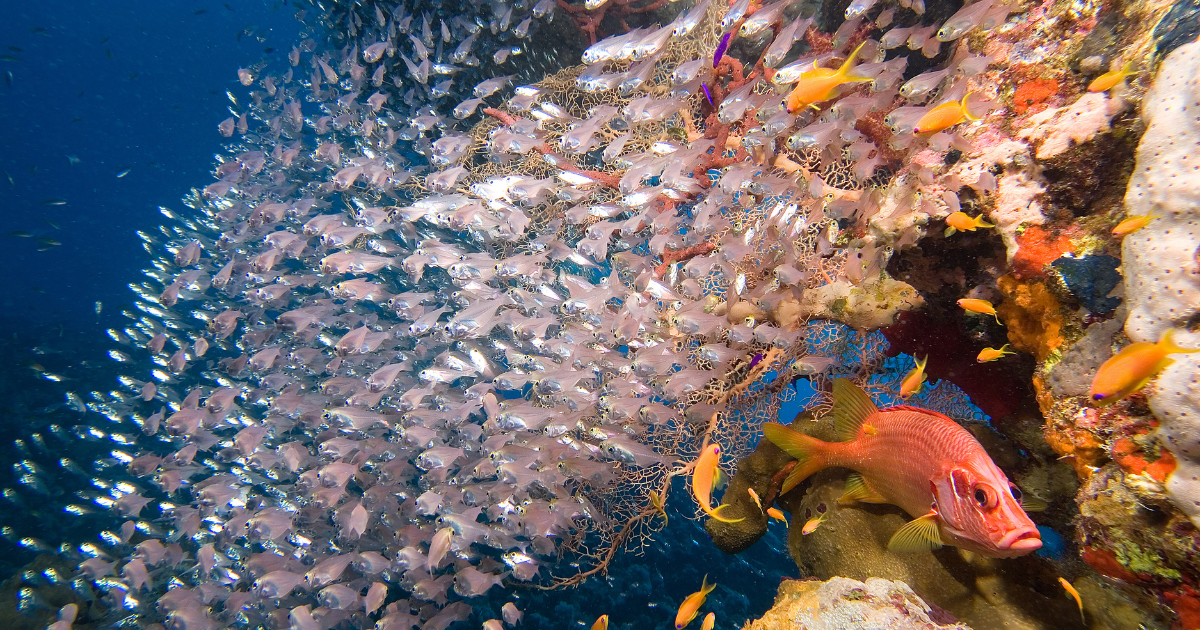
A study led by Jessica Hankins of the University of Colorado Boulder provides new insights into the resilience of coral reefs against ocean acidification, a primary consequence of climate change. The research findings indicate that certain corals possess an innate ability to regulate their internal chemistry, allowing them to continue skeletal growth despite increasing acidity in surrounding waters. This report analyzes the study’s methodology, findings, and significant implications for achieving key United Nations Sustainable Development Goals (SDGs), particularly SDG 14 (Life Below Water) and SDG 13 (Climate Action).
Research Methodology and Scientific Innovation (SDG 9)
The research methodology exemplifies an advancement in scientific capabilities, aligning with SDG 9 (Industry, Innovation, and Infrastructure), which encourages scientific research and upgrading technological capabilities. The process involved several complex stages:
- Field teams extracted yard-long core samples from coral colonies up to 200 years old at sites including the Great Barrier Reef and Hawaiian shallows.
- These samples were transported to advanced laboratory facilities for detailed analysis.
- Researchers utilized Raman microspectroscopy, a laser-based analytical technique, to measure the molecular vibrations within the coral skeletons. This provided a detailed chemical history of the coral’s growth.
- CT scans were also employed to analyze the structural integrity of the coral samples.
Key Findings: Coral Adaptation and SDG 14 (Life Below Water)
The study’s findings offer a hopeful perspective on the future of marine ecosystems and directly contribute to the objectives of SDG 14 (Life Below Water), which aims to conserve and sustainably use marine resources. Specifically, the research addresses Target 14.3: to minimize and address the impacts of ocean acidification.
- Chemical Regulation: The primary finding is that corals can, to some extent, regulate the chemistry of the fluid from which they form their skeletons.
- Sustained Growth: Despite a 200-year trend of rising ocean acidity due to the absorption of atmospheric CO2, the studied corals adjusted their internal environment to continue building their calcium carbonate structures.
- Evidence of Resilience: This capacity for self-regulation suggests a higher degree of resilience to ocean acidification than previously understood, providing a “glimmer of evidence” that these vital ecosystems may persist.
Implications for SDG 13 (Climate Action)
While the findings are positive, they must be contextualized within the broader framework of SDG 13 (Climate Action), which calls for urgent action to combat climate change and its impacts. The researcher cautions that resilience to acidification is only one factor in coral survival. Coral reefs remain under severe threat from a multitude of interconnected climate-related stressors that must be addressed.
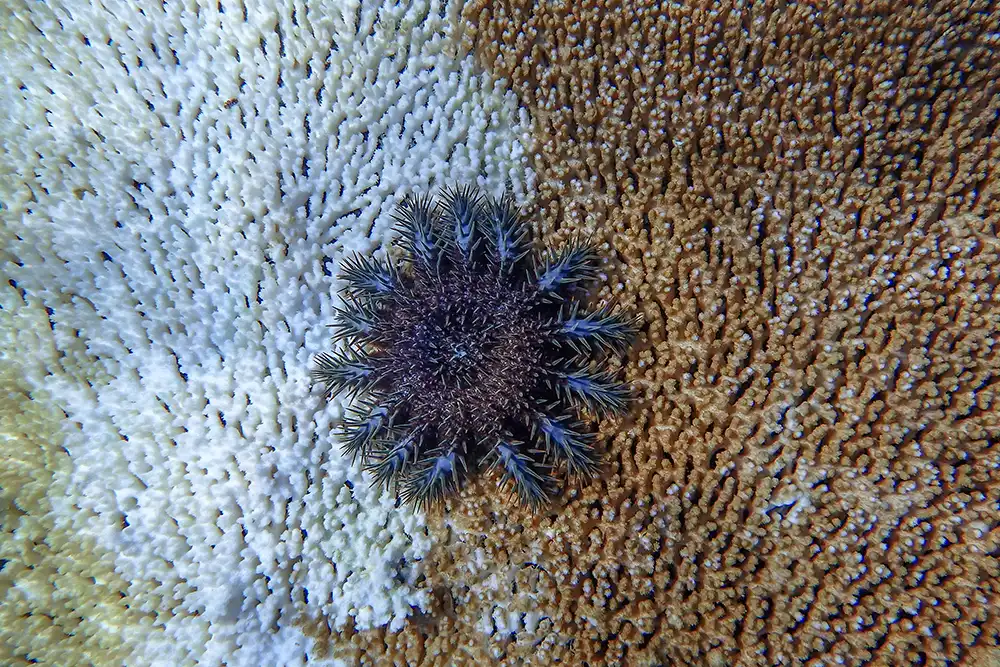
- Multiple Stressors: Climate change impacts coral reefs through various mechanisms that often overlap and interact, including ocean warming (causing mass bleaching), nutrient overload, and increased storm intensity.
- A Call for Comprehensive Action: The study underscores that addressing ocean acidification alone is insufficient. The findings should not be interpreted as a sign that global warming is no longer a threat to corals but rather as a call for more nuanced and comprehensive climate action.
- Need for Long-Term Data: Further long-term research is required to understand the limits of this resilience and how corals will respond to the combined pressures of future climate scenarios.
Conclusion: A Foundation for Future Marine Conservation Efforts
The research conducted by Hankins and her colleagues provides a valuable and unique window into the adaptive mechanisms of coral reefs. It offers a strong scientific foundation to better understand how these critical ecosystems respond to environmental change. This knowledge is essential for developing effective conservation and management strategies that align with the global commitments outlined in the Sustainable Development Goals. The study reinforces the urgent need for continued scientific innovation (SDG 9) to inform robust policies for climate action (SDG 13) and the protection of life below water (SDG 14).
Analysis of Sustainable Development Goals in the Article
-
Which SDGs are addressed or connected to the issues highlighted in the article?
The article primarily addresses issues related to SDG 13 (Climate Action) and SDG 14 (Life Below Water), with a strong connection to SDG 9 (Industry, Innovation and Infrastructure) through its focus on scientific research.
- SDG 13: Climate Action: The article directly links the threats to coral reefs to climate change. It states, “The oceans absorb nearly a third of CO2 produced around the world,” and discusses the “massive increase in carbon dioxide output since the industrial age began.” The research is framed within the context of understanding “climate change damage” and the multiple “stressors from climate change.”
- SDG 14: Life Below Water: The central topic is the health and resilience of coral reefs, which are critical marine ecosystems. The article discusses ocean acidification (“When saltwater absorbs carbon, it also turns more acidic”), its impact on coral growth, and the widespread problem of “massive coral bleaching and die-offs.” The research at the Great Barrier Reef and Hawaiian shallows is a direct investigation into the health of these underwater environments.
- SDG 9: Industry, Innovation and Infrastructure: The article highlights the role of advanced scientific research and technology in understanding environmental challenges. It details the innovative methods used by the researchers, such as using “yard-long drills to extract core samples,” “laser scope in Colorado,” “CT scan for analysis,” and “Raman microspectroscopy labs.” This focus on scientific research as a tool for understanding and potentially solving environmental problems aligns with the innovation aspect of SDG 9.
-
What specific targets under those SDGs can be identified based on the article’s content?
Several specific targets can be identified based on the article’s discussion of ocean acidification, marine ecosystem protection, and the role of scientific research.
- Target 14.3: Minimize and address the impacts of ocean acidification, including through enhanced scientific cooperation at all levels. The entire study is focused on understanding how corals respond to rising ocean acidity. The article explains, “When saltwater absorbs carbon, it also turns more acidic, and the extra acid was thought to interfere with the way coral builds its complex molecular structure.” The research itself, conducted by CU Boulder colleagues, is an example of the scientific cooperation mentioned in this target.
- Target 14.2: By 2020, sustainably manage and protect marine and coastal ecosystems to avoid significant adverse impacts, including by strengthening their resilience, and take action for their restoration in order to achieve healthy and productive oceans. The research provides a “glimmer of evidence” that coral reefs “may be more resilient to climate change damage than previously thought.” By studying how corals “adjusted their own chemistry and continued to build the hard scaffolding of calcium carbonate,” the research contributes directly to understanding and strengthening the resilience of these vital marine ecosystems.
- Target 13.3: Improve education, awareness-raising and human and institutional capacity on climate change mitigation, adaptation, impact reduction and early warning. The publication of the research in “Science Advances” and the interview with the lead author, Jessica Hankins, serve to raise awareness and improve understanding of climate change impacts on marine life. Hankins’ careful explanation of the study’s limitations (“The last thing researchers want is various climate change debaters taking one study… and declaring ‘No worries from global warming!’”) is a direct effort to ensure accurate education on the complexities of climate science.
- Target 9.5: Enhance scientific research, upgrade the technological capabilities of industrial sectors in all countries… encouraging innovation. The article showcases the enhancement of scientific research through the use of advanced technologies like “Raman microspectroscopy” and CT scans to analyze coral samples. This cutting-edge research, described as “an unexpected and hopeful signal,” exemplifies the push for innovation to better understand and address global challenges.
-
Are there any indicators mentioned or implied in the article that can be used to measure progress towards the identified targets?
The article implies several indicators that are used by scientists to measure the health of oceans and the progress of research.
- Indicator 14.3.1: Average marine acidity (pH) measured at agreed suite of representative sampling stations. This indicator is directly implied when the article discusses how the ocean “turns more acidic” and notes that “ocean acidity has been rising steadily for 200 years.” The entire premise of the research is to study the coral’s response to this measurable change in ocean chemistry.
- Implied Indicator: Health and resilience of coral reef ecosystems. While not a formal UN indicator, the article’s focus on “massive coral bleaching and die-offs” versus the finding that corals “adjusted their own chemistry” points to the health and structural integrity of coral reefs as a key measure of progress for Target 14.2. The study’s method of analyzing 200-year-old coral cores is a way of tracking this resilience over time.
- Implied Indicator: Number of scientific and technical publications. The article explicitly mentions that the research findings were “published in ‘Science Advances’.” The publication of peer-reviewed scientific papers is a standard indicator for measuring the output and progress of scientific research, relevant to both Target 9.5 and Target 13.3.
SDGs, Targets, and Indicators Table
| SDGs | Targets | Indicators |
|---|---|---|
| SDG 14: Life Below Water | Target 14.3: Minimize and address the impacts of ocean acidification, including through enhanced scientific cooperation at all levels. | Indicator 14.3.1 (Implied): Average marine acidity (pH). The article refers to the ocean becoming “more acidic” over the last 200 years. |
| SDG 14: Life Below Water | Target 14.2: Sustainably manage and protect marine and coastal ecosystems… including by strengthening their resilience. | Implied Indicator: Health and resilience of coral reef ecosystems. The study analyzes coral bleaching, die-offs, and the ability of corals to regulate their chemistry. |
| SDG 13: Climate Action | Target 13.3: Improve education, awareness-raising and human and institutional capacity on climate change mitigation, adaptation, impact reduction and early warning. | Implied Indicator: Number of scientific and technical publications. The article mentions the study was “published in ‘Science Advances’,” contributing to public and scientific awareness. |
| SDG 9: Industry, Innovation and Infrastructure | Target 9.5: Enhance scientific research, upgrade the technological capabilities… encouraging innovation. | Implied Indicator: Application of advanced scientific techniques. The article details the use of “Raman microspectroscopy” and CT scans for analysis. |
Source: coloradosun.com
What is Your Reaction?
 Like
0
Like
0
 Dislike
0
Dislike
0
 Love
0
Love
0
 Funny
0
Funny
0
 Angry
0
Angry
0
 Sad
0
Sad
0
 Wow
0
Wow
0