





















































Life-cycle assessment validates Ecocem’s ACT technology – Agg-Net
Report on Ecocem’s ACT Technology and its Contribution to Sustainable Development Goals
Introduction: Fostering Sustainable Industrial Innovation (SDG 9)
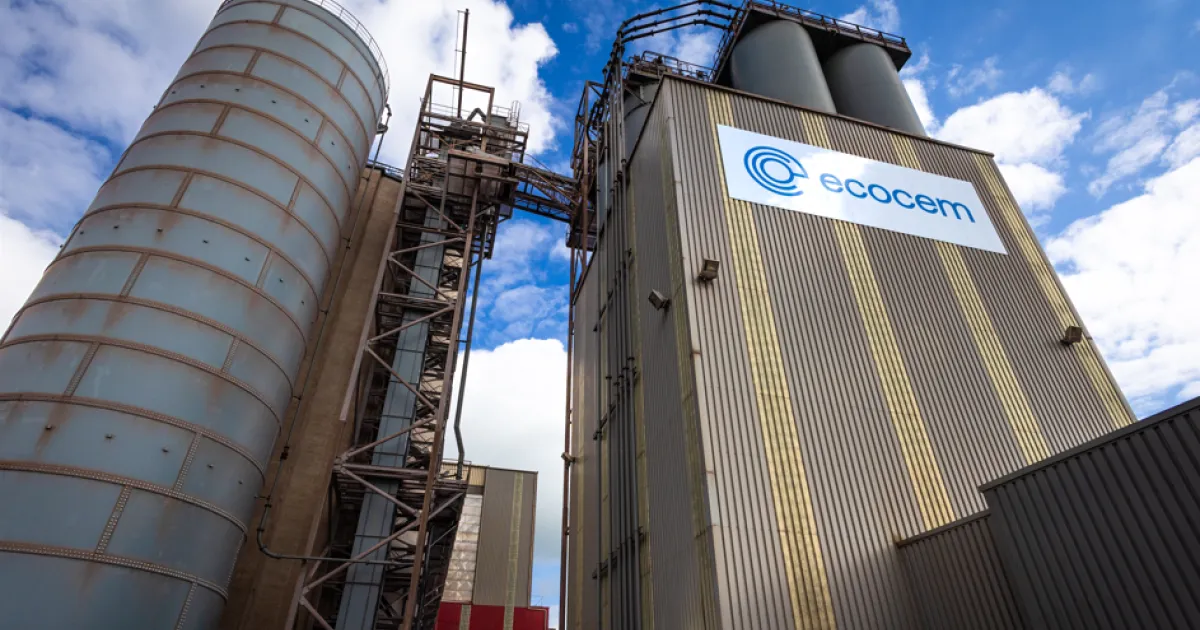
Ecocem, a leading provider of low-carbon cement technologies in Europe, has announced significant progress in sustainable industrial processes. Through the development of its ACT technology, the company is directly addressing the targets of SDG 9: Industry, Innovation, and Infrastructure, which calls for building resilient infrastructure, promoting inclusive and sustainable industrialization, and fostering innovation. The recent validation of ACT technology’s performance in the United States marks a critical step in upgrading industrial capacity for greater sustainability.
Life-Cycle Assessment Findings and Contribution to Climate Action (SDG 13)
A screening life-cycle assessment (LCA), conducted by the independent body Climate Earth, has validated the environmental performance of the ACT technology. The results demonstrate a substantial contribution to SDG 13: Climate Action by offering a viable pathway to decarbonize the cement manufacturing sector.
- CO2 Emission Reduction: The technology can reduce total carbon dioxide emissions associated with US cement manufacturing by up to 60% when compared to the industry standard Portland limestone cement.
- Embodied Carbon Metrics: The LCA confirmed an embodied carbon value of 345 kgCO2e/tonne for cement produced with ACT technology.
- Industry Benchmark Comparison: This figure represents a significant reduction from the Portland Cement Association (PCA) industry average of 844 kgCO2e/tonne for Portland limestone cement.
Technology Attributes for Sustainable Cities and Production (SDG 11 & SDG 12)
The ACT technology’s characteristics support the development of sustainable infrastructure and promote responsible production methods, aligning with SDG 11: Sustainable Cities and Communities and SDG 12: Responsible Consumption and Production. By providing a high-performance, low-carbon building material, the technology enables the construction of more sustainable and resilient urban environments while ensuring efficient resource use.
- Performance and Durability: The technology delivers the necessary strength, durability, and workability required for modern construction, ensuring that sustainability does not compromise structural integrity.
- Certification and Scalability: ACT technology is ASTM C1157 certified, confirming its adherence to performance standards, and is designed to be a scalable solution for widespread adoption.
- Efficiency: The technology is engineered to be cost-effective and highly efficient in terms of material usage, promoting more sustainable production patterns within the construction industry.
Conclusion: Accelerating Decarbonization in Global Construction
The third-party validation of Ecocem’s ACT technology underscores its potential to significantly reduce embodied carbon emissions in cement and concrete applications. As stated by Steve Bryan, Managing Director of Ecocem Americas, the technology strengthens the mission to accelerate the decarbonization of global construction markets. This innovation represents a crucial advancement in achieving interconnected Sustainable Development Goals by improving industry efficiency and promoting climate-resilient infrastructure without increasing costs or operational complexity.
Analysis of SDGs, Targets, and Indicators
-
Which SDGs are addressed or connected to the issues highlighted in the article?
-
SDG 9: Industry, Innovation and Infrastructure
The article directly relates to this goal by discussing a technological innovation (ACT technology) within a major industrial sector (cement manufacturing). It highlights how this innovation makes the industry more sustainable and efficient.
-
SDG 12: Responsible Consumption and Production
This goal is addressed through the promotion of a production process that is more environmentally sound. The ACT technology enables the production of cement with a significantly lower carbon footprint, contributing to more sustainable production patterns and resource efficiency.
-
SDG 13: Climate Action
The core focus of the article is the reduction of CO2 emissions, which is a primary objective of climate action. By demonstrating a technology that can cut carbon emissions from cement manufacturing by up to 60%, the article showcases a direct contribution to mitigating climate change.
-
SDG 9: Industry, Innovation and Infrastructure
-
What specific targets under those SDGs can be identified based on the article’s content?
-
Target 9.4: “By 2030, upgrade infrastructure and retrofit industries to make them sustainable, with increased resource-use efficiency and greater adoption of clean and environmentally sound technologies and industrial processes…”
The article’s focus on Ecocem’s ACT technology as a “scalable low-carbon cement technology” that is “cost-effective” directly aligns with this target. It represents a clean and environmentally sound technology designed to make a key industry more sustainable.
-
Target 12.2: “By 2030, achieve the sustainable management and efficient use of natural resources.”
The technology improves the efficiency of the cement manufacturing process by significantly reducing its primary waste product, CO2. This represents a more efficient use of resources by minimizing the negative environmental externalities of production.
-
Target 13.1 (Implied): “Strengthen resilience and adaptive capacity to climate-related hazards and natural disasters in all countries.”
While the target itself is broad, the action described in the article—decarbonizing a major industrial process—is a fundamental strategy for mitigating climate change. Reducing emissions is a key component of strengthening global resilience to the impacts of climate change.
-
Target 9.4: “By 2030, upgrade infrastructure and retrofit industries to make them sustainable, with increased resource-use efficiency and greater adoption of clean and environmentally sound technologies and industrial processes…”
-
Are there any indicators mentioned or implied in the article that can be used to measure progress towards the identified targets?
- CO2 Emission per Unit of Product: The article explicitly mentions a key indicator for progress: the embodied carbon of the cement. It states that the ACT technology achieved “an embodied carbon of 345 kgCO2e/tonne.” This is a direct measurement corresponding to indicator 9.4.1 (CO2 emission per unit of value added).
- Comparison to Industry Benchmark: Progress is measured against an established industry average. The article compares the 345 kgCO2e/tonne figure to the “Portland Cement Association (PCA) industry average of 844 kgCO2e/tonne for Portland limestone cement.” This comparison serves as a powerful indicator of the technology’s impact.
- Percentage of Emission Reduction: The article provides a clear and quantifiable indicator of improvement by stating the technology can achieve “up to 60% reduction” in total CO2 emissions. This percentage is a direct measure of progress towards decarbonization goals.
-
Create a table with three columns titled ‘SDGs, Targets and Indicators” to present the findings from analyzing the article.
SDGs Targets Indicators SDG 9: Industry, Innovation and Infrastructure Target 9.4: Upgrade industries to make them sustainable and adopt clean and environmentally sound technologies. CO2 emission per unit of product (345 kgCO2e/tonne). SDG 12: Responsible Consumption and Production Target 12.2: Achieve the sustainable management and efficient use of natural resources. Comparison with industry average (a reduction from 844 kgCO2e/tonne). SDG 13: Climate Action Target 13.1 (Implied): Strengthen resilience and adaptive capacity to climate-related hazards. Percentage reduction in CO2 emissions (up to 60%).
Source: agg-net.com
What is Your Reaction?
 Like
0
Like
0
 Dislike
0
Dislike
0
 Love
0
Love
0
 Funny
0
Funny
0
 Angry
0
Angry
0
 Sad
0
Sad
0
 Wow
0
Wow
0