













































United States Small Scale LNG Market 2025: Industry – openPR.com
Global Small-Scale LNG Market Report: A Catalyst for Sustainable Development
Market Overview and Projections
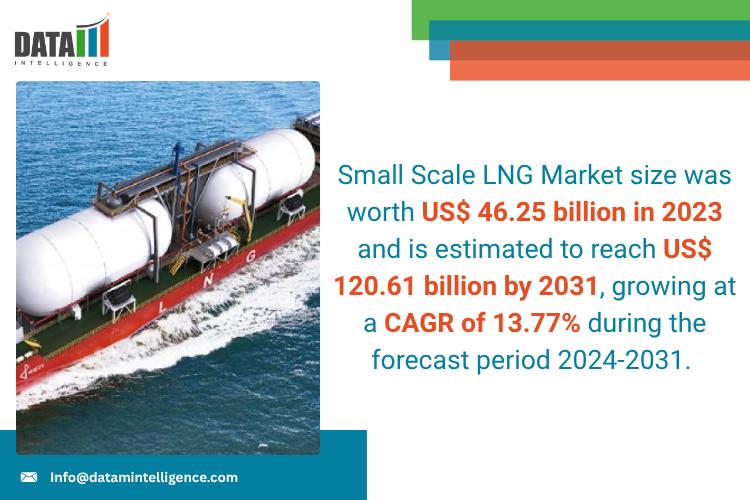
The Global Small-Scale Liquefied Natural Gas (SSLNG) market was valued at US$ 46.25 billion in 2023. It is projected to expand to US$ 120.61 billion by 2031, reflecting a Compound Annual Growth Rate (CAGR) of 13.77% during the 2024-2031 forecast period. This growth underscores the increasing role of SSLNG in the global energy transition and its alignment with key Sustainable Development Goals (SDGs).
Contribution to Sustainable Development Goals (SDGs)
The expansion of the SSLNG market is intrinsically linked to the advancement of several United Nations Sustainable Development Goals. The technology and its applications provide tangible solutions for creating a more sustainable and equitable energy future.
- SDG 7 (Affordable and Clean Energy): SSLNG provides a cleaner energy alternative to coal, diesel, and heavy fuel oil, particularly for remote and off-grid communities and industries, thereby increasing access to more sustainable energy sources.
- SDG 9 (Industry, Innovation, and Infrastructure): The market drives investment in resilient, modular, and innovative energy infrastructure, including liquefaction plants, regasification terminals, and bunkering facilities, which are crucial for industrial development.
- SDG 11 (Sustainable Cities and Communities): By fueling marine and heavy-duty road transport, SSLNG helps reduce air pollutants like sulfur oxides (SOx) and particulate matter, contributing to improved air quality in port cities and transportation corridors.
- SDG 13 (Climate Action): As a transition fuel, LNG offers lower carbon dioxide emissions compared to traditional fossil fuels. The development of renewable e-LNG (e-methane) further strengthens the sector’s contribution to mitigating climate change.
- SDG 14 (Life Below Water): The adoption of LNG as a marine fuel, facilitated by SSLNG bunkering, directly addresses maritime pollution by significantly cutting emissions harmful to marine ecosystems.
Key Market Drivers and SDG Alignment
The growth of the SSLNG market is propelled by several factors that directly support global sustainability objectives.
- Rising Demand for Cleaner Fuels: A global imperative to reduce carbon emissions and air pollution, in line with SDG 13 (Climate Action) and SDG 11 (Sustainable Cities and Communities), is pushing industries and transport sectors toward cleaner alternatives like LNG.
- Growth in Off-Grid Energy Demand: SSLNG systems offer an efficient and scalable solution for supplying energy to isolated regions and industrial sites lacking pipeline connectivity, directly supporting SDG 7 (Affordable and Clean Energy).
- Expansion of LNG-Fueled Transportation: Stricter emission regulations in the marine, road, and rail sectors are accelerating the adoption of LNG as a fuel, advancing goals related to SDG 11 and SDG 14 (Life Below Water).
- Cost-Effective and Flexible Infrastructure: SSLNG projects require lower capital investment and offer greater scalability than large-scale facilities, making them an attractive option for building resilient infrastructure in emerging markets, as targeted by SDG 9.
- Supportive Government Policies: National energy policies promoting gas-based economies and decarbonization are creating a favorable environment for SSLNG adoption worldwide, reinforcing commitments to SDG 7 and SDG 13.
- Technological Advancements: Innovations in modular liquefaction, cryogenic storage, and transport technologies are enhancing the efficiency and cost-effectiveness of the SSLNG supply chain, fostering the innovation central to SDG 9.
Recent Industry Developments (2025)
North America
- United Energy LNG and Power LNG announced a strategic merger to create a scalable SSLNG platform, enhancing infrastructure for industrial and transport markets (SDG 9).
- Galveston LNG Bunker Port (GLBP) secured permits to construct the first dedicated SSLNG bunkering facility on the U.S. Gulf Coast, a critical step for promoting cleaner marine fuels (SDG 14).
- GLBP signed a Letter of Intent with Loa Carbon to supply e-LNG, advancing the availability of low-carbon fuel options and supporting long-term climate goals (SDG 13).
Asia-Pacific
- Nippon Yusen (NYK) of Japan announced plans to expand its LNG fleet to meet rising demand, indicating a long-term commitment to cleaner shipping (SDG 14).
- KEYS Bunkering West Japan completed the first ship-to-ship SSLNG bunkering for a cruise ship, demonstrating operational readiness for cleaner maritime tourism (SDG 11).
- The Japanese government will increase its Strategic Buffer LNG reserves, ensuring energy security while transitioning to cleaner fuels (SDG 7).
- In Korea, POSCO International and Korea Southern Power (KOSPO) signed an MoU to develop domestic LNG bunkering services, aiming to build local refueling infrastructure by 2027 (SDG 9).
Europe
- Molgas Energy Group acquired Titan Energy Holding, consolidating SSLNG bunkering operations across Europe to create a more efficient clean fuel network (SDG 9).
- In Italy, OLT Offshore LNG Toscana launched its new SSLNG service and successfully auctioned monthly slots, operationalizing a key access point for small-scale distribution and contributing to regional energy diversification (SDG 7).
Regional Market Analysis
Asia-Pacific
This region holds the largest market share, driven by strong energy demand and government policies promoting a transition from coal to cleaner fuels in China, India, Japan, and South Korea. Investments in regasification terminals and LNG-powered transport fleets support regional goals for cleaner air (SDG 11) and sustainable energy (SDG 7).
North America
Abundant natural gas resources in the United States and Canada are fueling the growth of SSLNG for off-grid industrial and transportation applications. The development of liquefaction plants serves both domestic needs and export markets, fostering economic growth and energy security (SDG 8, SDG 7).
Market Segmentation
By Type
- Liquefaction
- Regasification
By Application
- Heavy-Duty Vehicles
- Transport (Marine, Rail)
- Industrial & Power
- Others
Leading Market Participants
Key players are actively contributing to the market’s growth and its alignment with sustainability through technological innovation and infrastructure development.
- The Linde Group: Supplies compact, modular liquefaction plants, enabling decentralized energy production in support of SDG 9.
- Wärtsilä Oyj Abp: Delivers modular terminal and vessel solutions, providing critical infrastructure for localized LNG distribution and marine bunkering (SDG 9, SDG 14).
- Baker Hughes Company: A major supplier of turbomachinery for LNG plants, strengthening its SSLNG capabilities through strategic acquisitions to support the entire value chain.
- Honeywell International Inc.: Offers scalable and reliable small-scale liquefaction processes, providing the technology needed for modular plant development (SDG 9).
- Chart Industries, Inc.: Specializes in a wide range of SSLNG equipment, manufacturing core components for liquefaction, storage, and regasification.
- Black & Veatch Corp: Acts as a global EPC and integrator for modular SSLNG projects, facilitating the deployment of clean energy infrastructure worldwide.
- Anthony Veder Group NV: Operates a specialized fleet for small-scale LNG shipping and bunkering, focusing on sustainable operations for niche distribution routes.
- Royal Dutch Shell PLC: A major global player involved in all aspects of the LNG value chain, including the growing small-scale and bunkering segments that support the transition to cleaner energy.
Analysis of Sustainable Development Goals in the Article
1. Which SDGs are addressed or connected to the issues highlighted in the article?
-
SDG 7: Affordable and Clean Energy
The article focuses on Liquefied Natural Gas (LNG) as a “cleaner fuel alternative” and a solution for energy supply. It discusses providing energy to areas without traditional infrastructure, which aligns with ensuring access to modern energy for all.
-
SDG 9: Industry, Innovation, and Infrastructure
The text is replete with examples of new infrastructure development, such as “small-scale regasification terminals,” “liquefaction plants,” and “bunkering facilities.” It also highlights “technological advancements in liquefaction and storage” as a key market driver, directly linking to building resilient infrastructure and fostering innovation.
-
SDG 13: Climate Action
A primary driver for the small-scale LNG market, as stated in the article, is the “rising demand for cleaner fuels” due to “increasing global awareness of carbon emissions.” The shift to LNG is presented as a measure to combat climate change by reducing the carbon footprint of the transport and industrial sectors.
-
SDG 11: Sustainable Cities and Communities
The article mentions that the transport sector is moving toward LNG to reduce “air pollution.” By promoting a cleaner fuel for “marine, road, and rail transport,” the expansion of small-scale LNG contributes to improving air quality in urban environments.
-
SDG 14: Life Below Water
The growth in LNG for marine transport is explicitly “supported by stricter IMO [International Maritime Organization] and regional emission norms.” These regulations are designed to reduce pollution from ships, thereby mitigating the impact on marine ecosystems.
-
SDG 8: Decent Work and Economic Growth
The article details significant economic growth in the small-scale LNG market, projecting an increase from “US$ 46.25 billion in 2023” to “US$ 120.61 billion by 2031.” This growth, along with numerous mergers, acquisitions, and new projects, signifies economic development and job creation in an innovative energy sector.
2. What specific targets under those SDGs can be identified based on the article’s content?
-
SDG 7: Affordable and Clean Energy
- Target 7.1: By 2030, ensure universal access to affordable, reliable and modern energy services. The article supports this by highlighting that “Small-scale LNG systems enable efficient energy supply to isolated regions, islands, and industrial sites without pipeline connectivity.”
- Target 7.2: By 2030, increase substantially the share of renewable energy in the global energy mix. The mention of a deal to supply “e-LNG (renewable e-methane)” points directly to efforts to incorporate renewable sources into the gas supply chain.
-
SDG 9: Industry, Innovation, and Infrastructure
- Target 9.1: Develop quality, reliable, sustainable and resilient infrastructure. The article provides concrete examples of this, such as the plan to “build the first dedicated Gulf-Coast small-scale LNG bunkering facility (Texas City Ship Channel)” and POSCO’s plan to “complete a bunkering pier at Gwangyang Terminal 2.”
- Target 9.4: By 2030, upgrade infrastructure and retrofit industries to make them sustainable… with all countries taking action. The article describes nations in Asia-Pacific “adopting LNG as a cleaner fuel alternative to coal and oil” and the use of LNG in “industrial & power” applications, which represents a retrofitting of industries for cleaner energy use.
-
SDG 13: Climate Action
- Target 13.2: Integrate climate change measures into national policies, strategies and planning. The article states that market growth is driven by “Government Incentives and Energy Transition Policies” and “National energy policies promoting gas-based energy systems and reduced carbon footprints.”
-
SDG 11: Sustainable Cities and Communities
- Target 11.6: By 2030, reduce the adverse per capita environmental impact of cities, including by paying special attention to air quality. The article notes the “expansion of LNG-fueled transportation” in “marine, road, and rail” as a response to the need to curb “air pollution,” which directly impacts urban air quality.
-
SDG 14: Life Below Water
- Target 14.1: By 2025, prevent and significantly reduce marine pollution of all kinds. The article connects the growth of LNG bunkering to “stricter IMO and regional emission norms,” which are aimed at reducing pollutants from ships that harm the marine environment.
-
SDG 8: Decent Work and Economic Growth
- Target 8.2: Achieve higher levels of economic productivity through diversification, technological upgrading and innovation. The article describes a rapidly growing market with a “CAGR of 13.77%,” driven by “technological advancements in liquefaction and storage,” which exemplifies economic growth through innovation in the energy sector.
3. Are there any indicators mentioned or implied in the article that can be used to measure progress towards the identified targets?
-
For SDG 7 (Affordable and Clean Energy):
- Indicator for Target 7.1: The number of new small-scale LNG projects serving “isolated regions, islands, and industrial sites without pipeline connectivity.”
- Indicator for Target 7.2: The volume of “e-LNG (renewable e-methane)” being supplied and integrated into the market, as evidenced by the LOI signed by Galveston LNG Bunker Port.
-
For SDG 9 (Industry, Innovation, and Infrastructure):
- Indicator for Target 9.1: The number and capacity of new infrastructure projects being built, such as the “Galveston LNG Bunker Port,” the “bunkering pier at Gwangyang Terminal 2,” and the 12 monthly SSLNG slots offered by “OLT Offshore LNG Toscana.”
-
For SDG 13 (Climate Action):
- Indicator for Target 13.2: The number of “government policies” and “incentives” enacted globally or regionally to promote the transition to cleaner fuels like LNG.
-
For SDG 11 (Sustainable Cities and Communities):
- Indicator for Target 11.6: The growth in the number of LNG-fueled vehicles, particularly “heavy duty vehicles,” and the volume of LNG used in the “road, and rail transport” sectors.
-
For SDG 14 (Life Below Water):
- Indicator for Target 14.1: The increase in the number of ships using LNG bunkering services, exemplified by the “first ship-to-ship small-scale LNG bunkering for a cruise ship,” and the expansion of LNG-fueled fleets, such as Nippon Yusen’s plan to “expand its LNG fleet.”
-
For SDG 8 (Decent Work and Economic Growth):
- Indicator for Target 8.2: The financial growth of the market, measured by its value increasing from “US$ 46.25 billion in 2023” to a projected “US$ 120.61 billion by 2031,” and its Compound Annual Growth Rate (CAGR) of “13.77%.”
4. Summary Table of SDGs, Targets, and Indicators
| SDGs | Targets | Indicators |
|---|---|---|
| SDG 7: Affordable and Clean Energy | 7.1: Ensure universal access to modern energy services. 7.2: Increase the share of renewable energy. |
Number of off-grid regions supplied by small-scale LNG. Volume of renewable e-LNG supplied to the market. |
| SDG 8: Decent Work and Economic Growth | 8.2: Achieve higher levels of economic productivity through innovation. | Market value growth (from $46.25B to $120.61B). Market CAGR (13.77%). |
| SDG 9: Industry, Innovation, and Infrastructure | 9.1: Develop quality, reliable, sustainable infrastructure. 9.4: Upgrade infrastructure and retrofit industries for sustainability. |
Number of new LNG bunkering facilities, terminals, and piers built. Rate of adoption of LNG in industrial and power sectors as an alternative to coal and oil. |
| SDG 11: Sustainable Cities and Communities | 11.6: Reduce the environmental impact of cities, focusing on air quality. | Growth in the use of LNG in road and rail transport fleets. |
| SDG 13: Climate Action | 13.2: Integrate climate change measures into national policies. | Number of government policies and incentives promoting energy transition and reduced carbon footprints. |
| SDG 14: Life Below Water | 14.1: Prevent and significantly reduce marine pollution. | Number of ships converted to or built for LNG fuel in compliance with IMO norms. Expansion of LNG bunkering services for marine vessels. |
Source: openpr.com
What is Your Reaction?
 Like
0
Like
0
 Dislike
0
Dislike
0
 Love
0
Love
0
 Funny
0
Funny
0
 Angry
0
Angry
0
 Sad
0
Sad
0
 Wow
0
Wow
0