








































;Resize=620#)








Universal Access to Clean Cooking in Africa – Climate and Clean Air Coalition

Report on Universal Access to Clean Cooking in Africa and Alignment with Sustainable Development Goals
1.0 Executive Summary
Access to clean cooking remains a significant impediment to sustainable development across Africa, directly impacting multiple Sustainable Development Goals (SDGs). A new report from the International Energy Agency (IEA), titled “Universal Access to Clean Cooking in Africa: Progress update and roadmap to implementation,” provides a comprehensive analysis of the current situation. The report tracks progress, outlines a strategic pathway forward, and monitors the implementation of USD 2.2 billion in commitments made at the 2024 Summit on Clean Cooking for Africa. This analysis underscores the urgent need for accelerated action to achieve universal clean cooking access, which is fundamental to Africa’s prosperity and environmental health.
2.0 The Challenge of Clean Cooking Access and its Impact on SDGs
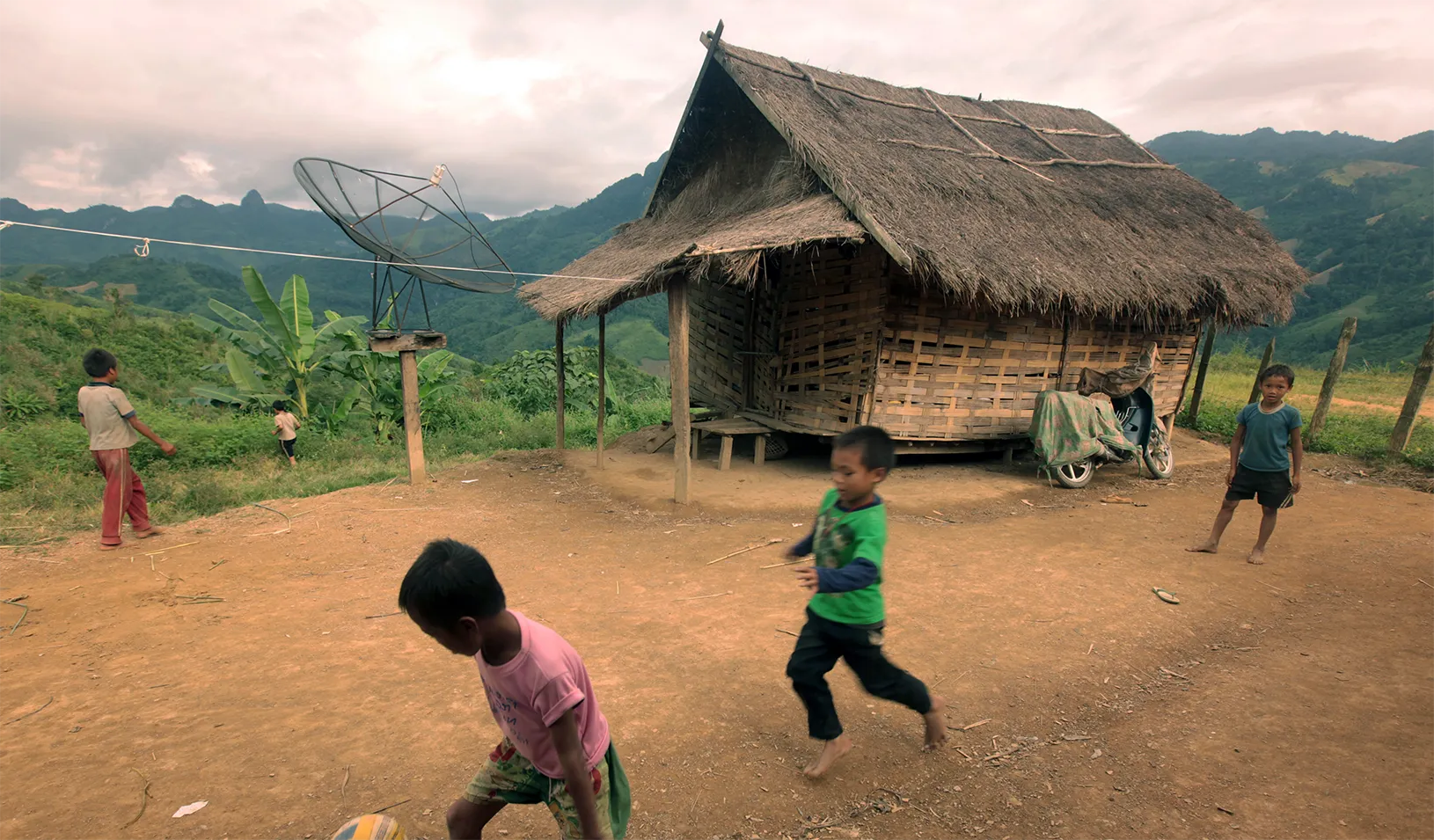
While global progress has been made in expanding access to clean cooking, sub-Saharan Africa has experienced a rise in the number of people without access. This deficit poses a direct threat to the achievement of several SDGs.
2.1 Key Impacts on Sustainable Development
- SDG 3: Good Health and Well-being: The reliance on traditional cooking fuels contributes to an estimated 815,000 premature deaths annually in Africa due to household air pollution.
- SDG 7: Affordable and Clean Energy: The core of the issue is a failure to meet Target 7.1, which calls for universal access to affordable, reliable, and modern energy services.
- SDG 15: Life on Land: The demand for traditional biomass fuels, such as wood and charcoal, leads to significant deforestation and land degradation.
- SDG 5: Gender Equality: Women and children are disproportionately affected, bearing the health burdens of indoor smoke and the time-consuming task of fuel collection, which limits educational and economic opportunities.
- SDG 8: Decent Work and Economic Growth: The lack of clean cooking infrastructure hinders broad economic development and productivity.
- SDG 13: Climate Action: Inefficient cooking methods release black carbon and other greenhouse gases, contributing to climate change.
3.0 IEA Roadmap for Implementation
The IEA report introduces a strategic framework to guide African nations toward universal access. This framework is built on data-driven analysis and a new modeling scenario designed to accelerate progress.
3.1 Components of the IEA Strategy
- The ACCESS Scenario: The report introduces the Accelerating Clean Cooking and Electricity Services Scenario (ACCESS), which provides a detailed pathway for all African countries to achieve universal access by replicating best practices from leading nations.
- Country-Specific Analysis: The roadmap includes a country-by-country analysis, offering tailored strategies based on local conditions.
- Infrastructure and Fuel Assessment: The analysis is supported by the first-ever mapping of clean cooking infrastructure across the continent and a thorough assessment of clean cooking fuel availability and affordability in each region.
- Commitment Tracking: The IEA will continue to monitor the deployment of the USD 2.2 billion in public and private sector commitments to ensure accountability and progress toward SDG 7.
4.0 Conclusion
Achieving universal access to clean cooking is a critical enabler for sustainable development in Africa. The IEA’s updated report and the ACCESS scenario provide a clear, actionable roadmap for governments, the private sector, and international partners. Continued tracking and implementation of these strategies are essential to mitigate the severe health, environmental, and economic consequences of the current deficit and to ensure progress across the 2030 Agenda for Sustainable Development.
Analysis of Sustainable Development Goals in the Article
1. Which SDGs are addressed or connected to the issues highlighted in the article?
- SDG 7: Affordable and Clean Energy
This is the central theme of the article. The entire text focuses on the challenge of “clean cooking access” in Africa, which is a fundamental component of ensuring access to affordable, reliable, sustainable, and modern energy for all. The article explicitly discusses the lack of access and the need for clean cooking fuels and infrastructure. - SDG 3: Good Health and Well-being
The article directly connects the lack of clean cooking access to severe health consequences. It states that this issue “harms health” and contributes to “815,000 premature deaths annually,” linking the energy issue to public health outcomes. - SDG 15: Life on Land
The environmental impact of using traditional cooking fuels is highlighted. The article mentions that the lack of clean cooking contributes to “significant deforestation,” which directly relates to the goal of protecting, restoring, and promoting the sustainable use of terrestrial ecosystems and sustainably managing forests. - SDG 17: Partnerships for the Goals
The article describes collaborative efforts to address the clean cooking crisis. It mentions the “2024 Summit on Clean Cooking for Africa,” which was co-hosted by the IEA, the President of Tanzania, the Prime Minister of Norway, and the President of the African Development Bank Group. This highlights the multi-stakeholder partnerships required to achieve the goals.
2. What specific targets under those SDGs can be identified based on the article’s content?
- Target 7.1: By 2030, ensure universal access to affordable, reliable and modern energy services.
The article’s focus on achieving “Universal Access to Clean Cooking in Africa” is a direct reference to this target. The statement that “the number of people without access to clean cooking has halved globally since 2010, the number in sub-Saharan Africa continues to rise” specifically addresses the progress, or lack thereof, towards this target. - Target 3.9: By 2030, substantially reduce the number of deaths and illnesses from hazardous chemicals and air, water and soil pollution and contamination.
The article’s statistic of “815,000 premature deaths annually” resulting from the lack of clean cooking access directly relates to this target. These deaths are caused by household air pollution from burning traditional, unclean fuels. - Target 15.2: By 2020, promote the implementation of sustainable management of all types of forests, halt deforestation, restore degraded forests and substantially increase afforestation and reforestation globally.
The mention of “significant deforestation” as a consequence of the reliance on traditional cooking fuels (like wood and charcoal) directly connects to the objective of halting deforestation outlined in this target. - Target 17.3: Mobilize additional financial resources for developing countries from multiple sources.
The article explicitly mentions the mobilization of financial resources through the “USD 2.2 billion in public and private commitments made at the 2024 Summit on Clean Cooking for Africa,” which is a clear example of this target in action.
3. Are there any indicators mentioned or implied in the article that can be used to measure progress towards the identified targets?
- Indicator 7.1.2: Proportion of population with primary reliance on clean fuels and technology.
The article directly discusses this by tracking the “number of people without access to clean cooking.” This is the inverse of the official indicator and is the primary metric used throughout the text to describe the scale of the problem. - Indicator 3.9.1: Mortality rate attributed to household and ambient air pollution.
The article provides a specific data point for this indicator by stating that the lack of clean cooking contributes to “815,000 premature deaths annually.” This figure is a direct measure of the mortality rate attributable to household air pollution. - Indicator 15.2.1: Progress towards sustainable forest management.
While not providing a quantitative figure, the article’s statement about “significant deforestation” serves as a qualitative indicator of a lack of progress in sustainable forest management in the regions affected by the clean cooking crisis. - Indicator 17.3.1: Additional financial resources mobilized for developing countries from multiple sources.
The article provides a precise financial figure that aligns with this indicator: “USD 2.2 billion in public and private commitments.” This amount represents mobilized financial resources to tackle the issue in Africa.
4. Table of SDGs, Targets, and Indicators
| SDGs | Targets | Indicators Identified in the Article |
|---|---|---|
| SDG 7: Affordable and Clean Energy | 7.1: Ensure universal access to affordable, reliable and modern energy services. | The “number of people without access to clean cooking” is tracked, which is the inverse of Indicator 7.1.2 (Proportion of population with primary reliance on clean fuels and technology). |
| SDG 3: Good Health and Well-being | 3.9: Substantially reduce the number of deaths and illnesses from pollution and contamination. | The article states “815,000 premature deaths annually,” which is a direct measure for Indicator 3.9.1 (Mortality rate attributed to household and ambient air pollution). |
| SDG 15: Life on Land | 15.2: Promote sustainable management of all types of forests, halt deforestation, and restore degraded forests. | The mention of “significant deforestation” serves as a qualitative measure related to Indicator 15.2.1 (Progress towards sustainable forest management). |
| SDG 17: Partnerships for the Goals | 17.3: Mobilize additional financial resources for developing countries from multiple sources. | The “USD 2.2 billion in public and private commitments” is a specific data point for Indicator 17.3.1 (Additional financial resources mobilized for developing countries). |
Source: ccacoalition.org
What is Your Reaction?
 Like
0
Like
0
 Dislike
0
Dislike
0
 Love
0
Love
0
 Funny
0
Funny
0
 Angry
0
Angry
0
 Sad
0
Sad
0
 Wow
0
Wow
0