





















































15th FYP to Advance Innovation-driven Development – 中国科技网
Report on China’s 15th Five-Year Plan Strategy for Innovation-Driven Sustainable Development
A report from the Central Committee of the Communist Party of China (CPC) outlines a strategic focus on enhancing innovation capacity to drive the development of new quality productive forces. This initiative, central to the 15th Five-Year Plan (2026-2030), aligns with several United Nations Sustainable Development Goals (SDGs), particularly those concerning industry, economic growth, and sustainable practices.
Strategic Focus on SDG 9: Industry, Innovation, and Infrastructure
The Ministry of Science and Technology has emphasized that scientific and technological modernization is fundamental to achieving national development targets. The strategy involves a deep implementation of innovation-driven development, which directly supports the objectives of SDG 9 by promoting resilient infrastructure, inclusive and sustainable industrialization, and fostering innovation.
Key Initiatives for Fostering Innovation
- Implementation of major national science and technology programs to address strategic needs.
- Advancement of strategic-oriented basic research.
- Prioritization of innovation in key generic, cutting-edge, modern engineering, and disruptive technologies.
- Enhancement of self-reliant capabilities in scientific and technological infrastructure.
- Acceleration of major, original scientific and technological achievements.
Integration of Innovation and Sustainable Industrialization
A core component of the plan is the seamless integration of scientific innovation with industrial chains to advance SDG 9. This includes:
- Nurturing emerging industries such as next-generation information technology and AI.
- Proactively developing forward-looking sectors like quantum technology and biotechnology.
- Utilizing digital and intelligent technologies to promote industries that are more eco-friendly and integrated, contributing to SDG 12 (Responsible Consumption and Production) and SDG 13 (Climate Action).
Systemic Reforms to Achieve Sustainable Development Goals
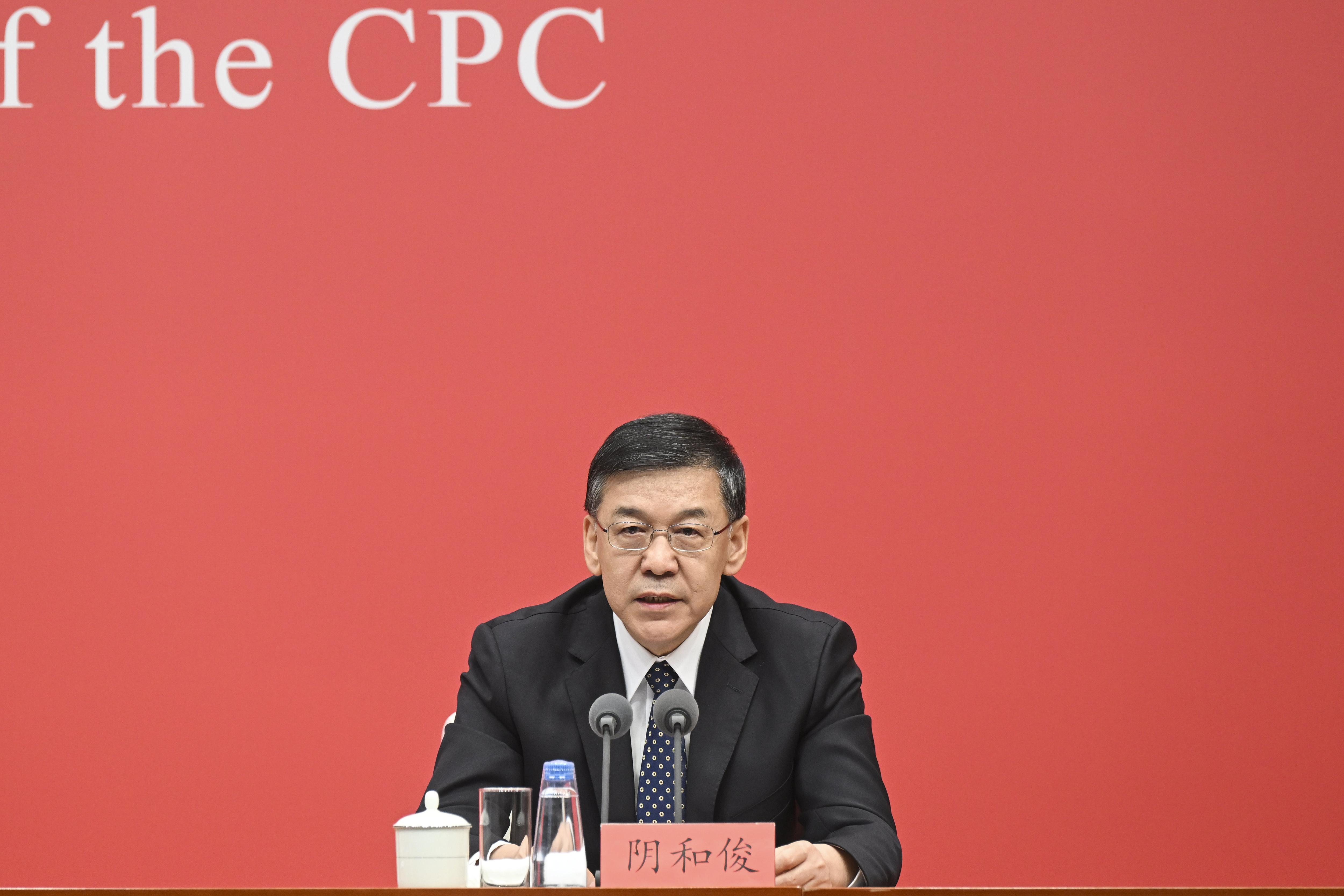
Minister of Science and Technology Yin Hejun outlined four key areas of focus designed to create an ecosystem conducive to sustainable growth and innovation, reflecting a commitment to SDG 8 (Decent Work and Economic Growth) and SDG 17 (Partnerships for the Goals).
Four Pillars of the Innovation Strategy
- Strengthening High-Quality Supply of Science and Technology: Coordinating national strategic needs with socioeconomic demands to build a robust foundation for sustainable innovation.
- Comprehensively Deepening Reform of the Science and Technology Management System:
- Strengthening policy coordination between science and technology, finance, industry, and education, fostering partnerships as outlined in SDG 17.
- Reinforcing the role of enterprises in innovation to drive sustainable economic growth (SDG 8).
- Developing talent training models aligned with national strategies, supporting SDG 4 (Quality Education).
- Integrating Sci-Tech Innovation and Industrial Development: Fostering alignment between innovation and industrial chains to build resilient infrastructure and promote sustainable industrialization (SDG 9).
- Developing New Productive Forces Based on Local Conditions:
- Guiding localities to leverage their resources for differentiated technological and industrial development.
- Enhancing cross-regional collaboration to build world-class industrial clusters, contributing to SDG 11 (Sustainable Cities and Communities).
- Encouraging the establishment of hubs for original innovation and industrial technological innovation.
Analysis of Sustainable Development Goals in the Article
1. Which SDGs are addressed or connected to the issues highlighted in the article?
The article discusses China’s strategy for its 15th Five-Year Plan (2026-2030), which is heavily focused on scientific and technological advancement to drive economic development. Based on this focus, the following SDGs are addressed:
- SDG 9: Industry, Innovation and Infrastructure: This is the most prominent SDG in the article. The text is centered on raising “innovation capacity,” enhancing “self-reliant capabilities in scientific and technological infrastructure,” and promoting the “deeper integration between sci-tech innovation and industrial innovation.” The goal is to build resilient infrastructure and foster sustainable industrialization through technological advancement.
- SDG 8: Decent Work and Economic Growth: The article’s emphasis on developing “new quality productive forces” and ensuring “total-factor productivity increases” directly relates to promoting sustained, inclusive, and sustainable economic growth. The plan aims to achieve “high-quality development” by leveraging technological innovation to upgrade the economy.
- SDG 4: Quality Education: The article connects innovation with human capital by mentioning the need to develop “talent training models to meet the needs of China’s scientific and technological development and national strategies.” This highlights the importance of aligning education and skills development with the country’s strategic industrial and technological goals.
- SDG 12: Responsible Consumption and Production: Although a minor point in the article, there is a direct mention of using “digital and intelligent technologies to make industries… more eco-friendly.” This connects the technological drive to the goal of ensuring sustainable consumption and production patterns by improving industrial efficiency and reducing environmental impact.
2. What specific targets under those SDGs can be identified based on the article’s content?
Several specific targets can be identified from the article’s discussion of China’s innovation-driven strategy:
-
Under SDG 9 (Industry, Innovation and Infrastructure):
- Target 9.5: Enhance scientific research, upgrade the technological capabilities of industrial sectors… encouraging innovation and substantially increasing… research and development spending. The article directly supports this by stating plans to “implement major national science and technology programs,” advance “strategic-oriented basic research,” and prioritize “innovation in key generic technologies, cutting-edge frontier technologies… and disruptive technologies.”
- Target 9.b: Support domestic technology development, research and innovation. The entire article is a blueprint for this target, with a focus on enhancing “self-reliant capabilities in scientific and technological infrastructure” and reinforcing “the principal role of enterprises in scientific and technological innovation.”
-
Under SDG 8 (Decent Work and Economic Growth):
- Target 8.2: Achieve higher levels of economic productivity through diversification, technological upgrading and innovation. The article’s core theme is to “develop new quality productive forces” and ensure “total-factor productivity increases” to “realize high-quality development,” which perfectly aligns with this target.
-
Under SDG 4 (Quality Education):
- Target 4.4: By 2030, substantially increase the number of youth and adults who have relevant skills, including technical and vocational skills, for employment, decent jobs and entrepreneurship. The plan to develop “discipline adjustment mechanisms and talent training models to meet the needs of China’s scientific and technological development” is a direct action toward achieving this target.
-
Under SDG 12 (Responsible Consumption and Production):
- Target 12.2: By 2030, achieve the sustainable management and efficient use of natural resources. The mention of using technology to “make industries… more eco-friendly” implies a strategy to improve resource efficiency and promote sustainable industrial practices, which is central to this target.
3. Are there any indicators mentioned or implied in the article that can be used to measure progress towards the identified targets?
The article is strategic and does not provide specific quantitative indicators. However, it implies several qualitative and quantitative measures that could be used to track progress:
- For Target 9.5: The article implies progress can be measured by the “delivery of major, landmark, and original scientific and technological achievements.” An indicator would be the number and impact of major scientific breakthroughs and original innovations. Another implied indicator is the level of investment in national science and technology programs.
- For Target 8.2: The article explicitly mentions a key performance indicator: “total-factor productivity increases.” Therefore, the rate of growth in total-factor productivity is a direct indicator.
- For Target 9.b: Progress can be measured by the growth of specific high-tech sectors. The article points to indicators such as the expansion of emerging industries like next-generation information technology and AI and the development of forward-looking sectors like quantum technology and biotechnology.
- For Target 4.4: An implied indicator is the number and effectiveness of new talent training models and adjusted academic disciplines that are established to support scientific and technological development.
- For Target 12.2: The article implies an indicator related to the adoption rate of digital and intelligent technologies that lead to more eco-friendly industrial processes.
4. Table of SDGs, Targets, and Indicators
| SDGs | Targets | Indicators (Mentioned or Implied in the Article) |
|---|---|---|
| SDG 9: Industry, Innovation and Infrastructure | Target 9.5: Enhance scientific research and upgrade technological capabilities. | Number and impact of “major, landmark, and original scientific and technological achievements.” |
| SDG 8: Decent Work and Economic Growth | Target 8.2: Achieve higher levels of economic productivity through technological upgrading and innovation. | Rate of “total-factor productivity increases.” |
| SDG 9: Industry, Innovation and Infrastructure | Target 9.b: Support domestic technology development, research and innovation. | Growth and expansion of emerging industries (e.g., AI, quantum technology, biotechnology). |
| SDG 4: Quality Education | Target 4.4: Increase the number of adults with relevant technical and vocational skills. | Development and implementation of new “talent training models” aligned with national strategic needs. |
| SDG 12: Responsible Consumption and Production | Target 12.2: Achieve the sustainable management and efficient use of natural resources. | Adoption of technologies that make industries “more eco-friendly.” |
Source: stdaily.com
What is Your Reaction?
 Like
0
Like
0
 Dislike
0
Dislike
0
 Love
0
Love
0
 Funny
0
Funny
0
 Angry
0
Angry
0
 Sad
0
Sad
0
 Wow
0
Wow
0