






















































Air pollution to drive up deaths and costs in Southeast Asia by 2050: study – South China Morning Post
Air Pollution in Southeast Asia: A Threat to Sustainable Development Goals
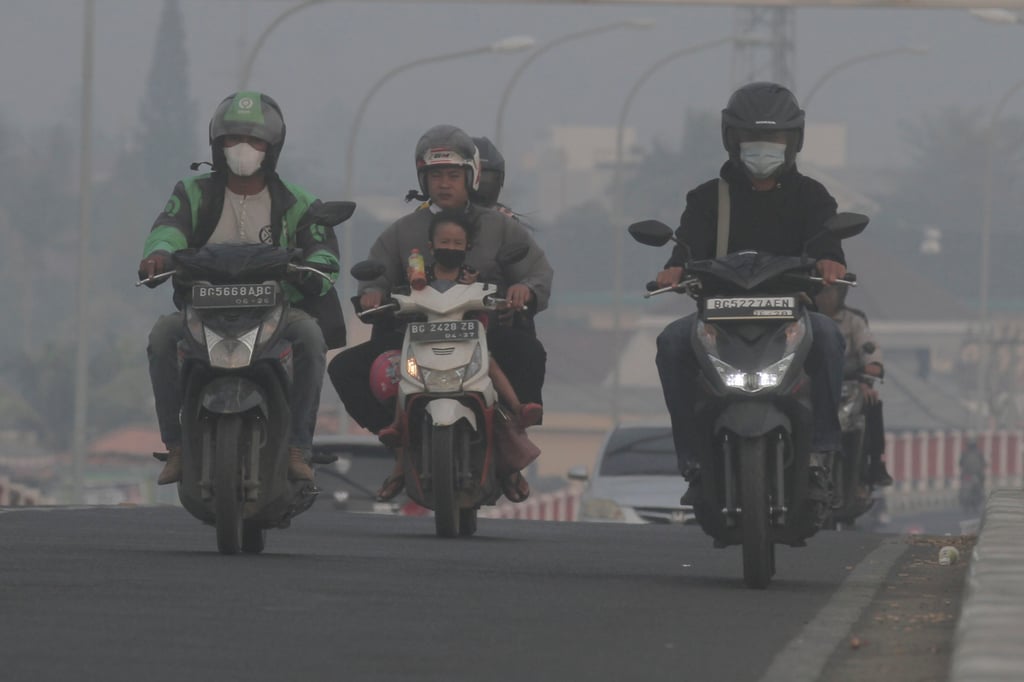
A recent study published in the journal Environment International projects a severe escalation in the adverse impacts of air pollution in Southeast Asia, directly undermining key Sustainable Development Goals (SDGs). Without decisive action, the region faces a substantial increase in premature mortality and staggering economic losses by 2050, posing a significant challenge to regional progress on health, economic stability, and climate action.
Impact on SDG 3 (Good Health and Well-being) and SDG 8 (Economic Growth)
The research highlights a critical threat to human health and economic prosperity, directly contravening the targets of SDG 3 and SDG 8. The study’s projections, based on a high greenhouse gas emissions scenario, indicate a failure to protect citizens and sustain economic growth.
- Baseline (2019): Air pollution was responsible for 1,147,259 premature deaths, incurring an economic cost of US$432 billion.
- Projection (2050): Premature deaths are expected to rise by nearly 10%.
- Projected Economic Loss (2050): The associated economic cost is forecasted to reach US$1.023 trillion, an increase of US$591 billion from 2019 levels.
Climate Change as a Compounding Factor (SDG 13: Climate Action)
The study underscores the inextricable link between climate change and public health. The projections are derived from models of different climate scenarios, demonstrating that insufficient progress on SDG 13 (Climate Action) will exacerbate the air pollution crisis. Steve Yim, who led the study at Nanyang Technological University, noted that climate change is expected to reshape weather systems, potentially leading to more extreme weather events that worsen air quality. The high emissions scenario, characterized by a warmer and drier climate, presents the most severe threat.
Call for Collaborative Action (SDG 17: Partnerships for the Goals)
The findings serve as an urgent call for enhanced regional and international cooperation, aligning with the principles of SDG 17 (Partnerships for the Goals). The research aims to stimulate dialogue among nations to collectively address the transboundary nature of air pollution and its profound health and economic consequences. Key objectives for this collaboration should include:
- Developing integrated policies that address both air pollution and climate change.
- Strengthening regional monitoring and data-sharing networks.
- Investing in clean energy and sustainable infrastructure to mitigate emissions at the source.
Analysis of SDGs, Targets, and Indicators
1. Which SDGs are addressed or connected to the issues highlighted in the article?
The article discusses issues related to air pollution, public health, economic costs, and climate change, which directly connect to several Sustainable Development Goals (SDGs). The following SDGs are addressed:
- SDG 3: Good Health and Well-being: The core issue of the article is the increase in “premature deaths caused by air pollution,” which is a primary concern of this goal.
- SDG 8: Decent Work and Economic Growth: The article highlights the significant “economic losses” associated with air pollution, stating it could “cost the region more than US$1 trillion by 2050.” This connects the environmental issue to its impact on economic stability and growth.
- SDG 11: Sustainable Cities and Communities: Air pollution is a major environmental problem in urban and rural areas. The article’s focus on air quality and its impact on the population of Southeast Asia is central to creating sustainable living environments.
- SDG 13: Climate Action: The study explicitly links the severity of air pollution and its consequences to “three different climate change scenarios, each defined by levels of greenhouse gas emissions.” This establishes a direct connection between climate change and the health and economic impacts discussed.
2. What specific targets under those SDGs can be identified based on the article’s content?
Based on the specific issues discussed in the article, the following targets can be identified:
-
SDG 3: Good Health and Well-being
- Target 3.9: By 2030, substantially reduce the number of deaths and illnesses from hazardous chemicals and air, water and soil pollution and contamination.
Explanation: The article’s central finding is that “Deaths from air pollution in Southeast Asia could rise by nearly 10 per cent.” It quantifies the existing problem by stating, “In 2019, there were 1,147,259 premature deaths caused by air pollution in Southeast Asia.” This directly aligns with the target’s aim to reduce deaths from air pollution.
- Target 3.9: By 2030, substantially reduce the number of deaths and illnesses from hazardous chemicals and air, water and soil pollution and contamination.
-
SDG 8: Decent Work and Economic Growth
- Target 8.4: Improve progressively, through 2030, global resource efficiency in consumption and production and endeavour to decouple economic growth from environmental degradation.
Explanation: The article quantifies the economic cost of environmental degradation, noting that air pollution cost the region “US$432 billion” in 2019 and is projected to cause losses of “US$1.023 trillion by 2050.” This highlights the failure to decouple economic activity from severe environmental and health costs, which is the focus of this target.
- Target 8.4: Improve progressively, through 2030, global resource efficiency in consumption and production and endeavour to decouple economic growth from environmental degradation.
-
SDG 11: Sustainable Cities and Communities
- Target 11.6: By 2030, reduce the adverse per capita environmental impact of cities, including by paying special attention to air quality.
Explanation: The article addresses the widespread problem of air pollution in Southeast Asia, a region with many densely populated urban areas. The call to take “more effective action” against air pollution directly supports the goal of improving air quality to reduce the adverse environmental impact on inhabitants.
- Target 11.6: By 2030, reduce the adverse per capita environmental impact of cities, including by paying special attention to air quality.
-
SDG 13: Climate Action
- Target 13.2: Integrate climate change measures into national policies, strategies and planning.
Explanation: The study models its projections on different climate change scenarios defined by “levels of greenhouse gas emissions.” The warning of increased deaths and economic loss unless “more effective action is taken” is a direct call for policy-level interventions that integrate climate change mitigation to prevent the worst outcomes.
- Target 13.2: Integrate climate change measures into national policies, strategies and planning.
3. Are there any indicators mentioned or implied in the article that can be used to measure progress towards the identified targets?
The article provides specific data points that can be used as indicators to measure progress:
-
For Target 3.9
- Indicator (Implied): Mortality rate attributed to ambient air pollution (Official Indicator 3.9.1).
Explanation: The article explicitly provides data for this indicator by stating the number of “premature deaths caused by air pollution,” which was “1,147,259” in 2019 and is projected to rise. This figure is a direct measure of the health burden of air pollution.
- Indicator (Implied): Mortality rate attributed to ambient air pollution (Official Indicator 3.9.1).
-
For Target 8.4
- Indicator (Implied): Economic losses from environmental degradation.
Explanation: The article quantifies the economic impact of air pollution, citing a cost of “US$432 billion” in 2019 and a projected loss of “US$1.023 trillion by 2050.” These monetary values serve as a clear indicator of the economic consequences of environmental degradation.
- Indicator (Implied): Economic losses from environmental degradation.
-
For Target 13.2
- Indicator (Implied): Total greenhouse gas emissions per year (Official Indicator 13.2.2).
Explanation: The study’s methodology is based on modeling “three different climate change scenarios, each defined by levels of greenhouse gas emissions.” The “high emissions scenario” is linked to the worst outcomes. Therefore, the level of greenhouse gas emissions is the key indicator driving the projections and the basis for the call to action.
- Indicator (Implied): Total greenhouse gas emissions per year (Official Indicator 13.2.2).
4. Summary Table of SDGs, Targets, and Indicators
| SDGs, Targets and Indicators | Targets | Indicators |
|---|---|---|
| SDG 3: Good Health and Well-being | 3.9: Substantially reduce the number of deaths and illnesses from hazardous chemicals and air, water and soil pollution and contamination. | Number of premature deaths from air pollution (1,147,259 in 2019). |
| SDG 8: Decent Work and Economic Growth | 8.4: Endeavour to decouple economic growth from environmental degradation. | Economic losses from air pollution (US$432 billion in 2019, projected to rise to US$1.023 trillion by 2050). |
| SDG 11: Sustainable Cities and Communities | 11.6: Reduce the adverse per capita environmental impact of cities, including by paying special attention to air quality. | The high number of deaths from air pollution implies poor air quality in the region. |
| SDG 13: Climate Action | 13.2: Integrate climate change measures into national policies, strategies and planning. | The “levels of greenhouse gas emissions” that define the different climate change scenarios used in the study. |
Source: amp.scmp.com
What is Your Reaction?
 Like
0
Like
0
 Dislike
0
Dislike
0
 Love
0
Love
0
 Funny
0
Funny
0
 Angry
0
Angry
0
 Sad
0
Sad
0
 Wow
0
Wow
0