







































Brazilian cardinal calls for peace, solidarity with poor after deadly police raid – OSV News
Report on Police Operation in Rio de Janeiro and its Implications for Sustainable Development Goals
1.0 Executive Summary
A police operation on October 28 in Rio de Janeiro, Brazil, resulted in a significant loss of life, prompting calls for peace, justice, and a re-evaluation of security strategies. The incident, which occurred in favela communities, starkly highlights challenges to achieving several Sustainable Development Goals (SDGs), particularly SDG 16 (Peace, Justice and Strong Institutions), SDG 11 (Sustainable Cities and Communities), and SDG 1 (No Poverty). This report analyzes the event and the subsequent reactions through the lens of the 2030 Agenda for Sustainable Development.
2.0 Incident Details
A large-scale police raid was conducted against the Red Command drug trafficking organization in two favela neighborhoods. The operation involved approximately 2,500 officers and escalated into a violent confrontation.
- Fatalities: 132 individuals were killed, including four police officers.
- Arrests: 113 suspects were arrested.
- Seizures: Authorities confiscated dozens of firearms and over one ton of drugs.
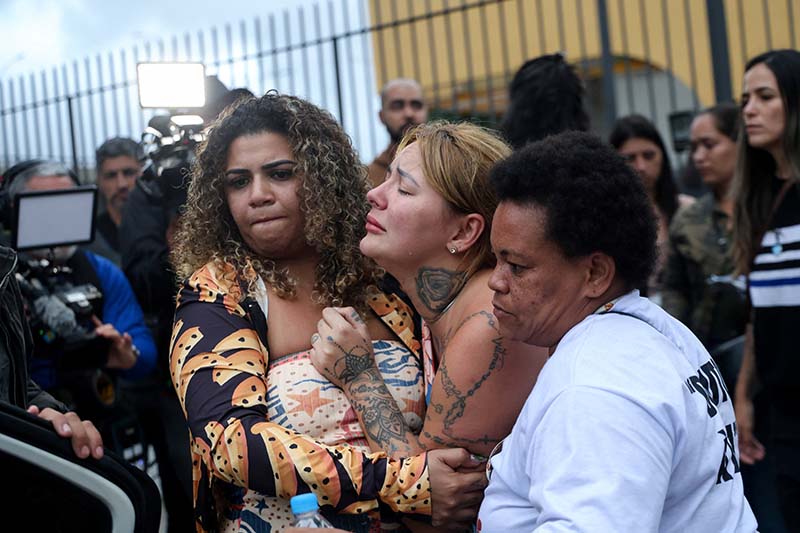
Local residents and human rights organizations, including the United Nations human rights body, have raised concerns over the alleged use of excessive force and have called for a thorough investigation, a move supported by Brazilian President Luiz Inácio Lula da Silva.
3.0 Analysis in the Context of Sustainable Development Goals
3.1 SDG 16: Peace, Justice and Strong Institutions
The event directly contravenes the core tenets of SDG 16, which aims to promote peaceful and inclusive societies for sustainable development, provide access to justice for all, and build effective, accountable, and inclusive institutions at all levels.
- Target 16.1 (Reduce Violence): The high death toll represents a severe setback in efforts to significantly reduce all forms of violence and related death rates.
- Target 16.3 (Promote Rule of Law): Allegations of excessive force and the subsequent calls for investigation by the U.N. and the Brazilian President underscore the critical need to ensure equal access to justice and uphold the rule of law.
- Target 16.A (Strengthen National Institutions): Cardinal Orani João Tempesta’s appeal to “unite our forces for reconciliation” and the President’s call for “coordinated work that strikes at the backbone of drug trafficking without putting… innocent families at risk” emphasize the necessity of strengthening institutions to prevent violence and maintain security humanely and effectively.
3.2 SDG 1, 10, and 11: Poverty, Inequality, and Sustainable Communities
The incident’s location within favelas, coupled with Cardinal Tempesta’s call to protect “the poorest and most vulnerable,” links the violence to broader socioeconomic challenges.
- SDG 1 (No Poverty) & SDG 10 (Reduced Inequalities): The operation highlights the disproportionate impact of violence on marginalized communities living in poverty, exacerbating existing inequalities and hindering progress toward their eradication.
- SDG 11 (Sustainable Cities and Communities): The violence undermines the goal of making cities and human settlements inclusive, safe, and resilient. Events like this create fear and instability, directly opposing the objective of ensuring safe urban environments for all residents.
4.0 Stakeholder Responses and Recommendations
Key stakeholders have called for actions aligned with fostering sustainable peace and development.
- Religious Leadership: Cardinal Tempesta urged citizens to become “builders of peace” and “seeds of reconciliation,” advocating for a societal approach to overcoming violence that aligns with the inclusive spirit of the SDGs.
- Government Response: President Lula da Silva has mandated a federal investigation into the raid’s circumstances, signaling a commitment to accountability and institutional strengthening (SDG 16). His statement emphasizes the need for security strategies that protect civilians and do not perpetuate cycles of violence.
- International Community: The U.N. human rights body’s call for an investigation reinforces global standards for accountability and the protection of human life, essential for the credibility of institutions under SDG 16.
Analysis of Sustainable Development Goals in the Article
1. Which SDGs are addressed or connected to the issues highlighted in the article?
- SDG 16: Peace, Justice and Strong Institutions: This is the most central SDG addressed. The article revolves around a violent police operation, a high death toll, the presence of organized crime (drug trafficking), and calls for peace, justice, and reconciliation. It also discusses the actions of state institutions (police) and the need for investigations into their conduct, directly relating to the goal of building effective, accountable, and inclusive institutions.
- SDG 11: Sustainable Cities and Communities: The article specifies that the raid took place in “two slum neighborhoods, known as favelas.” This highlights the challenges of urban violence and the need to create safe and resilient communities, particularly for those living in vulnerable settlements. The disruption caused by organized crime and violent police actions directly undermines the sustainability and safety of these urban areas.
- SDG 10: Reduced Inequalities: The Cardinal’s call to protect “the poorest and most vulnerable” explicitly connects the violence to social inequality. The events occurring in favelas, which are typically home to marginalized populations, suggest that these communities bear a disproportionate burden of violence and insecurity, highlighting a critical link to the goal of reducing inequalities.
2. What specific targets under those SDGs can be identified based on the article’s content?
- Target 16.1: Significantly reduce all forms of violence and related death rates everywhere. The article’s core subject is a violent event described as an “all-out street war” that resulted in “132 deaths.” The appeals for peace from Cardinal Tempesta and the President’s statement against violence directly address the need to reduce such high death rates.
- Target 16.3: Promote the rule of law at the national and international levels and ensure equal access to justice for all. The calls for investigations into the police raid by human rights organizations, the U.N., and the Brazilian President himself reflect this target. The residents’ protests against the “alleged use of excessive force” point to a demand for accountability and justice, which are central to the rule of law.
- Target 16.a: Strengthen relevant national institutions… to prevent violence and combat terrorism and crime. The article describes a massive operation by a national institution (the police) to combat organized crime. However, the high death toll and allegations of excessive force raise questions about the effectiveness and accountability of this institution, making this target highly relevant to the discussion of how to combat crime without harming innocent people.
- Target 11.1: By 2030, ensure access for all to adequate, safe and affordable housing and basic services and upgrade slums. While not about housing directly, the article highlights the extreme lack of safety in the favelas. A key component of upgrading slums is ensuring the security and well-being of their residents. The violence described shows a failure to provide a safe environment for these communities.
3. Are there any indicators mentioned or implied in the article that can be used to measure progress towards the identified targets?
-
For Target 16.1: The article provides a direct quantitative indicator for violence-related death rates.
- Indicator: The number of deaths from the police raid, explicitly stated as “132 deaths.” This figure serves as a direct measure for Indicator 16.1.1 (Number of victims of intentional homicide).
-
For Target 16.3: The article implies indicators related to the functioning of the justice system.
- Indicator: The official response to calls for investigation. The President instructing the justice minister to meet with the governor to “investigate the circumstances of the raid” is an action that can be tracked to measure progress towards accountability and the rule of law.
-
For Target 16.a: The article provides quantifiable outcomes of the police operation, which can be used as indicators of institutional action against crime.
- Indicators: The “arrest of 113 suspects,” the “seizure of dozens of firearms,” and the seizure of “more than a ton of drugs.” These metrics are often used to measure the performance of law enforcement institutions in combating organized crime.
SDGs, Targets and Indicators Table
| SDGs | Targets | Indicators Identified in the Article |
|---|---|---|
| SDG 16: Peace, Justice and Strong Institutions | 16.1: Significantly reduce all forms of violence and related death rates everywhere. | The specific number of fatalities from the violent raid: “132 deaths.” |
| SDG 16: Peace, Justice and Strong Institutions | 16.3: Promote the rule of law… and ensure equal access to justice for all. | Calls for official investigations by the U.N. and the Brazilian President into the “alleged use of excessive force” by police. |
| SDG 16: Peace, Justice and Strong Institutions | 16.a: Strengthen relevant national institutions… to prevent violence and combat… crime. | Quantifiable results of the police operation: “arrest of 113 suspects,” “seizure of dozens of firearms,” and “more than a ton of drugs.” |
| SDG 11: Sustainable Cities and Communities | 11.1: …ensure access for all to… safe… housing… and upgrade slums. | The location of the “all-out street war” in “two slum neighborhoods, known as favelas,” indicating a severe lack of safety in these communities. |
| SDG 10: Reduced Inequalities | 10.2: By 2030, empower and promote the social… inclusion of all… | The Cardinal’s specific call for the “protection of life… especially the poorest and most vulnerable,” highlighting the disproportionate impact of violence on marginalized groups. |
Source: osvnews.com
What is Your Reaction?
 Like
0
Like
0
 Dislike
0
Dislike
0
 Love
0
Love
0
 Funny
0
Funny
0
 Angry
0
Angry
0
 Sad
0
Sad
0
 Wow
0
Wow
0