















































FAO Report: World Food Commodity Prices Decline in October, Beef an Exception – Markets Financial Content
Report on Global Food Commodity Prices and Sustainable Development Goals (October 2025)
Executive Summary
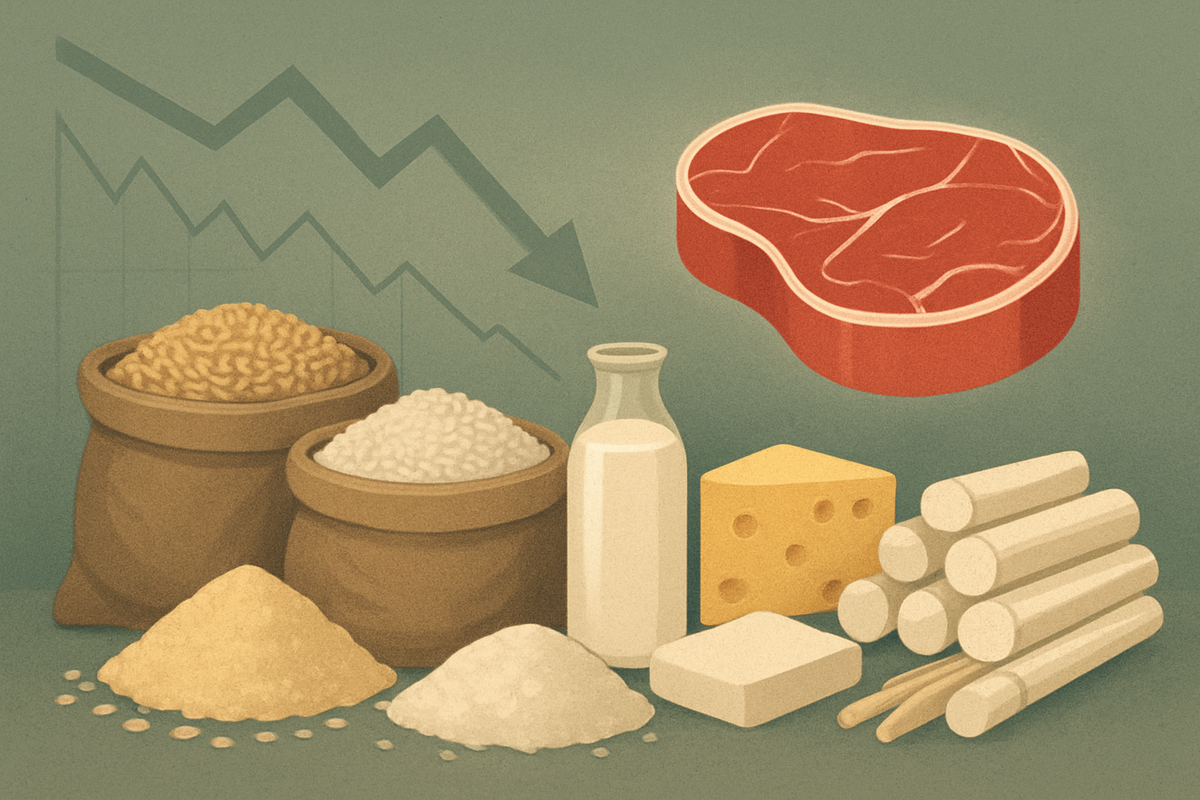
A report from the Food and Agriculture Organization (FAO) for October 2025 indicates a 1.6 percent decline in the FAO Food Price Index (FFPI), marking the second consecutive monthly drop. This trend presents positive implications for achieving Sustainable Development Goal 2 (Zero Hunger) and SDG 1 (No Poverty) by improving food affordability for vulnerable populations. However, divergent price increases for beef and vegetable oils highlight significant challenges related to SDG 12 (Responsible Consumption and Production) and SDG 13 (Climate Action), underscoring the complex relationship between global markets and sustainable development.
Detailed Commodity Analysis and SDG Implications
Price Declines in Staple Commodities: Advancing SDG 2
Significant price reductions were observed across key food sectors, directly supporting the objective of ensuring access to safe, nutritious, and sufficient food.
- Cereal Price Index: Decreased by 1.3 percent, driven by ample global supplies and favorable production forecasts. This trend is crucial for enhancing food security as cereals are a primary food source globally.
- Dairy Price Index: Fell by 3.4 percent due to abundant export availabilities and subdued import demand, making essential dairy products more accessible.
- Sugar Price Index: Plummeted by 5.3 percent, reaching its lowest level since December 2020. This was fueled by strong production in key exporting nations and lower crude oil prices, which reduced demand for biofuel production.
Divergent Trends: Challenges for Sustainable Production and Consumption
In contrast to the general decline, price increases in specific commodities raise concerns regarding environmental sustainability and resource allocation.
- Bovine Meat (Beef) Prices: Continued an upward trajectory due to firm global demand. This trend poses a challenge to SDG 12 and SDG 13, as beef production is a significant contributor to greenhouse gas emissions and land degradation.
- Vegetable Oil Price Index: Rose by 0.9 percent, influenced by biofuel mandates and harvest delays. This highlights a potential conflict between achieving SDG 7 (Affordable and Clean Energy) and ensuring food security under SDG 2, as land and crops are diverted from food to fuel production.
Impact on Corporate Sector and Economic Viability (SDG 8)
Headwinds for Cereal, Dairy, and Sugar Industries
The deflationary price environment presents economic challenges for companies in sectors with falling commodity prices, potentially impacting their contribution to SDG 8 (Decent Work and Economic Growth).
- Companies like Archer-Daniels-Midland (NYSE: ADM) and Bunge Global SA (NYSE: BG) may face pressure on grain trading margins.
- Dairy processors such as Danone S.A. (EPA: BN) and Nestlé S.A. (SIX: NESN) could experience revenue challenges despite lower input costs.
- Sugar producers, including Cosan S.A. (NYSE: CSAN), are likely to see a direct negative impact on profitability.
Favorable Conditions for Beef and Vegetable Oil Sectors
Companies with significant operations in beef and vegetable oils are positioned to benefit from rising prices, though this economic success is linked to production models requiring greater alignment with sustainability goals.
- Meatpackers such as Tyson Foods, Inc. (NYSE: TSN) and JBS S.A. (BVMF: JBSS3) may see stronger performance in their beef segments.
- The rise in vegetable oil prices could benefit oilseed processors, partially offsetting declines in other areas.
Broader Industry Trends and Policy Alignment with the 2030 Agenda
Strengthening Supply Chain Resilience for Global Food Security
The current market stabilization reflects a global effort to build more resilient agricultural supply chains, a key component of achieving SDG 2. This trend underscores the importance of policies that promote sustainable agricultural practices and reduce food loss and waste, in line with the targets of SDG 12.
Regulatory Imperatives for Sustainable Systems
The market dynamics necessitate a focused policy response to balance economic goals with the 2030 Agenda for Sustainable Development.
- Sustainable Livestock Production: Increased scrutiny on the environmental impact of beef production is needed to align the sector with SDG 13 and encourage investment in sustainable protein alternatives.
- Food vs. Fuel Debate: Policymakers must address the growing intersection of energy and agricultural policy, ensuring biofuel mandates under SDG 7 do not compromise food availability and affordability as targeted by SDG 2.
- Trade and Subsidies: A review of agricultural subsidies and trade agreements is required to foster market stability and promote production systems that are both economically viable and environmentally sound.
Future Outlook: Navigating Towards Sustainable Food Systems
Short-Term Projections and Socio-Economic Impact
In the near term, lower food prices are expected to provide relief to consumers, contributing to poverty reduction (SDG 1) and improved food security (SDG 2). However, agricultural producers will face tighter profit margins, requiring innovation and efficiency gains to support economic growth and decent work (SDG 8).
Long-Term Risks and Strategic Priorities
The long-term outlook remains subject to significant risks that could impede progress toward the SDGs. Strategic focus is required in the following areas:
- Climate Change Adaptation: Unforeseen climate events like droughts or floods pose a direct threat to agricultural productivity and the stability needed to achieve SDG 2 and SDG 13.
- Geopolitical Stability: Global conflicts can rapidly disrupt supply chains, reversing progress on food security.
- Investment in Sustainable Innovation: Greater investment is needed in agricultural technology and alternative proteins to advance SDG 12 and reduce the environmental footprint of the global food system.
- Coherent Policymaking: Governments and international bodies must ensure that agricultural, energy, and environmental policies are integrated to support the holistic achievement of the Sustainable Development Goals.
Analysis of Sustainable Development Goals in the Article
1. Which SDGs are addressed or connected to the issues highlighted in the article?
-
SDG 2: Zero Hunger
The article’s core focus is on global food commodity prices, production, and market stability. It directly discusses factors affecting food affordability for consumers and the food security of importing nations, which are central to SDG 2’s mission to end hunger and ensure access to food.
-
SDG 8: Decent Work and Economic Growth
The analysis of how price fluctuations impact the profitability and revenue of agricultural companies (e.g., Archer-Daniels-Midland, Tyson Foods) and the need for producers to enhance efficiency and adopt new technologies connects to economic productivity and growth within the agricultural sector.
-
SDG 12: Responsible Consumption and Production
The article touches on sustainable production patterns by discussing the environmental impact of beef production, the potential for sustainable protein alternatives, and the diversion of sugarcane for biofuel production, highlighting the link between consumption, production, and natural resource use.
-
SDG 13: Climate Action
The mention of “increased scrutiny on the environmental impact of beef production” implicitly connects to climate action. Beef production is a significant source of greenhouse gas emissions, and discussions about its sustainability and potential regulation are directly related to mitigating climate change.
2. What specific targets under those SDGs can be identified based on the article’s content?
-
Target 2.c (under SDG 2): Adopt measures to ensure the proper functioning of food commodity markets and their derivatives and facilitate timely access to market information, including on food reserves, in order to help limit extreme food price volatility.
The entire article is an analysis of the FAO Food Price Index report, which is a key tool for monitoring market functioning and providing information to stabilize markets. The report’s purpose is to track price movements and supply/demand dynamics, directly aligning with this target’s goal of limiting price volatility.
-
Target 8.2 (under SDG 8): Achieve higher levels of economic productivity through diversification, technological upgrading and innovation…
The article suggests that in response to lower commodity prices, agricultural producers will need to adapt by embracing “enhanced efficiency, adoption of advanced agricultural technologies, and diversification into higher-value crops or niche markets.” This directly reflects the strategy outlined in Target 8.2.
-
Target 12.2 (under SDG 12): By 2030, achieve the sustainable management and efficient use of natural resources.
The discussion on biofuel mandates influencing vegetable oil prices and lower crude oil prices reducing the incentive to divert sugarcane into biofuel production highlights the competition for natural resources between food and energy sectors. Furthermore, the call for “sustainable beef production practices” addresses the resource-intensive nature of livestock farming.
3. Are there any indicators mentioned or implied in the article that can be used to measure progress towards the identified targets?
-
Indicator 2.c.1: Indicator of food price anomalies.
The article is centered on the FAO Food Price Index (FFPI) and its sub-indices (Cereal, Dairy, Sugar, Meat, Vegetable Oil). The FFPI is the primary tool used globally to measure the monthly change in international prices of a basket of food commodities, making it a direct measure for this indicator.
-
Implied Indicator for Target 8.2: Profitability and revenue growth in the agricultural sector.
While not a formal UN indicator, the article implies that the financial performance of major agricultural companies like ADM, Bunge, and Tyson Foods serves as a practical measure of economic productivity and health within the sector. Tracking their “trading margins,” “revenue growth,” and “profitability” indicates progress towards a more productive and resilient agricultural economy.
-
Implied Indicator for Target 12.2: Market share of sustainable and alternative products.
The article suggests that market opportunities may emerge for “companies specializing in alternative proteins” as price disparities narrow. The growth in market share of these alternatives compared to traditional beef would be a clear indicator of a shift towards more sustainable consumption and production patterns.
SDGs, Targets, and Indicators Summary
| SDGs | Targets | Indicators |
|---|---|---|
| SDG 2: Zero Hunger | Target 2.c: Adopt measures to ensure the proper functioning of food commodity markets… in order to help limit extreme food price volatility. | Indicator 2.c.1 (Indicator of food price anomalies): The article explicitly uses the FAO Food Price Index (FFPI) and its sub-indices to measure and report on food price changes and volatility. |
| SDG 8: Decent Work and Economic Growth | Target 8.2: Achieve higher levels of economic productivity through diversification, technological upgrading and innovation. | Implied Indicator (Profitability in the agricultural sector): The article discusses the need for producers to improve efficiency and adopt technology to maintain profitability, with the financial performance of companies like Deere & Company and Tyson Foods serving as a proxy for sector productivity. |
| SDG 12: Responsible Consumption and Production | Target 12.2: Achieve the sustainable management and efficient use of natural resources. | Implied Indicator (Market share of alternative proteins): The article notes that price dynamics could make alternative proteins more competitive, implying that their market share growth would indicate a shift towards more sustainable consumption. |
| SDG 13: Climate Action | Target 13.2: Integrate climate change measures into national policies, strategies and planning. | Implied Indicator (Regulation on agricultural emissions): The article suggests that the environmental impact of beef could lead to “regulatory pressures,” implying that the introduction of such policies would be an indicator of integrating climate measures into agricultural planning. |
Source: markets.financialcontent.com
What is Your Reaction?
 Like
0
Like
0
 Dislike
0
Dislike
0
 Love
0
Love
0
 Funny
0
Funny
0
 Angry
0
Angry
0
 Sad
0
Sad
0
 Wow
0
Wow
0