



















































The Agricultural Safety Net: How ARC and PLC Programs Anchor Commodity Market Stability – Markets Financial Content

Report on U.S. Agricultural Safety Net Programs and Their Alignment with Sustainable Development Goals
Executive Summary
The Agricultural Risk Coverage (ARC) and Price Loss Coverage (PLC) programs, administered under the U.S. Farm Bill, constitute a critical federal safety net for agricultural producers. These counter-cyclical mechanisms provide essential income stability against market volatility, thereby underpinning the economic viability of farms and rural communities. This report analyzes the structure and impact of the ARC and PLC programs, with a significant emphasis on their contribution to, and alignment with, the United Nations’ Sustainable Development Goals (SDGs), particularly SDG 1 (No Poverty), SDG 2 (Zero Hunger), and SDG 8 (Decent Work and Economic Growth).
Program Mechanics and Contribution to Economic Stability (SDG 1 & SDG 8)
The ARC and PLC programs are designed to mitigate the financial risks inherent in agricultural commodity production. Their function is fundamentally aligned with providing a stable economic foundation for farmers, which is a direct contributor to SDG 1 (No Poverty) and SDG 8 (Decent Work and Economic Growth) in rural areas.
Core Program Structures
- Price Loss Coverage (PLC): This program provides payments when the national marketing year average (MYA) price for a covered commodity falls below a statutory “effective reference price.” This mechanism offers deep loss protection, directly preventing catastrophic income loss and supporting SDG 1 by creating a floor for farm revenue.
- Agricultural Risk Coverage (ARC): This program offers revenue-based protection and is available in two forms:
- ARC-County (ARC-CO): Triggers payments when actual county-level crop revenue drops below 86% of a benchmark revenue. It addresses shallow losses and is the more popular option among producers.
- ARC-Individual (ARC-IC): Provides protection based on the individual farm’s revenue across all covered commodities.
By ensuring a degree of income predictability, these programs enable farmers to remain solvent during market downturns, sustain employment, and continue investing in their operations, which fosters economic growth and resilience within rural economies (SDG 8).
Impact Analysis: Stakeholders and Sustainable Development Goal Alignment
The effects of the ARC and PLC programs extend across the agricultural value chain, influencing various stakeholders and intersecting with multiple SDGs.
Primary Beneficiaries and SDG 2 (Zero Hunger)
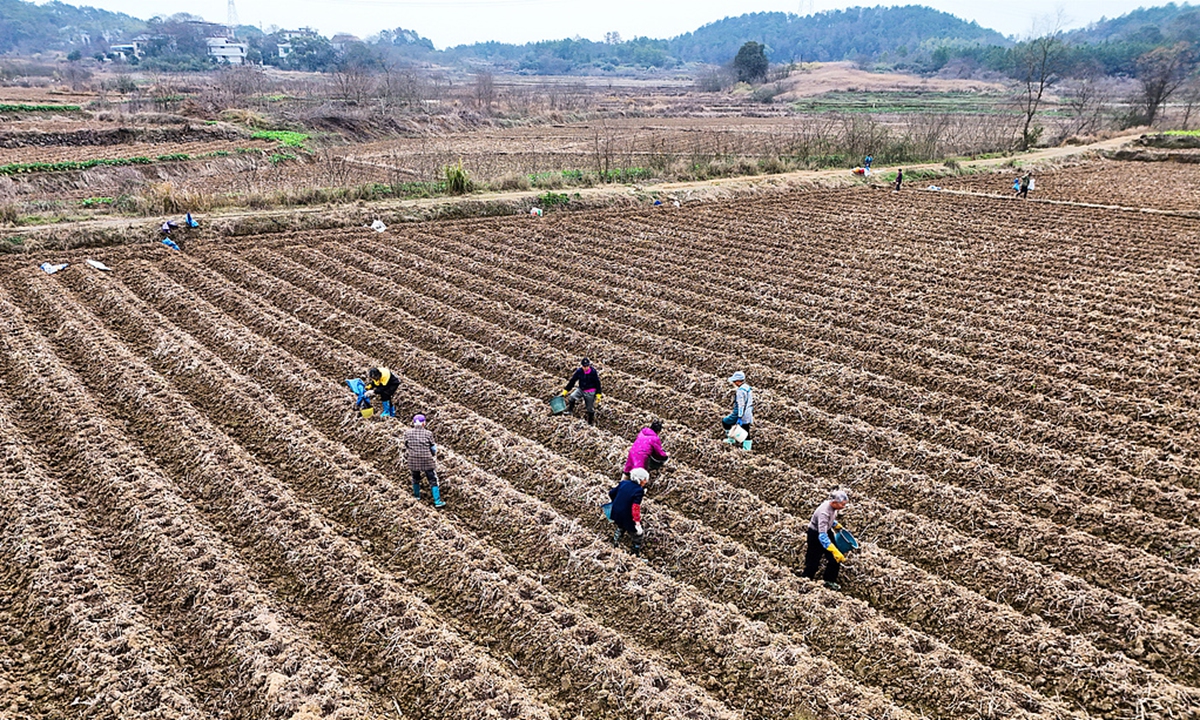
- Producers of Covered Commodities: Farmers of major crops like corn, soybeans, and wheat receive direct income support, which is crucial for maintaining production capacity. This stability is foundational to ensuring a consistent and resilient national food supply, directly supporting the objectives of SDG 2 (Zero Hunger).
- Agribusiness Sector: Companies supplying agricultural inputs, such as Deere & Company (NYSE: DE), Corteva Agriscience (NYSE: CTVA), and Nutrien Ltd. (NYSE: NTR), benefit from a financially secure customer base. This stability ensures continued investment in productivity-enhancing technologies that contribute to food security.
Challenges and Considerations for SDG 10 (Reduced Inequalities)
- Producers of Non-Covered Commodities: Farmers of specialty crops (fruits, vegetables) are not eligible for ARC/PLC, creating a disparity in the federal safety net. This gap highlights a challenge related to SDG 10 (Reduced Inequalities), as it creates an uneven support structure across different agricultural sectors.
- Taxpayer Costs: The programs are funded by taxpayers, and their cost fluctuates with market conditions. Policy debates often center on ensuring this public investment is efficient and effectively targeted to support the goals of food security and rural stability without creating market distortions.
Policy Framework and Future Trajectory for Enhanced Sustainability
The ARC and PLC programs are part of a long-term policy evolution aimed at managing agricultural risk. Future iterations, particularly within upcoming Farm Bill negotiations, present an opportunity to strengthen their alignment with broader sustainability objectives.
Current Policy Context
The programs represent a strategic partnership between the government and the agricultural sector (SDG 17), moving from direct price controls to market-oriented risk management tools. This layered approach, which includes crop insurance, creates a comprehensive system to protect against both price and yield losses, reinforcing the stability required to achieve SDG 2.
Future Opportunities for SDG Alignment
- Climate Resilience (SDG 13): Future Farm Bill discussions could explore linking program benefits to the adoption of climate-smart agricultural practices. Providing a stable financial foundation through ARC/PLC enables farmers to make long-term investments in technologies and methods that enhance resilience to climate change.
- Promoting Food Diversity (SDG 2 & SDG 12): There is an ongoing debate about expanding the safety net to include a wider range of commodities. Doing so could reduce inequalities (SDG 10) and encourage more diverse production systems, contributing to more responsible and resilient food systems (SDG 12).
- Targeted Support: Reforms could focus on better targeting support to small, beginning, or underserved producers, further strengthening the programs’ contribution to reducing poverty (SDG 1) and inequality (SDG 10) within the agricultural community.
Conclusion: A Foundation for Resilient and Sustainable Agriculture
The Agricultural Risk Coverage (ARC) and Price Loss Coverage (PLC) programs are cornerstone policies that provide essential economic resilience to the U.S. agricultural sector. Their primary function of stabilizing farm income directly supports progress toward key Sustainable Development Goals, including No Poverty (SDG 1), Zero Hunger (SDG 2), and Decent Work and Economic Growth (SDG 8). While challenges related to equity and cost persist, the programs are a vital mechanism for ensuring a stable food supply. Future policy developments offer a significant opportunity to enhance their design, better aligning them with pressing global challenges such as climate change (SDG 13) and the need for more sustainable production systems (SDG 12), thereby reinforcing their role as a foundation for a secure and sustainable future.
Analysis of Sustainable Development Goals in the Article
1. Which SDGs are addressed or connected to the issues highlighted in the article?
-
SDG 1: No Poverty
The article discusses how the ARC and PLC programs act as a “bulwark against financial ruin for American farmers” and “stabilize farm income.” This directly relates to preventing poverty and providing economic security for farming households, which are often vulnerable to market volatility. -
SDG 2: Zero Hunger
The programs are explicitly linked to food security. The text states they ensure the “resilience of the nation’s food supply,” prevent “disruptions in commodity supplies,” and contribute to a “stable food supply for the nation.” By supporting farmers, the programs help maintain consistent agricultural production. -
SDG 8: Decent Work and Economic Growth
The article highlights the programs’ role in underpinning the “agricultural economy” and preventing “widespread economic distress in rural communities.” By stabilizing farm incomes, the programs support not only farmers but also related industries like machinery manufacturers and local rural businesses, thus contributing to broader economic stability and growth. -
SDG 10: Reduced Inequalities
The article touches upon inequality by noting that “farmers of non-covered commodities, particularly those in specialty crops… do not directly benefit from ARC and PLC, creating a disparity in the federal safety net.” This points to an inequality of outcome and opportunity within the agricultural sector based on the type of crop grown.
2. What specific targets under those SDGs can be identified based on the article’s content?
-
Target 1.3: Implement nationally appropriate social protection systems and measures for all.
The ARC and PLC programs are described as a “crucial safety net” and a form of “social protection” for a specific segment of the population (American farmers). They are a government-administered system designed to protect against income loss, directly aligning with the goal of this target. -
Target 2.4: Ensure sustainable food production systems and implement resilient agricultural practices.
By providing a safety net against price and revenue drops, the programs enable farmers to “weather economic downturns” and make “long-term investments in their farms.” This financial stability is crucial for maintaining resilient agricultural operations that can withstand market shocks and continue producing food consistently. -
Target 8.1: Sustain per capita economic growth in accordance with national circumstances.
The article explains that the programs prevent a “cascading effect of farm failures” and have a “positive ripple effect” on rural economies. This stabilization of the agricultural sector, a key part of the U.S. economy, contributes to sustained economic activity and prevents economic contraction in rural areas. -
Target 10.3: Ensure equal opportunity and reduce inequalities of outcome.
The article implicitly addresses this target by highlighting its absence. The discussion about the “disparity in the federal safety net” for farmers of non-covered commodities points to a lack of equal opportunity for government support. The ongoing debate about expanding the safety net to “small and beginning farmers” is a direct conversation about reducing these inequalities.
3. Are there any indicators mentioned or implied in the article that can be used to measure progress towards the identified targets?
-
Indicator for SDG 1 (No Poverty): Farm Income Stability
The article repeatedly emphasizes the stabilization of “farm income.” Measuring the volatility of income for farmers of covered commodities versus those without this safety net could serve as an indicator of the program’s effectiveness in preventing poverty. -
Indicator for SDG 2 (Zero Hunger): Commodity Prices and Supply Levels
The article mentions the “national marketing year average (MYA) price” and “county average yields” as key metrics for program payments. Monitoring these prices and the stability of “commodity supplies” serves as a direct indicator of food market stability and, by extension, food security. -
Indicator for SDG 8 (Decent Work and Economic Growth): Investment in Agricultural Technology and Equipment
The article suggests that financially secure farmers are “more likely to invest in modern equipment, high-quality seeds, and necessary chemicals.” Tracking sales data from companies like Deere & Company or Corteva Agriscience, as mentioned in the text, could be an indirect indicator of the economic health and productivity of the agricultural sector. -
Indicator for SDG 10 (Reduced Inequalities): Program Coverage and Accessibility
An indicator is implied in the discussion of program limitations. The number or percentage of farmers (e.g., “small and beginning farmers” or growers of “specialty crops”) who are not covered by these programs can be used to measure the level of inequality in the federal safety net. Progress would be measured by the expansion of program eligibility.
4. Table of SDGs, Targets, and Indicators
| SDGs | Targets | Indicators |
|---|---|---|
| SDG 1: No Poverty | Target 1.3: Implement nationally appropriate social protection systems and measures for all. | Stability of farm income; prevention of farm failures. |
| SDG 2: Zero Hunger | Target 2.4: Ensure sustainable food production systems and implement resilient agricultural practices. | Stability of commodity supplies; national marketing year average (MYA) prices; county average yields. |
| SDG 8: Decent Work and Economic Growth | Target 8.1: Sustain per capita economic growth in accordance with national circumstances. | Level of long-term investments in farms (e.g., modern equipment, technology); financial health of rural economies and related agricultural industries. |
| SDG 10: Reduced Inequalities | Target 10.3: Ensure equal opportunity and reduce inequalities of outcome. | The disparity in federal support between farmers of covered commodities and non-covered commodities (e.g., specialty crops); inclusion of small and beginning farmers in safety net programs. |
Source: markets.financialcontent.com
What is Your Reaction?
 Like
0
Like
0
 Dislike
0
Dislike
0
 Love
0
Love
0
 Funny
0
Funny
0
 Angry
0
Angry
0
 Sad
0
Sad
0
 Wow
0
Wow
0